While some arrhythmias are harmless and temporary, others
can be serious or even life-threatening if ignored. Understanding the signs,
causes, and detection methods of arrhythmia can make a life-saving difference.
At Aarogyaa Bharat, we believe awareness is the first step
toward prevention. This blog will help you recognize arrhythmia early and take
timely action.
What Is Arrhythmia?
Arrhythmia refers to an irregular heartbeat caused by
problems in the heart’s electrical impulses. These impulses coordinate how fast
or slow the heart beats. When the signals are disrupted, the rhythm changes.
Arrhythmias may feel like:
- Fluttering
in the chest
- Racing
heartbeat
- Skipped
or delayed beats
Not all arrhythmias are dangerous, but some require
immediate medical attention.
Types of Arrhythmias
1. Tachycardia (Fast Heartbeat)
When the heart beats faster than 100 beats per minute at
rest. It may cause dizziness, shortness of breath, or chest discomfort.
2. Bradycardia (Slow Heartbeat)
When the heart beats slower than 60 beats per minute. In
some people, especially athletes, this can be normal - but in others, it may
reduce blood flow to the brain.
3. Atrial Fibrillation (AFib)
One of the most common and serious types of arrhythmias,
AFib causes rapid and irregular heartbeats and significantly increases the risk
of stroke.
4. Premature Heartbeats
Extra or skipped beats that often feel like a flutter.
Usually harmless, but frequent episodes should be evaluated.
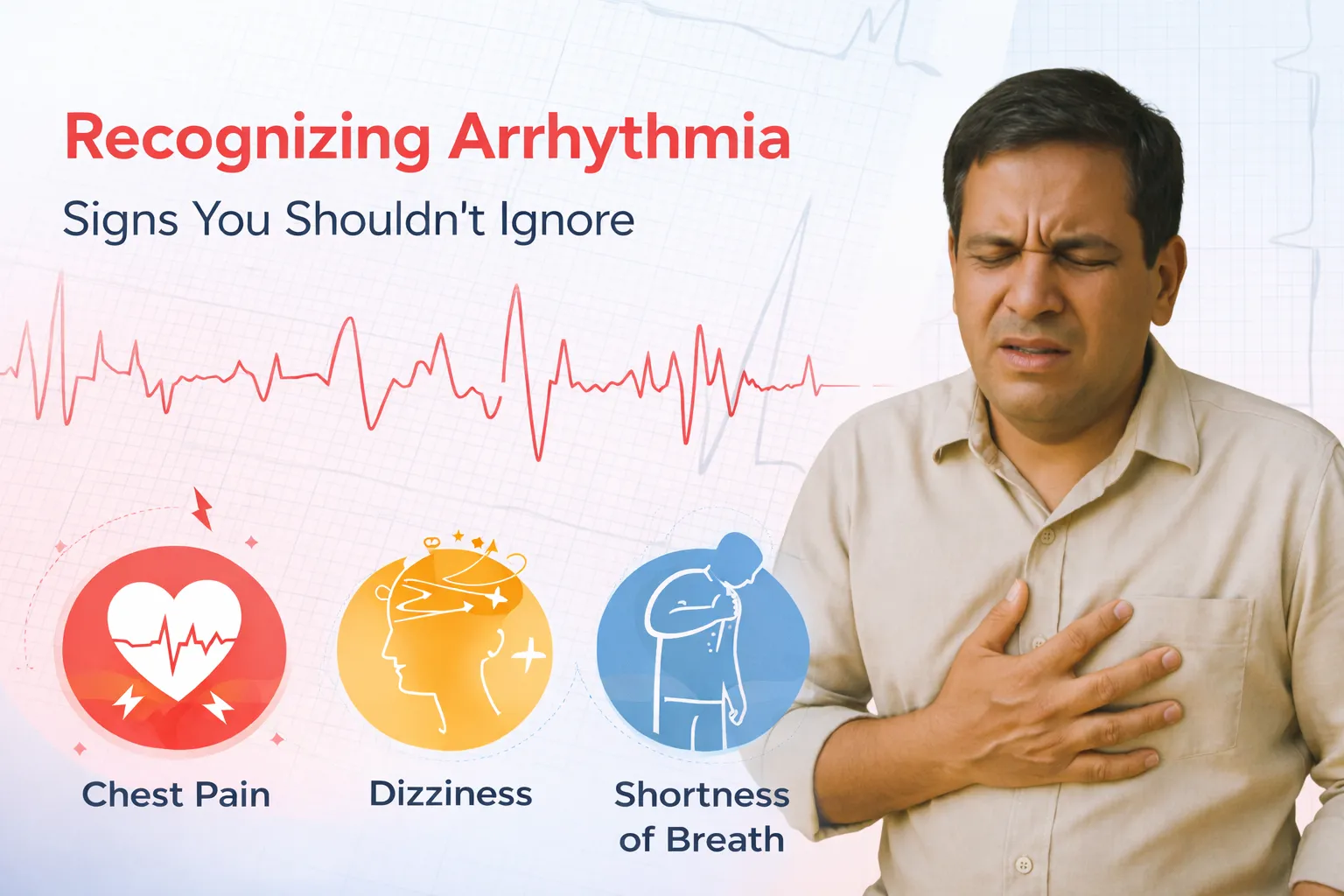
Common Signs of Arrhythmia You Shouldn’t Ignore
Arrhythmia symptoms can vary from mild to severe. Watch out
for these warning signs:
- Palpitations
or fluttering sensation in the chest
- Rapid
or unusually slow heartbeat
- Shortness
of breath
- Dizziness
or light-headedness
- Fatigue
or weakness
- Chest
pain or discomfort
- Fainting
or near-fainting spells
If these symptoms occur frequently or suddenly, medical
attention is crucial.
What Causes Arrhythmia?
Several factors can disrupt the heart’s electrical system,
including:
- Heart
disease or previous heart attack
- High
blood pressure
- Diabetes
- Thyroid
disorders
- Electrolyte
imbalance
- Excess
caffeine, alcohol, or smoking
- Stress
and anxiety
- Certain
medications
Understanding the cause helps doctors decide the right
treatment approach.
How Is Arrhythmia Diagnosed?
Early detection plays a key role in managing arrhythmia.
Common diagnostic methods include:
Electrocardiogram (ECG)
An ECG records the heart’s electrical activity and helps
identify irregular rhythms.
A portable device worn for 24-48 hours to track heart
rhythms during daily activities.
Event Monitors
Used over longer periods to detect irregularities that don’t
happen daily.
Echocardiogram
An ultrasound of the heart to assess structure and function.
With advancements in portable ECG devices, early detection
has become more accessible than ever.
Can Arrhythmia Be Prevented?
While not all arrhythmias are preventable, adopting a
heart-healthy lifestyle can significantly reduce risk:
- Maintain
a balanced diet
- Exercise
regularly
- Manage
stress
- Limit
caffeine and alcohol
- Quit
smoking
- Monitor
blood pressure and sugar levels
- Get
regular heart check-ups
Prevention starts with awareness and consistent care.
Living with Arrhythmia
With timely diagnosis and proper treatment, many people live
full, active lives with arrhythmia. Treatment options may include medications,
lifestyle changes, medical devices, or procedures depending on the severity.
The key is not to ignore the signs.
Frequently Asked Questions (FAQs)
Q1. Is arrhythmia always dangerous?
No. Some arrhythmias are harmless, but others can be serious
if left untreated.
Q2. Can stress cause arrhythmia?
Yes, chronic stress and anxiety can trigger irregular heart
rhythms.
Q3. How do I know if my palpitations are serious?
If palpitations are frequent, accompanied by dizziness,
chest pain, or fainting, consult a doctor immediately.
Q4. Can arrhythmia be detected at home?
With modern portable ECG devices, basic heart rhythm
monitoring at home is possible, but medical evaluation is still essential.
Conclusion
Your heart speaks through rhythm. When that rhythm feels
off, it’s your body’s way of asking for attention. Recognizing arrhythmia early
can prevent complications and protect your life.
At Aarogyaa Bharat, we are committed to spreading awareness
and making heart health monitoring accessible because every heartbeat matters.