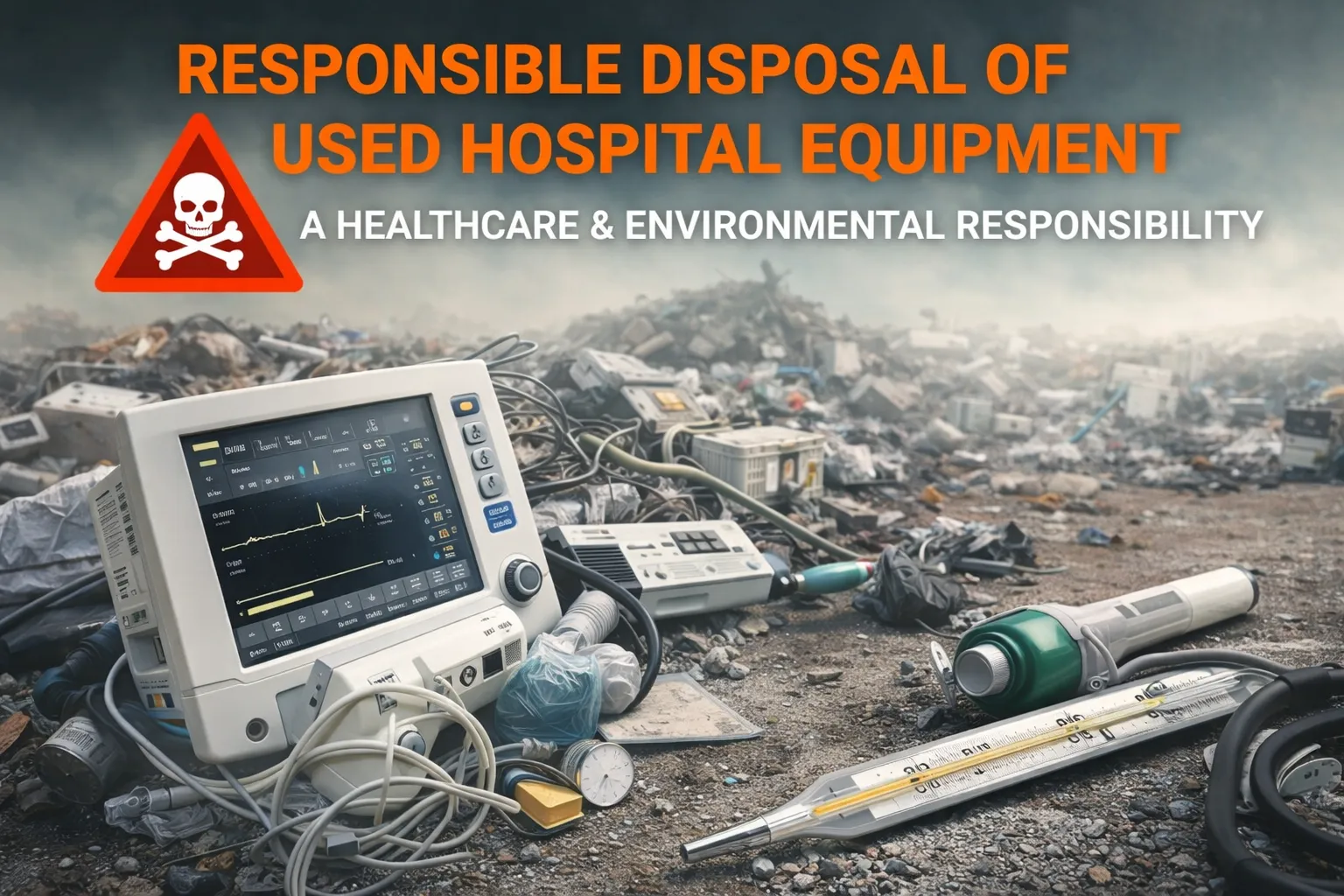
From hospitals and clinics to laboratories and home-care
setups, medical devices are continuously upgraded, replaced, or discarded. But
the real question is:
Are we disposing of used hospital equipment responsibly or
unintentionally harming fellow human beings and the environment?
At Aarogyaa Bharat, we believe healthcare should heal not
harm. Responsible disposal of medical equipment is not just a regulatory
requirement, but a moral, environmental, and public health responsibility.
Understanding the Scale of the Problem
Electronic and medical waste contains a dangerous mix of toxic
substances, including:
- Lead
glass (CRT monitors, imaging equipment)
- Batteries
containing lithium, nickel, and lead
- Mercury
(monitors, sensors, switches)
- Cadmium
(circuit boards, semiconductors)
- Chromium
and flame retardants
- Ozone-depleting
substances such as CFCs
Alarming facts:
- E-waste
contributes nearly 40% of lead and 70% of heavy metals found in landfills
- Improper
disposal leads to groundwater contamination, air pollution, and soil
acidification
- Toxic
exposure often impacts informal waste workers, nearby communities, and
future generations
Health Risks of Improper Medical Equipment Disposal
When hospital equipment is dumped, burned, or dismantled
improperly, toxic substances leach into the environment.
Health problems linked to medical e-waste toxins include:
- Impaired
mental and neurological development (especially in children)
- Increased
risk of cancer
- Damage
to liver and kidneys
- Respiratory
disorders due to air pollution
- Hormonal
and reproductive health issues
Ironically, devices designed to save lives can cause
long-term health damage if disposed of irresponsibly.
Why Hospital Equipment Needs Special Disposal Care
Medical equipment is different from general electronics
because it may also involve:
- Biohazard
contamination (blood, bodily fluids)
- Radioactive
components (certain imaging devices)
- Sharp
objects and pressurized systems
- Sensitive
patient data stored in devices
This makes random dumping or resale without checks extremely
dangerous and unethical.
Responsible Disposal: What Does It Really Mean?
Responsible disposal of used hospital equipment follows a
structured and compliant approach:
1. Assessment Before Disposal
Not all “used” equipment is waste.
- Can
it be refurbished?
- Can
it be reused safely?
- Can
it be donated after proper testing?
Extending the lifecycle of equipment is the most sustainable
option.
2. Segregation at Source
Medical equipment should be separated into:
- Reusable
/ refurbishable devices
- Recyclable
electronic components
- Hazardous
and bio-contaminated waste
Mixing medical e-waste with general waste is one of the biggest
environmental mistakes.
3. Data & Bio-Safety Clearance
Before disposal:
- Patient
data must be wiped securely
- Devices
must be decontaminated
- Batteries
and hazardous parts removed safely
This protects patient privacy and public health.
4. Authorized E-Waste Recyclers
Used hospital equipment must be handed over to:
- Government-authorized
e-waste recyclers
- Biomedical
waste handlers (as applicable)
These facilities ensure:
- Safe
extraction of metals
- Controlled
disposal of toxins
- Minimal
environmental damage
5. Documentation & Compliance
Responsible disposal includes:
- Disposal
certificates
- Compliance
with E-Waste Management Rules (India)
- Environmental
audit readiness
This protects hospitals and clinics from legal, financial,
and reputational risks.
How Aarogyaa Bharat Supports Responsible Medical
Equipment Lifecycle
At Aarogyaa Bharat, we strongly advocate a circular
healthcare economy, where equipment is:
- Used
responsibly
- Refurbished
where possible
- Reused
safely
- Disposed
ethically when end-of-life is reached
Our focus is to:
- Reduce
unnecessary medical e-waste
- Promote
reuse and refurbishment
- Encourage
safe disposal awareness
- Support
ethical healthcare practices
Sustainability in healthcare is no longer optional it is
essential.
THINK: Are You Unintentionally Causing Harm?
Every hospital, clinic, lab, or home-care provider must
pause and ask:
- Where
does our discarded medical equipment go?
- Who
handles it after disposal?
- What
impact does it have on communities and the environment?
Ignoring disposal responsibility today creates health
disasters tomorrow.
Frequently Asked Questions (FAQ)
Q1. Why is medical equipment e-waste more dangerous than
normal e-waste?
Medical equipment often contains toxic metals, biohazards,
and sensitive data, making improper disposal far more harmful than regular
electronics.
Q2. Can used hospital equipment be reused instead of
disposed?
Yes. Many devices can be refurbished and safely reused after
proper testing, servicing, and sanitization—reducing both cost and
environmental impact.
Q3. What happens if hospital equipment is disposed of
improperly?
Improper disposal can lead to environmental pollution,
serious health risks, regulatory penalties, and reputational damage for
healthcare institutions.
Q4. Who is responsible for disposing of used hospital
equipment?
The responsibility lies with hospitals, clinics, labs, and
equipment owners, who must ensure disposal through authorized and compliant
channels.
Q5. How does responsible disposal benefit society?
It reduces pollution, protects public health, safeguards
informal workers, preserves natural resources, and promotes sustainable
healthcare practices.
Conclusion
Responsible disposal of used hospital equipment is not just
about compliance it is about ethical healthcare, environmental protection, and
human well-being.
India’s growing healthcare sector must not become a silent
contributor to environmental and public health crises. By choosing reuse where
possible and safe disposal where necessary, we can ensure that healthcare truly
remains a force for good.