Because of this constant load, knee injuries, instability,
and degeneration are extremely common. This is where mediolateral stabilizers
play a vital role in protecting the knee, reducing pain, and restoring
mobility.
This comprehensive guide from AarogyaaBharat explains how
mediolateral stabilizers work, who needs them, and how they help support knee
health during injury, recovery, and daily life.
Understanding the Knee Joint
The knee is a hinge-type joint formed by:
- Femur
(thigh bone)
- Tibia
(shin bone)
- Patella
(kneecap)
Its stability comes from:
- Medial
Collateral Ligament (MCL) - inner knee stability
- Lateral
Collateral Ligament (LCL) - outer knee stability
- Anterior
and Posterior Cruciate Ligaments (ACL & PCL)
- Meniscus
cartilage and surrounding muscles
Damage or weakness in any of these structures can lead to
pain, instability, swelling, and reduced movement.
What Are Mediolateral Stabilizers?
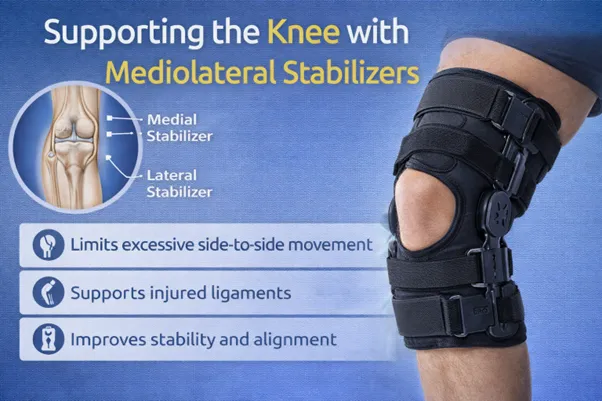
Mediolateral stabilizers are supportive structures usually
rigid or semi-rigid bars built into knee braces. They are placed along the
inner (medial) and outer (lateral) sides of the knee to control side-to-side
movement.
Their primary purpose is to:
- Prevent
abnormal inward or outward knee motion
- Support
injured or weakened ligaments
- Maintain
proper knee alignment
- Improve
confidence during movement
These stabilizers act like external ligaments, reinforcing
the knee during activity.
Why Mediolateral Stability Is Important
The knee is especially prone to:
- Valgus
stress (knee collapsing inward)
- Varus
stress (knee bending outward)
These movements are common in ligament injuries, arthritis,
post-surgical recovery, and sports trauma. Without proper support, instability
can worsen damage and delay healing.
Mediolateral stabilizers help:
- Reduce
ligament strain
- Control
excessive motion
- Improve
load distribution
- Minimize
pain during movement
Who Benefits from Mediolateral Knee Support?
Mediolateral stabilizers are widely recommended for:
1. Ligament Injuries
- MCL
or LCL sprains and tears
- Partial
ligament injuries
- Post-surgical
ligament repair
2. Knee Osteoarthritis
- Medial
or lateral compartment arthritis
- Reduces
pressure on damaged cartilage
- Improves
walking comfort
3. Sports and Activity-Related Injuries
- Football,
basketball, running, or cricket injuries
- Prevents
reinjury during return to activity
4. Post-Surgery Rehabilitation
- ACL
reconstruction
- Meniscus
repair
- Early
mobility support
5. Elderly Individuals
- Knee
weakness or buckling
- Improved
balance and fall prevention
How Mediolateral Stabilizers Work
Mediolateral stabilizers function by:
- Guiding
the knee through a safe range of motion
- Restricting
harmful sideways movement
- Supporting
joint alignment during weight-bearing
- Enhancing
neuromuscular confidence
Modern knee braces allow controlled movement without locking
the joint, making them comfortable for daily use.
Types of Knee Braces with Mediolateral Stabilizers
1. Hinged Knee Braces
- Dual
hinges on both sides
- Best
for moderate to severe instability
2. Functional Knee Braces
- Used
during rehabilitation
- Allows
controlled movement
3. Unloader Knee Braces
- Designed
for arthritis patients
- Shifts
load away from damaged joint area
4. Prophylactic Knee Braces
- Used
in sports for injury prevention
Benefits of Mediolateral Knee Stabilizers
Improved knee stability
Reduced pain and swelling
Faster recovery after injury
Better joint alignment
Increased walking confidence
Lower risk of reinjury
Choosing the Right Knee Brace
When selecting a brace with mediolateral stabilizers,
consider:
- Severity
of knee injury
- Doctor
or physiotherapist recommendation
- Daily
activity level
- Comfort
and adjustability
- Breathable
materials
- Correct
sizing
At Aarogyaa Bharat, we help patients choose knee supports
that balance comfort, protection, and long-term joint health.
Proper Usage and Care
For best results:
- Wear
the brace as advised
- Ensure
snug but comfortable fitting
- Avoid
overtightening
- Clean
regularly
- Do
not wear over open wounds
Common Misconceptions
Myth: Knee braces weaken muscles
Fact: When used correctly, they support healing and safe movement
Myth: Only athletes need knee braces
Fact: Elderly patients and arthritis sufferers benefit equally
When to Consult a Doctor
Seek medical advice if:
- Pain
persists despite brace use
- Swelling
or numbness develops
- Knee
instability worsens
A knee brace is a supportive aid, not a replacement for
medical evaluation.
Why Choose Knee Supports from Aarogyaa Bharat?
At Aarogyaa Bharat, we provide:
- Medical-grade
orthopedic solutions
- Trusted
brands and quality assurance
- Expert
product guidance
- Home-care
and rehabilitation support
We believe mobility is essential for independence and
quality of life.
Frequently Asked Questions (FAQs)
Q1. What does a mediolateral stabilizer do for the knee?
It limits excessive side-to-side movement, supports
ligaments, and improves knee alignment during activity.
Q2. Can I wear a knee brace with mediolateral stabilizers
daily?
Yes. Many people wear them daily for stability and pain
relief, but long-term use should follow medical guidance.
Q3. Are mediolateral knee braces helpful for arthritis?
Yes. They help reduce pressure on the affected knee compartment and improve walking comfort in osteoarthritis patients.
Conclusion
The knee is strong but not invincible. With daily stress,
aging, or injury, proper support becomes essential. Mediolateral stabilizers
provide targeted protection that improves stability, reduces pain, and restores
confidence in movement.
Whether you’re recovering from injury, managing arthritis,
or preventing future damage, the right knee support can make a meaningful
difference.