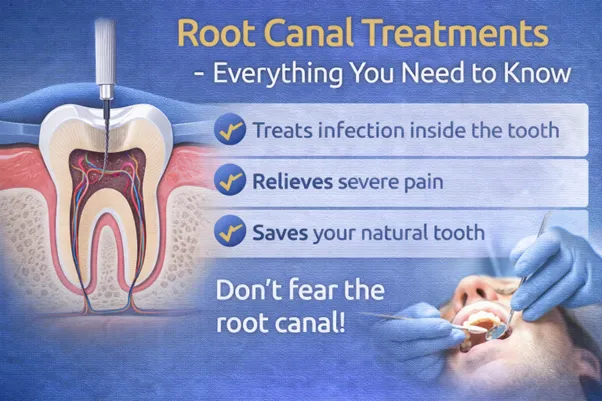
But here’s the truth root canal treatment is one of the most
misunderstood dental procedures. Thanks to modern dentistry, it is now a safe,
effective, and mostly painless way to save your natural tooth and
relieve severe dental pain.
At Aarogyaa Bharat, we believe informed patients make better
health decisions. This complete guide explains what a root canal is, why it’s
needed, how it’s done, and what to expect without fear or confusion.
What Is a Root Canal Treatment?
A root canal treatment (RCT) is a dental procedure used to
treat infection or damage inside the tooth. Each tooth contains a soft inner
tissue called the pulp, which houses nerves, blood vessels, and connective
tissue.
When this pulp becomes infected or inflamed due to decay,
injury, or cracks, it can cause:
- Severe
toothache
- Sensitivity
to hot or cold
- Swelling
and abscess formation
Root canal treatment removes the infected pulp, cleans the
inside of the tooth, and seals it saving the tooth instead of extracting it.
Why Is Root Canal Treatment Needed?
A root canal is usually recommended when the pulp inside the
tooth is damaged beyond repair. Common causes include:
- Deep
dental cavities
- Cracked
or chipped teeth
- Repeated
dental procedures on the same tooth
- Trauma
or injury to the tooth
- Advanced
gum disease
Without treatment, the infection can spread to surrounding
bone and tissues, leading to serious complications.
Common Symptoms That Indicate You May Need a Root Canal
You may require a root canal if you experience:
- Persistent
or throbbing tooth pain
- Pain
while chewing or biting
- Sensitivity
to hot or cold that lingers
- Swollen
or tender gums
- Darkening
of the tooth
- Pimple-like
swelling on the gums (dental abscess)
In some cases, there may be no pain at all, which is why
regular dental check-ups are important.
Step-by-Step: How Is a Root Canal Performed?
Modern root canal treatment is typically completed in 1-2
visits and involves the following steps:
1. Diagnosis and X-ray
The dentist examines the tooth and takes X-rays to assess
the extent of infection.
2. Local Anesthesia
The area is numbed completely. Most patients feel little to
no pain during the procedure.
3. Removal of Infected Pulp
An opening is made in the tooth, and the infected pulp is
removed.
4. Cleaning and Shaping
The root canals are cleaned, disinfected, and shaped for
filling.
5. Filling and Sealing
The canals are filled with a biocompatible material and
sealed to prevent reinfection.
6. Crown Placement (Optional but Recommended)
A dental crown may be placed to restore strength and
function to the tooth.
Is Root Canal Treatment Painful?
This is the most common fear and the biggest myth.
Root canal treatment does not cause pain; it relieves
pain.
With modern anesthesia and technology, most patients report that the procedure
feels similar to getting a regular filling.
Post-treatment discomfort is usually mild and temporary.
Benefits of Root Canal Treatment
Saves your natural tooth
Eliminates infection and pain
Prevents spread of infection
Restores chewing function
Improves oral and overall health
More cost-effective than tooth replacement
Keeping your natural tooth is always better than extraction
when possible.
Root Canal vs Tooth Extraction
|
Feature |
Root Canal
Treatment |
Tooth
Extraction |
|
Tooth
preservation |
Yes |
No |
|
Chewing
efficiency |
Maintained |
Reduced |
|
Jawbone
health |
Preserved |
Bone loss
possible |
|
Cost
long-term |
Lower |
Higher
(implants/bridges) |
Whenever feasible, dentists prefer saving the tooth rather
than removing it.
Aftercare and Recovery
After a root canal:
- Avoid
chewing on the treated tooth until restored
- Maintain
good oral hygiene
- Take
prescribed medications if needed
- Attend
follow-up visits
Most people return to normal activities the same day.
How Long Does a Root Canal Last?
With proper care, a tooth treated with a root canal can last
a lifetime. Regular brushing, flossing, and dental check-ups are key.
Why Root Canal Treatment Matters for Overall Health
Untreated dental infections can affect more than just your
mouth. They may contribute to:
- Systemic
infections
- Heart
complications
- Weakened
immunity
A healthy mouth supports a healthy body.
How Aarogyaa Bharat Supports Dental Awareness
At Aarogyaa Bharat, we focus on:
- Preventive
healthcare education
- Accurate
medical information
- Empowering
patients to overcome fear with knowledge
Understanding dental procedures reduces anxiety and promotes
better oral health decisions.
Frequently Asked Questions (FAQs)
Q1. How long does a root canal treatment take?
Most root canal procedures take 60-90 minutes and may
require one or two visits depending on complexity.
Q2. Is it safe to delay a root canal?
No. Delaying treatment can worsen infection and may lead to
tooth loss or serious complications.
Q3. Will my tooth need a crown after a root canal?
In many cases, yes. A crown protects the treated tooth and restores its strength.
Conclusion
Root canal treatment isn’t something to fear it’s something
to be thankful for. What was once a dreaded procedure is now a routine,
comfortable, and highly effective way to save natural teeth and eliminate pain.
If you experience persistent tooth discomfort, don’t ignore
it. Early diagnosis and treatment can make all the difference.
For trusted health education and patient-first awareness,
rely on Aarogyaa Bharat where clarity replaces fear and knowledge leads
to better health.