Understanding Medical Oxygen Therapy in Home Healthcare
Oxygen therapy is prescribed when a patient’s blood oxygen
levels fall below healthy limits, making it difficult for organs to function
efficiently. Medical oxygen bottles deliver concentrated oxygen through masks
or nasal cannulas, helping patients breathe more comfortably and maintain
stable oxygen saturation. In home environments, oxygen therapy allows patients
to recover outside hospitals while still receiving essential respiratory
support. However, oxygen is a highly reactive gas that increases combustion
risk, which makes safety education critical for families using oxygen cylinders
at home. Aarogyaa Bharat emphasizes that oxygen therapy should always follow
medical prescriptions, as excessive oxygen flow can be harmful for certain
patients, especially those with chronic respiratory conditions where controlled
oxygen delivery is required.
Types of Medical Oxygen Bottles Used at Home
Medical oxygen cylinders come in various sizes depending on
usage duration and patient mobility needs. Smaller portable cylinders allow
patients to move around the house, while larger stationary bottles provide
extended oxygen supply for continuous therapy. Cylinders are typically made of aluminium
or steel and contain compressed oxygen under high pressure, which requires
careful handling. Some patients may transition to oxygen concentrators for
long-term therapy, but oxygen bottles remain essential for backup supply or
emergency situations. Aarogyaa Bharat advises understanding cylinder capacity
and flow rate before choosing a home oxygen solution.
Table: Common Medical Oxygen Bottle Types for Home Use
|
Cylinder
Type |
Typical
Capacity |
Best Use
Scenario |
Key Safety
Note |
|
Small
Portable Cylinder |
Short
duration |
Mobility
inside home |
Secure
upright position |
|
Medium
Cylinder |
Moderate use |
Night-time
therapy |
Use regulator
properly |
|
Large
Stationary Cylinder |
Continuous
therapy |
Bedside
support |
Avoid moving
frequently |
|
Backup
Cylinder |
Emergency
supply |
Power outage
backup |
Check
pressure regularly |
Why Safety Matters When Using Oxygen Bottles at Home
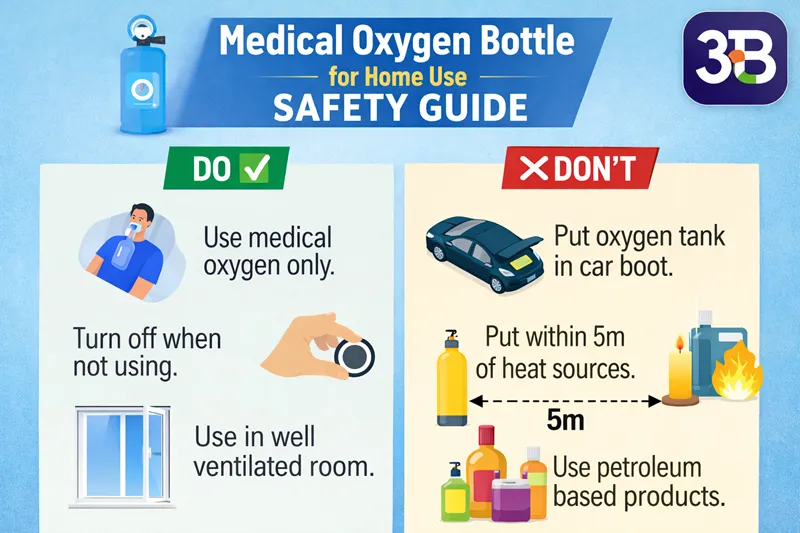
Oxygen itself is not flammable, but it dramatically
increases the speed at which materials burn, making fire prevention the most
important safety priority. Even small sparks from electrical devices, cooking
flames, or smoking can become dangerous in oxygen-rich environments. Patients
and caregivers must maintain a safe distance between oxygen equipment and heat
sources, including stoves, candles, or heaters. Aarogyaa Bharat strongly
recommends placing oxygen bottles in well-ventilated areas and ensuring that
children or pets cannot tamper with the equipment.
Correct Setup of Medical Oxygen Bottles
Proper setup begins with attaching the regulator securely to
the cylinder valve and ensuring that all connections are tight without leaks.
The flow meter should be adjusted only according to medical instructions, and
tubing should remain free of bends or obstructions. Cylinders must always be
kept upright and secured using stands or holders to prevent tipping. Aarogyaa
Bharat highlights that improper setup is one of the most common causes of
oxygen accidents in home environments, making caregiver training essential.
Safe Usage Practices During Oxygen Therapy
Patients using oxygen bottles should avoid applying
oil-based lotions or petroleum products near the face because these substances
can increase fire risk in oxygen-rich environments. Cotton clothing is safer
than synthetic fabrics, which may generate static electricity. Electrical
equipment near oxygen therapy areas should be in good working condition, and
extension cords should be avoided whenever possible. Aarogyaa Bharat advises
maintaining clear airflow around the cylinder and avoiding placing blankets or
covers over oxygen equipment.
Table: Essential Oxygen Bottle Safety Rules for Home Use
|
Safety
Area |
Recommended
Practice |
Risk
Prevented |
Caregiver
Tip |
|
Fire Safety |
Keep away
from flames |
Prevent
ignition |
No smoking
policy |
|
Storage |
Upright
secured position |
Avoid falling |
Use cylinder
stand |
|
Handling |
Open valve
slowly |
Pressure
control |
Train
caregivers |
|
Hygiene |
Clean mask
regularly |
Infection
prevention |
Replace
tubing periodically |
Monitoring Patients During Home Oxygen Therapy
Monitoring oxygen saturation using a pulse oximeter helps
ensure that therapy remains effective and safe. Patients and caregivers should
watch for symptoms such as dizziness, headache, or unusual breathing patterns,
which may indicate incorrect oxygen flow. Regular medical check ups help adjust
therapy levels based on recovery progress. Aarogyaa Bharat emphasizes that
oxygen therapy is a medical treatment, not a general wellness tool, and should
always be supervised by healthcare professionals.
Transporting Oxygen Bottles Safely
When moving oxygen cylinders within the home or during
travel, the valve cap should remain securely in place, and cylinders should
never be dragged or rolled horizontally. Portable cylinders should be carried
using approved holders or carts to prevent accidental drops. Vehicles
transporting oxygen bottles must remain well-ventilated, and cylinders should
be secured to avoid movement during travel. Aarogyaa Bharat recommends
informing family members about safe handling procedures to prevent accidents.
Storage Guidelines for Home Oxygen Cylinders
Proper storage is essential for maintaining safety and
equipment longevity. Oxygen bottles should be kept in cool, dry environments
away from direct sunlight or extreme heat. Storing cylinders near flammable
materials such as cleaning chemicals or aerosols increases risk and should be
avoided. Aarogyaa Bharat advises designating a specific oxygen therapy area
within the home to maintain organization and reduce accidental exposure to
hazards.
Emotional and Psychological Support for Oxygen Therapy Patients
Patients who require oxygen therapy at home may experience
anxiety or emotional stress related to their condition. Creating a safe and
comfortable environment helps reduce fear and encourages compliance with
treatment. Family members play a crucial role in offering reassurance and
maintaining a positive atmosphere. Aarogyaa Bharat believes that combining
medical safety with emotional support improves both recovery outcomes and
quality of life.
Common Mistakes to Avoid When Using Oxygen Bottles at Home
Many accidents occur due to small mistakes such as placing
oxygen cylinders near cooking areas, using damaged tubing, or adjusting flow
rates without medical advice. Ignoring warning signs like hissing sounds or
regulator malfunction can also lead to serious issues. Aarogyaa Bharat stresses
the importance of routine equipment checks and following manufacturer
guidelines carefully.
Conclusion
Medical oxygen bottles provide essential respiratory support
for patients recovering at home, but safe usage requires careful handling,
proper storage, and consistent monitoring. By following clinical safety
guidelines and maintaining awareness of fire risks, families can create a
secure environment that supports effective oxygen therapy. Aarogyaa Bharat
encourages caregivers and patients to treat oxygen equipment with respect and
responsibility, integrating safety practices into daily routines to ensure both
comfort and protection during home healthcare.