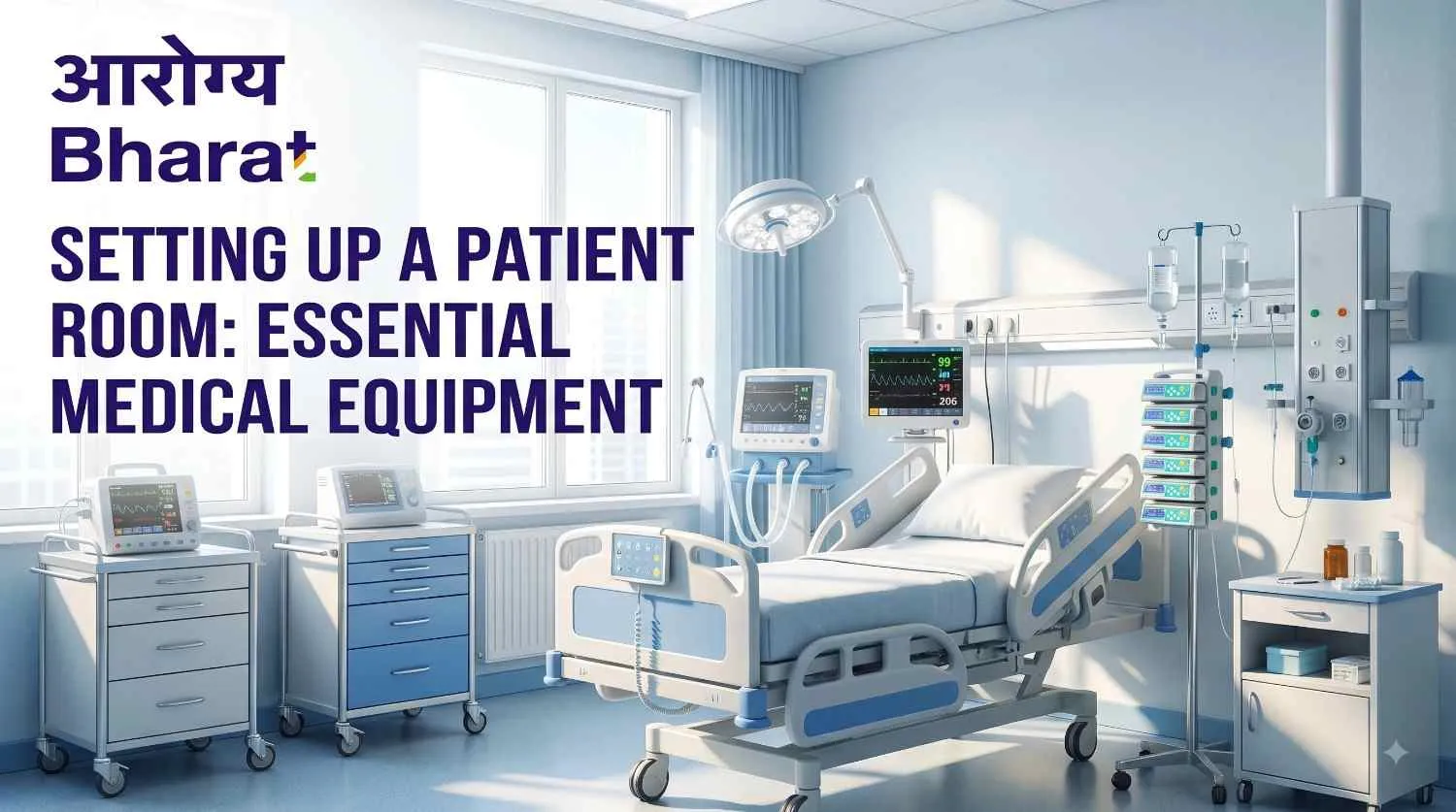
Creating a well-organized patient room can make home
healthcare more comfortable, safer, and easier to manage for both patients and
caregivers. Whether the patient is recovering after surgery, managing a
long-term condition, living with limited mobility, or receiving elderly care at
home, the room should be designed around their individual needs. Essential
equipment may include an adjustable hospital bed, bedside table, mobility aids,
patient monitoring devices, bathroom support equipment, and other daily-care
products. The room should also provide enough space for caregivers to move
around the bed without obstruction. Good lighting, accessible electrical
outlets, clear walking pathways, and organized medical supplies are equally
important. Before purchasing equipment, families should consider the patient's
mobility, medical requirements, room size, caregiver support, and
recommendations from healthcare professionals. A properly planned patient room
can support safer daily routines while making essential care tasks more
manageable.
Medical Disclaimer: Equipment requirements vary
according to the patient's medical condition. Consult a qualified doctor,
nurse, physiotherapist, occupational therapist, or other healthcare
professional before setting up specialized medical equipment.
Why a Proper Patient Room Setup Matters
A patient's room is more than simply a place to sleep. For
individuals spending several hours a day in bed, the surrounding environment
can affect comfort, mobility, personal care, and caregiver efficiency. A poorly
arranged room may create obstacles that increase the risk of trips, falls, or
difficulty accessing essential items. A well-planned room keeps frequently used
products within easy reach while maintaining sufficient space for safe
movement. The bed should be positioned so caregivers can access the patient
from appropriate sides when required. Medical equipment should be arranged
without blocking doors, windows, or emergency pathways. Families should also
consider how the patient's needs may change during recovery. A temporary setup
for post-surgery care may require different equipment from a long-term
home-care arrangement. Planning ahead can reduce unnecessary rearrangement and
improve everyday care.
Assess the Patient's Needs Before Buying Equipment
The first step in creating a patient room is understanding
what the patient actually needs. Someone recovering from a minor procedure may
require only a comfortable bed, bedside table, and basic mobility support,
while a patient with significant mobility limitations may require an adjustable
hospital bed, wheelchair, walker, commode, and caregiver-support equipment.
Consider the patient's ability to sit, stand, walk, transfer, use the bathroom,
eat independently, and reach objects. The duration of home care is also
important because short-term recovery and long-term care can have different
equipment requirements. Families should also consider the patient's weight
capacity requirements and the available room dimensions. A healthcare
professional can help identify equipment that is medically appropriate. Avoid
purchasing equipment simply because it is popular or advertised as useful for
patients.
Choosing the Right Hospital Bed
A hospital bed is often the central piece of equipment in a
patient room, particularly when the patient spends extended periods in bed.
Unlike a standard household bed, an adjustable hospital bed can allow changes
to the backrest and, depending on the model, the leg section and overall bed
height. These adjustments can make activities such as eating, reading, resting,
repositioning, and caregiver assistance easier. Families considering Hospital
Beds should evaluate the patient's mobility, weight, room dimensions,
mattress requirements, adjustment mechanism, side-rail options, and available
service support. Electric beds can offer convenient positioning through a hand
controller, while manual beds may provide a simpler alternative. The bed should
be placed on a stable surface with enough surrounding space for caregivers to
provide care safely.
Selecting a Suitable Mattress
The mattress is just as important as the bed frame because
patients who spend long periods in bed require adequate support and comfort. A
mattress should be compatible with the selected hospital bed and designed to
accommodate its movement when the backrest or leg section is adjusted. Patients
with limited mobility or prolonged bed rest may require specialized
pressure-management solutions based on professional assessment. Families should
not select a mattress solely according to softness because body support,
pressure distribution, patient weight, and medical requirements are also
important. Customers exploring Pressure Relief Mattresses should
consider the patient's mobility and skin-care needs and discuss specialized
options with a healthcare professional when appropriate. Regular inspection of
the mattress cover and surface can also help identify damage or hygiene issues.
Bedside Table and Patient Essentials
A bedside table can make everyday activities easier by
keeping frequently used items within comfortable reach. Depending on the
patient's needs, the table may hold water, prescribed medications, tissues, a
phone, reading materials, personal-care products, or a nurse-call device where
available. Items should be organized so that essential objects are easy to
identify without creating clutter. The table should be positioned where the
patient can safely reach it without leaning excessively or attempting to stand
unnecessarily. If the patient has limited upper-body movement, caregivers
should place important items closer to the stronger or more accessible side. A
height-adjustable overbed table may also allow the patient to eat, write, read,
or use a device while remaining in bed. The goal is accessibility without
compromising safety.
Mobility Equipment for Patient Rooms
Mobility equipment can be essential for patients who have
difficulty walking or transferring between the bed, bathroom, and other areas
of the home. Depending on the patient's condition, suitable equipment may
include a walker, wheelchair, transfer aid, or other mobility-support product.
Customers exploring Mobility Aids should consider the patient's
strength, balance, coordination, weight, hand grip, and level of independence.
A walker that is suitable for one patient may not be appropriate for another.
The equipment should also fit comfortably through doorways and around
furniture. Professional assessment can help determine which mobility aid is
appropriate and how it should be used. Caregivers should avoid encouraging a
patient to walk independently with new equipment until they understand its
correct operation.
Wheelchair for Patients with Limited Mobility
A wheelchair can provide mobility support for patients who
cannot safely walk long distances or need assistance moving around the home.
When setting up a patient room, families should ensure there is enough space
for the wheelchair to approach the bed and turn safely. Doorways and pathways
should remain free from furniture, loose rugs, wires, and other obstacles. The
wheelchair should be positioned securely when the patient transfers in or out.
Customers exploring the Wheelchair Collection can consider different
wheelchair designs based on the user's mobility, transportation needs, weight,
and caregiver support. A healthcare professional can also recommend appropriate
seating and positioning features when required. Wheelchair selection should
focus on safety and patient needs rather than simply choosing the most
affordable model.
Bathroom and Toilet Support Equipment
Bathroom access can become challenging for patients with
weakness, reduced balance, or limited mobility. Depending on the patient's
needs, bathroom equipment may include a commode, shower chair, toilet-support
frame, grab bars, or other appropriate aids. The pathway from the patient room
to the bathroom should remain clear and well illuminated, especially when
nighttime trips are expected. Floors should be kept dry and slippery surfaces
should be addressed. A commode may be useful when reaching the bathroom is
difficult, but the appropriate product depends on the patient's ability to
transfer safely. Customers exploring Bathroom Safety Products should
consider the patient's mobility and bathroom layout. Installation of fixed
support equipment should be performed correctly and, where necessary, by a
qualified professional.
Patient Monitoring Equipment
Some patients may require monitoring equipment as part of
their home-care plan. Depending on the healthcare professional's
recommendations, this may include a blood pressure monitor, thermometer, pulse
oximeter, blood glucose monitor, or other appropriate device. Monitoring
equipment should be stored in a clean and accessible location and used
according to the manufacturer's instructions. Patients and caregivers should
understand what the readings mean and when professional advice is required. A
device should not be used to make major treatment decisions without appropriate
medical guidance. Customers exploring Patient Monitoring Devices should
compare accuracy, ease of use, display readability, power requirements, and
suitability for the patient. Medical monitoring should complement professional
care rather than replace it.
Oxygen Equipment for Patients Requiring Oxygen Therapy
Patients who have been prescribed supplemental oxygen may
require an oxygen concentrator or another oxygen-delivery system. The equipment
should be positioned according to the manufacturer's ventilation and safety
requirements. Oxygen equipment must be kept away from smoking, flames, candles,
incense, and other ignition sources because oxygen supports combustion. Tubing
should be arranged carefully so that it does not create a trip hazard around
the bed. Customers exploring Oxygen Equipment should select products
based on the patient's prescribed oxygen requirements and professional
recommendations. Families should not change oxygen flow settings without
medical guidance. Caregivers should also know how to respond to equipment
alarms and what steps to take if the machine stops working.
Medication and Medical Supply Organization
Keeping medications and medical supplies organized can
reduce confusion during daily care. However, medicines should be stored
according to their specific storage instructions and kept away from children or
individuals who may accidentally access them. Frequently used non-prescription
care supplies can be arranged in clearly labeled containers, while prescription
medicines should remain under appropriate supervision. A dedicated storage area
can also hold disposable gloves, gauze, wipes, thermometers, masks, and other
routine supplies. Customers exploring Patient Care Products should
consider what is actually required for the patient's care plan rather than
accumulating unnecessary products. Expiry dates should be checked regularly,
and damaged or expired supplies should be discarded according to appropriate
local guidance.
Overbed Table for Eating and Daily Activities
An overbed table can be especially useful for patients who
spend significant time in bed. It can provide a stable surface for meals,
reading, writing, using a phone, or other activities. Height adjustment allows
the table to be positioned according to the patient's posture and bed height.
The table should not be placed where it restricts the patient's ability to get
out of bed or where its wheels can roll unexpectedly. Heavy objects should be
positioned carefully to prevent instability. Patients with limited mobility may
appreciate having daily essentials organized on the table, but caregivers
should avoid overcrowding it. A clean, uncluttered surface can make eating and
other activities more comfortable.
Patient Transfer Equipment
Transferring a patient between the bed, wheelchair, commode,
or chair can be one of the more physically demanding parts of home care.
Patients with significant weakness may require specialized transfer equipment
or caregiver assistance. The appropriate solution depends on the patient's
weight-bearing ability, balance, coordination, and level of cooperation.
Families should never attempt a complex transfer without proper training
because incorrect techniques can cause injury to both the patient and caregiver.
Professional assessment may identify whether a transfer board, lift, or another
device is appropriate. Customers exploring Patient Transfer Equipment
should prioritize safety, weight capacity, compatibility, and professional
instruction. Equipment should be used exactly according to its manufacturer's
instructions.
Lighting and Electrical Access
Good lighting is an essential part of patient-room safety.
The patient should be able to see the pathway between the bed, bathroom, chair,
and doorway, especially at night. A bedside lamp or accessible light switch can
help reduce unnecessary movement in darkness. Electrical outlets should be
accessible without requiring the patient or caregiver to stretch across the
bed. Cords should be organized along safe pathways rather than across walking
areas. Medical equipment should be connected according to manufacturer
instructions, and overloaded extension boards should be avoided. If multiple
electrical devices are used, families should consider the electrical
requirements of each product. Proper lighting and cable management can reduce
avoidable hazards while making everyday activities easier.
Keeping the Patient Room Clutter-Free
A patient room should provide enough clear space for the
patient, caregiver, wheelchair, walker, and other necessary equipment.
Furniture that is rarely used should be removed if it blocks movement. Loose
rugs, decorative objects, unnecessary chairs, bags, and electrical cables can
become hazards. Frequently used items should remain accessible without forcing
the patient to stretch, bend, or walk unnecessarily. Caregivers should
periodically review the room because equipment needs may change during
recovery. If a wheelchair or walker is used, the turning area around the bed
should remain unobstructed. A simple room layout can often improve safety more
effectively than adding numerous products. Families should prioritize function,
accessibility, and ease of cleaning.
Infection Control and Patient Room Hygiene
Cleanliness becomes particularly important when caring for a
patient at home. Frequently touched surfaces such as bed controls, bedside
tables, handles, monitoring devices, and mobility equipment should be cleaned
according to the manufacturer's instructions. Medical equipment should never be
cleaned with chemicals that could damage its surfaces or components. Bedding
should be changed regularly and immediately when contaminated. Caregivers
should wash their hands before and after providing patient care and follow any
additional infection-control instructions provided by healthcare professionals.
Waste should be handled appropriately, particularly if the patient uses medical
supplies that require special disposal. A clean room can support a more
comfortable care environment, but infection-control requirements vary according
to the patient's condition.
Emergency Access and Caregiver Convenience
The patient room should be arranged so that caregivers can
reach the patient quickly when assistance is required. Important contact
numbers and medical information can be kept in an accessible location, while
emergency pathways should remain completely clear. The patient's prescribed
medicines and essential care information should be organized appropriately. If
a patient uses an oxygen concentrator or other powered medical device,
caregivers should understand what to do during equipment failure or power interruption.
Emergency plans should be developed according to the patient's medical
requirements. Customers can explore Home Safety Products when improving
general safety around the patient's room. Professional advice should be
obtained when the patient's condition requires specialized emergency equipment
or monitoring.
Essential Equipment Checklist for a Patient Room
- Adjustable
hospital bed
- Compatible
medical mattress
- Bedside
or overbed table
- Suitable
pillow and positioning supports
- Walker
or wheelchair when medically appropriate
- Bathroom
and toilet support equipment
- Patient
monitoring devices when prescribed or recommended
- Oxygen
equipment when prescribed
- Medication
and medical-supply storage
- Transfer
equipment when required
- Adequate
lighting
- Non-slip
and clear walking pathways
- Accessible
electrical outlets
- Easy-to-reach
personal-care supplies
- Appropriate
cleaning and hygiene supplies
How to Arrange Equipment Around the Bed
The hospital bed should usually be positioned so caregivers
can access the patient without unnecessary obstacles. The bedside table can be
placed where the patient can reach essential items without excessive
stretching. A wheelchair or walker should have a designated parking area that
does not block the doorway or bathroom route. Oxygen tubing, electrical cables,
and monitoring wires should be arranged carefully to avoid creating hazards.
Equipment that requires frequent use should be closer to the bed, while less
frequently used supplies can be stored elsewhere. The exact arrangement depends
on the room's dimensions and the patient's mobility. Before finalizing the
setup, families should walk through the patient's daily routine and identify
areas where movement may become difficult.
Choosing Equipment Based on Patient Mobility
Mobility is one of the most important factors when selecting
patient-room equipment. A fully mobile patient may require very little
equipment, while someone who cannot walk independently may require a
wheelchair, walker, transfer aid, commode, and adjustable bed. Patients with
limited hand strength may also need equipment that is easier to operate. The
height of the bed and chairs can affect transfer safety. A healthcare
professional can assess whether the patient can safely stand, walk, or transfer
independently. Customers considering Elderly Care Products should focus
on products that match the user's actual abilities. Equipment that is too
complicated or difficult to control may create additional risks rather than
improving independence.
Patient Room Setup for Elderly Care
Older adults may have additional needs related to balance,
strength, vision, hearing, and mobility. A patient room for elderly care should
therefore have clear pathways, adequate lighting, easily accessible personal
items, and appropriate mobility support. The bed should be positioned at a
practical height for transfers according to the patient's ability and
professional recommendations. Frequently used items should be placed within
reach, while unnecessary furniture should be removed. Nighttime bathroom access
should receive particular attention because reduced visibility and fatigue can
increase fall risk. Families can combine appropriate Elderly Care Products
with environmental improvements to create a safer routine. Individual
assessment is important because the needs of one elderly patient can differ
significantly from another.
Setting Up a Patient Room After Surgery
After surgery, a patient's mobility and daily routine may
temporarily change. The room should be prepared before the patient returns home
so that essential equipment is already available. Depending on the procedure,
the patient may need an adjustable bed, walker, wheelchair, commode, dressing
supplies, or other support equipment. The discharge instructions should be
reviewed carefully because restrictions may apply to walking, bending, lifting,
sleeping positions, or transfers. Frequently used items should be placed within
easy reach to minimize unnecessary movement during the initial recovery period.
Caregivers should also know when follow-up appointments and professional
assistance are required. The setup can then be adjusted as the patient's mobility
improves.
Medical Equipment for Long-Term Home Care
Long-term home care requires a different approach because
equipment may remain part of the patient's daily environment for months or
longer. Families should consider durability, maintenance, replacement parts,
service support, and ease of cleaning when purchasing equipment. The patient's
condition may also change over time, requiring additional mobility or care
products. A regular review of the room can identify equipment that is no longer
required or products that need maintenance. Customers exploring Home Medical
Equipment should compare specifications and after-sales support rather than
focusing only on initial price. Professional reassessment may also be useful
when there are significant changes in mobility, strength, or care requirements.
Common Patient Room Setup Mistakes
One common mistake is buying equipment before assessing the
patient's actual needs and room dimensions. Another is placing too much
furniture around the bed, leaving insufficient space for a wheelchair or
caregiver. Families may also overlook lighting, electrical cable management,
bathroom access, and the location of frequently used supplies. Using
incompatible mattresses or accessories with an adjustable hospital bed can
create safety and performance problems. Another mistake is assuming that
equipment automatically makes a patient independent. Patients may require
training and supervision before using walkers, wheelchairs, transfer devices,
or other equipment. A healthcare professional can help identify potential risks
and recommend appropriate changes to the home-care environment.
How Aarogyaa Bharat Can Help With Home Healthcare Needs
Aarogyaa Bharat provides healthcare products and resources
designed to support patients, caregivers, elderly individuals, and families
managing healthcare requirements at home. Customers can explore different
categories based on mobility, patient care, rehabilitation, respiratory care,
and daily living requirements. When creating a patient room, families can
compare products according to the patient's condition, room layout, duration of
use, and professional recommendations. Medical Equipment should always
be selected carefully, especially when a product affects patient positioning,
oxygen therapy, mobility, or transfers. Aarogyaa Bharat can serve as a
convenient resource for families looking to understand and explore home
healthcare solutions.
Aarogyaa Bharat Hospital Page
Families looking for broader healthcare information can also
explore the Aarogyaa Bharat Hospital Page while planning patient care at
home. Hospital discharge instructions should always be followed when a patient
is returning home after treatment or surgery. These instructions may specify
equipment requirements, medication routines, mobility restrictions, wound care,
positioning, or follow-up requirements. Online product information can help
families understand available equipment but should not replace clinical
instructions. If there is uncertainty about whether a patient needs a hospital
bed, wheelchair, walker, oxygen equipment, or another medical product,
professional guidance should be obtained. A well-planned home environment works
best when it supports the patient's actual care plan.
Aarogyaa Bharat City Pages
Healthcare product availability, delivery, rental options,
and service support may differ between locations. Families can explore Aarogyaa
Bharat City Pages for location-specific healthcare information and product
availability. Before ordering larger equipment such as hospital beds,
wheelchairs, or oxygen concentrators, customers should confirm delivery,
installation, rental terms, technical support, and service coverage. This can
be particularly important when equipment is required urgently following
hospital discharge. Local support may also make maintenance and replacement
easier. Customers should verify current availability and service details before
placing an order.
Healthcare Calculator and Home Care Planning
A Healthcare Calculator can provide useful general
information, but it should not be used to make individualized medical
decisions. Patient-room equipment should be selected according to the patient's
medical condition, mobility, weight, physical abilities, and professional recommendations.
For example, a calculator should not be used to determine whether a patient
needs oxygen therapy, a specific hospital-bed position, or a particular
mobility aid. Healthcare professionals should make those decisions based on
clinical assessment. Online tools can support awareness and education but
cannot replace a doctor's or therapist's advice. Families should seek
professional guidance whenever the patient's condition changes significantly.
Quick Patient Room Setup Checklist
- Assess
the patient's medical and mobility needs.
- Measure
the room before purchasing large equipment.
- Choose
an appropriate hospital bed.
- Select
a compatible mattress.
- Keep a
bedside table within comfortable reach.
- Provide
suitable mobility equipment when required.
- Keep
bathroom pathways clear.
- Arrange
medical supplies in an organized manner.
- Provide
adequate lighting for day and night.
- Keep
electrical cords away from walking pathways.
- Position
oxygen equipment safely when prescribed.
- Maintain
clean and accessible surfaces.
- Create
sufficient space for caregivers.
- Check
equipment regularly for damage or wear.
- Follow
all healthcare professional and manufacturer instructions.
Conclusion
Setting up a patient room properly can make home healthcare
safer, more organized, and more comfortable for both patients and caregivers.
The right setup may include an adjustable hospital bed, suitable mattress,
bedside table, mobility equipment, bathroom-support products, monitoring
devices, oxygen equipment, and organized medical supplies, depending on the
patient's individual requirements. However, equipment alone is not enough;
clear pathways, adequate lighting, safe electrical arrangements, hygiene, and
caregiver accessibility are equally important. Families should assess the
patient's condition and room layout before purchasing products and should
follow professional recommendations for specialized equipment. As recovery
progresses or the patient's condition changes, the room should also be reviewed
and adjusted. A thoughtfully planned patient room can support daily care while
helping patients maintain greater comfort, dignity, and independence at home.
Frequently Asked Questions
1. What equipment is essential for a patient room at
home?
The required equipment depends on the patient's condition.
Common products may include an adjustable hospital bed, suitable mattress,
bedside table, mobility aids, bathroom-support equipment, patient monitoring
devices, and oxygen equipment when prescribed.
2. Do all patients need a hospital bed at home?
No. A hospital bed is generally useful when a patient
requires frequent repositioning, extended bed rest, caregiver assistance, or
specific positioning. A healthcare professional can help determine whether one
is appropriate.
3. How much space should be kept around a patient bed?
There is no single space requirement for every room because
bed dimensions and equipment vary. The room should provide enough clearance for
caregivers and any wheelchair, walker, or other equipment to move safely
without obstruction.
4. What equipment helps patients with limited mobility?
Depending on the patient's abilities, equipment may include
a walker, wheelchair, commode, transfer aid, adjustable hospital bed, or other
mobility-support products. Professional assessment is recommended before
selecting specialized equipment.
5. How can I make a patient room safer?
Keep pathways clear, provide adequate lighting, organize
essential supplies within reach, secure electrical cables, position equipment
correctly, maintain clean surfaces, and use appropriate mobility and
bathroom-support equipment when required.
Medical Disclaimer
This article is intended for general educational purposes only and does not replace professional medical advice, diagnosis, or treatment. Medical equipment should be selected and used according to the patient's individual requirements and professional recommendations. Patients with significant mobility limitations, breathing difficulties, swallowing problems, post-operative restrictions, or other medical concerns should receive appropriate professional guidance before using specialized equipment. Always follow manufacturer instructions for operating, cleaning, maintaining, and storing medical devices. If a patient develops severe breathing difficulty, chest pain, sudden weakness, confusion, loss of consciousness, or another medical emergency, seek immediate medical attention.