



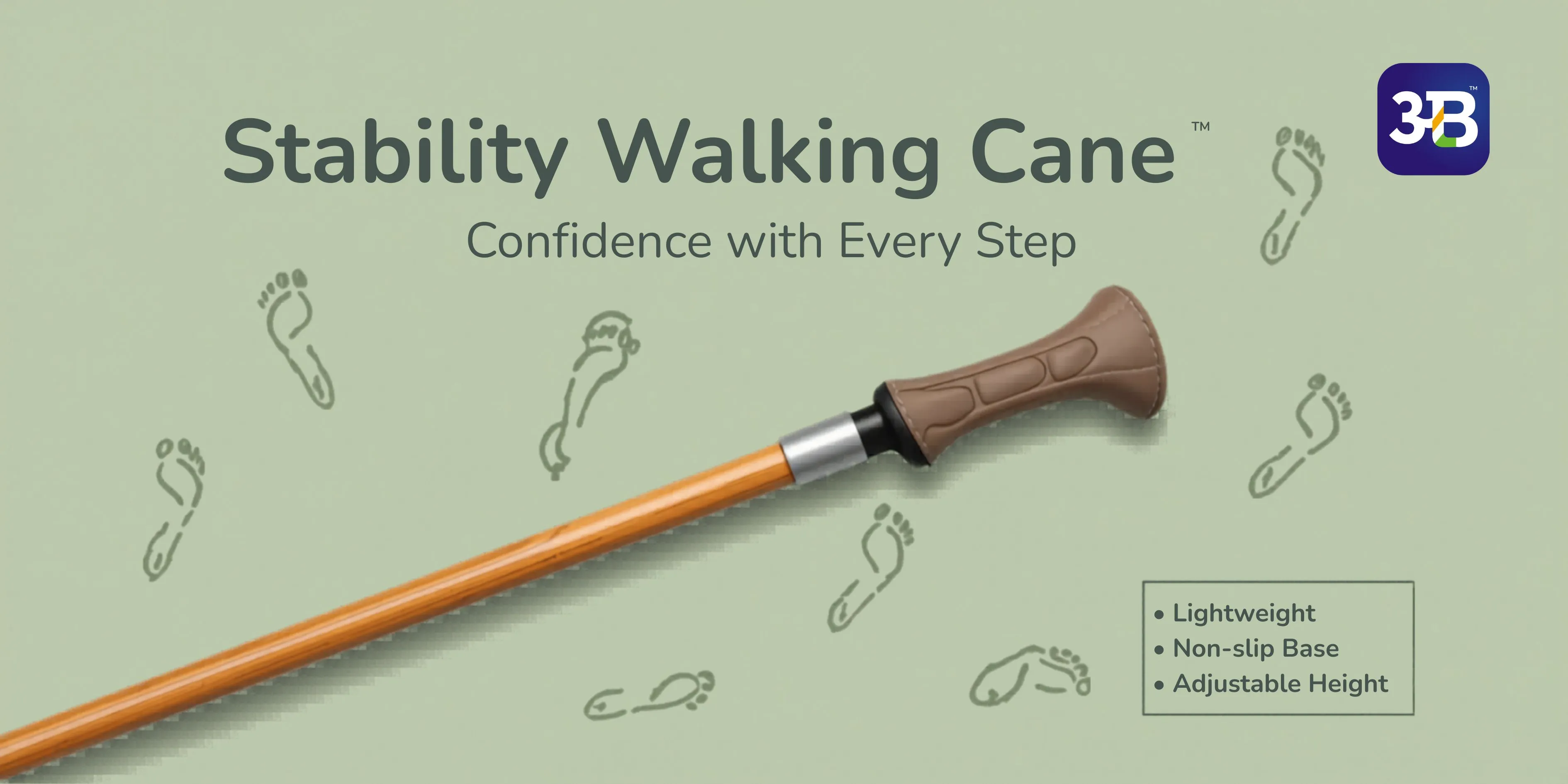
Why Daily Balance Support is Important for Elderly
Individuals
As people age, maintaining balance becomes increasingly
difficult due to natural physical changes such as reduced muscle strength,
slower reflexes, weaker joints, and decreased coordination, which can make even
simple daily activities like walking around the home, climbing stairs, or
moving outdoors more challenging and risky, increasing the chances of slips,
falls, and injuries that can greatly impact confidence and independence, and
this is why proper balance support becomes essential for elderly individuals
who want to continue living safely and actively without depending heavily on
caregivers or family members, and a walking stick serves as one of the most
effective and simple mobility aids for this purpose because it provides an
additional point of contact with the ground, helping users maintain better
stability, posture, and walking control throughout the day, while platforms
like Aarogyaa Bharat continue to highlight these mobility solutions across
Aarogyaa Bharat Hospital Pages where rehabilitation and elderly care are
emphasized, along with Aarogyaa Bharat City Pages that help users find suitable
mobility products nearby and tools like the Healthcare Calculator that support
better product comparison and decision-making.
What is a Walking Stick and How Does it Improve Daily
Balance
A walking stick, also commonly known as a cane, is a
lightweight mobility aid designed to assist elderly individuals and patients
who require additional support while walking, and it works by helping
distribute body weight more evenly while reducing pressure on weak joints and
muscles, making movement safer and less physically demanding, especially for
seniors who experience mild balance problems, joint pain, or muscle weakness,
and modern walking sticks are designed with features such as adjustable height settings,
ergonomic handles, lightweight aluminium frames, and anti-slip rubber tips that
improve grip, comfort, and stability, allowing users to move confidently in
both indoor and outdoor environments, while also promoting better posture and
reducing strain on the back and legs, and Aarogyaa Bharat offers a wide range
of walking sticks with detailed guidance through Aarogyaa Bharat Hospital Pages
and Aarogyaa Bharat City Pages to help users choose the best support solution
according to their daily mobility needs.
Key Benefits of Using a Walking Stick for Daily Balance
Using a walking stick for daily balance provides several
important benefits that improve both safety and quality of life for elderly
individuals, as it helps reduce the risk of falls by improving stability during
movement, supports better posture while walking, reduces pressure on knees,
hips, and ankles, and gives users greater confidence while performing daily
tasks such as walking around the house, visiting markets, or spending time
outdoors, while also encouraging mobility and physical activity that contribute
to better overall health and mental well-being, and walking sticks are
especially useful for elderly individuals recovering from surgery or
experiencing age-related mobility challenges because they allow users to remain
active without excessive physical strain, and Aarogyaa Bharat emphasizes these
advantages through its Healthcare Calculator and expert-backed product
recommendations that guide users toward selecting high-quality mobility aids
suitable for long-term daily use.
Different Types of Walking Sticks for Elderly Users
There are several types of walking sticks available for
elderly individuals depending on the level of support required, including
standard single-point walking sticks that provide basic support and are ideal
for mild balance issues, quad canes with four-point bases that offer enhanced
stability for users with greater mobility concerns, folding walking sticks that
are lightweight and portable for travel convenience, and ergonomic walking
sticks that feature specially designed handles to improve grip comfort and
reduce wrist strain, making it important to choose the right type according to
the user’s physical condition, daily routine, and comfort preferences, and
Aarogyaa Bharat provides detailed product categories and interlinking through
Aarogyaa Bharat City Pages and Healthcare Calculator tools to help users
compare and select the most suitable walking stick for their needs.
Comparison Table of Walking Sticks
|
Walking
Stick Type |
Best For |
Key
Features |
Support
Level |
|
Standard
Walking Stick |
Mild balance
support |
Lightweight,
easy handling |
Medium |
|
Quad Cane |
Extra
stability needs |
Four-point
base, strong balance |
High |
|
Folding
Walking Stick |
Travel and
portability |
Foldable,
compact design |
Medium |
|
Ergonomic
Walking Stick |
Comfortable
daily use |
Soft grip,
reduced wrist pressure |
Medium-High |
Important Features to Look for Before Buying a Walking
Stick
Choosing the right walking stick requires careful attention
to features that directly affect safety, comfort, and long-term usability, such
as adjustable height settings that ensure proper posture and reduce body
strain, lightweight yet durable materials that make handling easier for elderly
users, ergonomic handles that improve grip comfort during extended use,
anti-slip rubber tips that provide better traction on different surfaces, and
foldable designs that allow convenient storage and portability, while some
advanced walking sticks also include shock-absorbing mechanisms and LED
lighting for additional safety during nighttime walking, and Aarogyaa Bharat
simplifies the buying process by offering detailed product comparisons, expert
recommendations, and interlinking through Aarogyaa Bharat Hospital Pages and
Healthcare Calculator tools that help users make informed decisions based on
their individual mobility needs.
How to Use a Walking Stick Correctly for Better Balance
Using a walking stick correctly is extremely important for
achieving maximum support and preventing injuries, and users should hold the
walking stick in the hand opposite to the weaker or affected leg, move the
stick forward together with the weaker leg while maintaining an upright
posture, and ensure that the stick is firmly placed on the ground before taking
each step, while also avoiding excessive leaning on the stick as it may affect
natural balance and posture, and proper usage techniques not only improve
walking efficiency but also help reduce fatigue and discomfort during long
periods of movement, and Aarogyaa Bharat provides educational guidance and
expert recommendations to help elderly users understand the safest and most
effective ways to use walking sticks in their daily routine.
Key Advantages of Walking Sticks for Daily Mobility
- Improves
daily balance and stability
- Reduces
fall and injury risk
- Supports
better posture while walking
- Minimizes
strain on joints and muscles
- Enhances
confidence and independence
- Lightweight
and easy to carry
- Suitable
for indoor and outdoor use
Indoor and Outdoor Use of Walking Sticks
Walking sticks are highly versatile mobility aids that can
be used effectively in both indoor and outdoor environments, as they provide
reliable support while moving around the home, climbing stairs, walking through
corridors, or performing household activities indoors, while also helping users
navigate outdoor spaces such as parks, markets, sidewalks, and community areas
with greater safety and confidence, and selecting a walking stick with a strong
anti-slip tip and comfortable grip becomes especially important for outdoor use
where surfaces may be uneven or slippery, and Aarogyaa Bharat helps users
choose the most suitable walking sticks for different environments through
Aarogyaa Bharat City Pages and detailed product guidance.
Safety Tips for Using Walking Sticks Daily
Safety should always be a priority when using a walking
stick, and elderly users should regularly inspect the rubber tip for wear and
tear, ensure the height adjustment remains secure, avoid slippery or uneven
surfaces whenever possible, maintain a steady walking pace, and use proper
footwear with anti-slip soles for better grip and stability, while also storing
the walking stick in a safe and accessible place when not in use, and Aarogyaa
Bharat highlights these safety practices through its healthcare resources and
expert product recommendations to help users maintain safer mobility habits in
daily life.
Maintenance Tips for Long-Term Durability
Proper maintenance of a walking stick ensures long-lasting
performance and reliable support, and users should clean the walking stick
regularly to remove dust and dirt, check screws and adjustable parts for
stability, replace worn-out rubber tips promptly, and store the walking stick
in a dry area to prevent rust or material damage, while routine care not only
improves durability but also ensures continued safety and comfort during daily
use, and Aarogyaa Bharat provides maintenance guidance and replacement support
through its platform for better long-term mobility care.
Latest Innovations in Walking Sticks (2026)
In 2026, walking sticks have evolved with modern innovations
such as ergonomic gel handles, lightweight aerospace-grade aluminium frames,
shock-absorbing systems, LED lighting for nighttime visibility, and foldable
smart designs that improve convenience and safety for elderly users, making
them more efficient and comfortable for everyday mobility needs, and Aarogyaa
Bharat ensures access to these latest innovations through its curated product
listings and expert-backed recommendations.
Conclusion
A walking stick for elderly daily balance is a simple yet highly effective mobility aid that improves stability, confidence, and independence while reducing the risk of falls and physical strain, and by choosing the right walking stick, understanding its features, and following proper usage and maintenance practices, elderly individuals can enjoy safer and more comfortable daily mobility both indoors and outdoors, while Aarogyaa Bharat continues to support this journey through its comprehensive range of mobility products, Aarogyaa Bharat Hospital Pages, Aarogyaa Bharat City Pages, and Healthcare Calculator tools, helping users make informed healthcare decisions and improve their quality of life.





