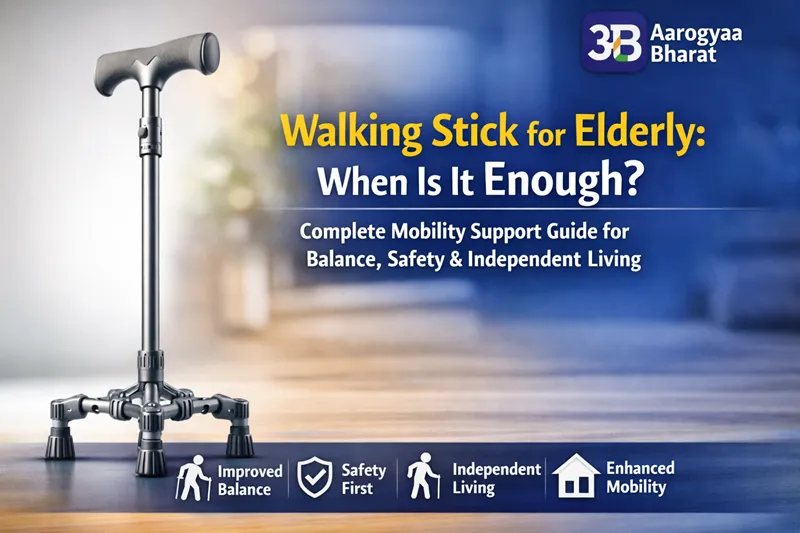
A walking stick for elderly can provide adequate support for mild balance issues, helping improve stability and confidence during daily activities. At Aarogyaa Bharat, we guide seniors in choosing the right mobility aid to ensure safety, comfort, and independent living at home and outdoors.
Understanding the Role of a Walking Stick in Elderly
Mobility
As seniors age, minor balance issues, joint stiffness, or
muscle weakness can make walking more challenging, and a walking stick becomes
a helpful support tool that enhances stability without restricting natural
movement. Unlike walkers, walking sticks provide single-point assistance,
making them suitable for individuals who still have good overall mobility but
need light balance support. Many elderly individuals prefer walking sticks
because they are lightweight, portable, and easy to use indoors or outdoors.
Families planning mobility solutions often explore mobility aid categories
along with rehabilitation sections to understand how walking sticks fit into
broader elderly care strategies that prioritize independence while maintaining
safety.
When a Walking Stick Is Enough for Elderly Support
A walking stick is usually enough when seniors experience
mild balance challenges rather than severe mobility limitations. Individuals
who can walk independently but feel slightly unsteady on uneven surfaces or
during longer walks often benefit from a walking stick. Seniors with
early-stage arthritis, minor knee discomfort, or reduced stamina may use a
walking stick to reduce strain while maintaining an active lifestyle.
Caregivers frequently assess posture, walking speed, and endurance before
deciding whether a walking stick is sufficient or if stronger support such as a
walker may be required. Exploring rehabilitation categories helps families
align mobility aids with physiotherapy routines that improve balance over time.
Signs That a Walking Stick May Be the Right Choice
Choosing a walking stick becomes appropriate when seniors
show signs of mild instability but still maintain independent movement. If an
elderly individual occasionally loses balance, prefers light support while
climbing steps, or needs assistance during outdoor walks, a walking stick can
provide enough stability without limiting mobility. Seniors who walk at a
steady pace without frequent falls or severe weakness typically find walking
sticks comfortable for daily use. Families often explore elderly care solutions
and mobility aid sections to compare walking sticks with walkers, ensuring that
the chosen support level matches the individual’s needs.
Benefits of Using a Walking Stick for Daily Mobility
Walking sticks offer several advantages for elderly
individuals who require minimal support. They help distribute weight away from
painful joints, reducing pressure on knees, hips, and lower back. Using a
walking stick encourages better posture and balance, which lowers the risk of
sudden slips or missteps. The lightweight design makes it easy for seniors to
carry the stick during daily activities or travel. Many caregivers combine
walking sticks with rehabilitation equipment and elderly care accessories such
as anti-slip mats or grab bars found within hospital pages, creating
a comprehensive safety environment that supports independent movement.
Limitations of Walking Sticks Compared to Walkers
While walking sticks are convenient, they do not provide the
same level of stability as walkers, which means they may not be suitable for
seniors with severe balance issues or post-surgery recovery needs. Individuals
who frequently rely on furniture for support or feel unsteady while standing
may require a walker instead of a walking stick. Caregivers often explore
hospital pages and mobility aid categories to determine when a
walking stick is no longer enough and when a transition to a more supportive
mobility aid becomes necessary. Understanding these limitations helps families
make informed decisions that prioritize safety.
Walking Stick vs Walker: Support Level Comparison
|
Mobility
Aid |
Support
Level |
Best For |
Daily
Usage |
|
Walking Stick |
Light support |
Mild balance
issues |
Indoor &
outdoor walking |
|
Standard
Walker |
High
stability |
Weak balance
or recovery |
Indoor
mobility |
|
Front-Wheel
Walker |
Moderate
support |
Daily walking
assistance |
Home mobility |
|
Rollator
Walker |
Mobility with
rest support |
Active
seniors |
Indoor &
outdoor use |
Health Conditions Where a Walking Stick Works Well
Walking sticks are often suitable for seniors managing
early-stage arthritis, mild knee pain, or slight coordination challenges.
Individuals recovering from minor injuries may use a walking stick to regain
confidence while gradually increasing mobility. Seniors who experience fatigue
during longer walks may find that a walking stick reduces strain without
restricting movement. Caregivers frequently explore rehabilitation sections to
integrate walking stick use with physiotherapy exercises that strengthen muscles
and improve balance, ensuring that mobility support evolves with recovery
progress.
Proper Walking Stick Height and Fit
Correct sizing is essential to ensure that a walking stick
provides effective support. The handle should align with wrist level when the
senior stands upright, allowing elbows to bend slightly and maintain natural
posture. A poorly adjusted walking stick can cause shoulder or wrist strain and
reduce stability. Families exploring mobility aid categories often compare
adjustable walking sticks that allow customization based on height and comfort
preferences, ensuring safe and ergonomic usage during daily movement.
Indoor and Outdoor Uses of Walking Sticks
Walking sticks are highly versatile and suitable for both
indoor and outdoor environments when chosen correctly. Indoors, they help
seniors move safely between rooms without bulky equipment, while outdoors they
provide support on uneven surfaces or longer walking routes. Seniors who enjoy
social activities or light exercise often prefer walking sticks because they
offer freedom of movement while maintaining balance. Families frequently
integrate walking sticks with elderly care solutions such as anti-slip flooring
supports and transfer aids found within hospital pages, creating a
seamless mobility experience.
When a Walking Stick Is No Longer Enough
Although walking sticks provide effective support for mild
mobility challenges, there are situations where stronger assistance becomes
necessary. If a senior experiences frequent falls, struggles to stand without
support, or shows signs of severe weakness after surgery, transitioning to a
walker may be safer. Caregivers often monitor changes in mobility and consult
rehabilitation categories to determine when additional support is required.
Recognizing these signs early helps prevent injuries and ensures that seniors
receive the appropriate level of assistance.
Safety Tips for Using a Walking Stick
Using a walking stick safely requires proper posture and
consistent practice. Seniors should hold the stick on the opposite side of the
weaker leg to distribute weight evenly and improve balance. Walking at a steady
pace and avoiding slippery surfaces further enhances safety. Caregivers should
regularly inspect the rubber tip and handle to ensure that the stick remains
stable during use. Combining walking sticks with hospital safety accessories
such as grab bars and anti-slip mats from elderly care sections provides
additional protection and reduces fall risks.
Cost and Practical Considerations
Walking sticks are generally more affordable than walkers,
making them an accessible option for seniors who require light support.
Adjustable designs and durable materials ensure long-term usability without
significant maintenance costs. Families often use healthcare calculators and
elderly care planning tools to evaluate expenses when mobility aids are part of
a larger home healthcare plan that includes rehabilitation equipment, beds, and
transfer accessories. Choosing a high-quality walking stick ensures reliability
while supporting everyday independence.
Important Feature Checklist Before Choosing a Walking
Stick
|
Feature |
Why It
Matters |
What to
Check |
|
Adjustable
Height |
Proper
posture alignment |
Wrist-level
handle position |
|
Rubber Tip |
Stability on
floors |
Anti-slip
durable base |
|
Grip Comfort |
Reduced wrist
strain |
Ergonomic
handle design |
|
Lightweight
Frame |
Easy handling |
Aluminium
construction |
|
Foldable
Design |
Travel
convenience |
Secure
folding mechanism |
Emotional and Psychological Benefits of Using a Walking
Stick
Mobility aids not only improve physical stability but also
enhance emotional confidence by allowing seniors to remain independent. A
walking stick gives elderly individuals the freedom to move safely without
feeling restricted, which can reduce anxiety and improve overall well-being.
Seniors who maintain mobility often feel more motivated to participate in daily
routines, social activities, and light exercise. Families often combine walking
sticks with rehabilitation equipment and elderly care solutions to create a
supportive environment that promotes both physical and emotional health.
Conclusion
A walking stick for elderly individuals can be enough when
balance challenges are mild and independence remains strong. By understanding
when a walking stick is suitable and recognizing when stronger support may be
required, families can create a safe mobility plan that evolves with changing
needs. Exploring mobility aid categories, hospital pages,
rehabilitation sections, elderly care solutions, and healthcare planning tools
helps build a comprehensive environment that supports confident movement and
long-term independence. Choosing the right mobility aid ensures safety,
comfort, and dignity for seniors in their daily lives.