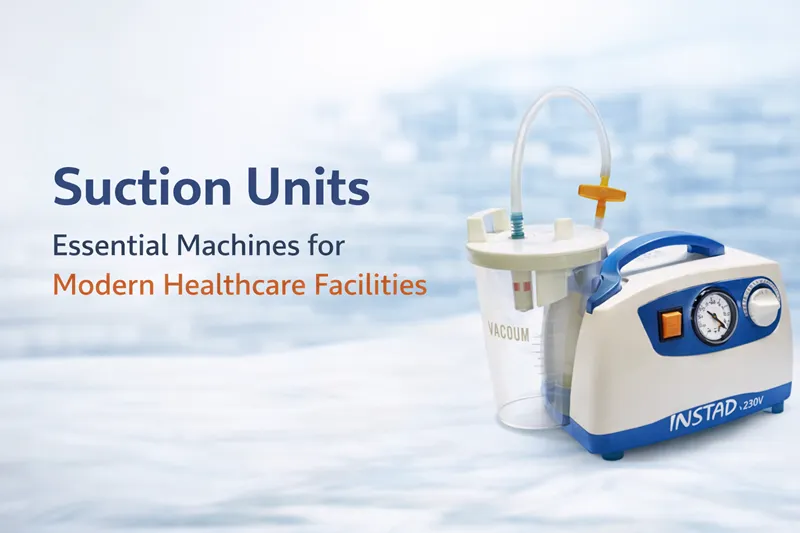
In real-world healthcare settings, suction units are not considered optional equipment. They are a core requirement found in hospitals, nursing homes, clinics, ambulances, operation theatres, intensive care units, dental practices, and increasingly, in home healthcare environments. Whenever a patient is unable to clear secretions independently, or when fluids obstruct breathing or visibility, suction units become critical support systems.
As healthcare standards evolve and patient safety protocols become stricter, the importance of reliable, efficient, and easy-to-operate suction units continues to grow. Modern suction machines are engineered to deliver consistent negative pressure, support multiple clinical applications, and operate safely under continuous or emergency use. Their role spans from routine bedside care to life-saving interventions, making them an indispensable part of modern medical infrastructure.
Understanding Suction Units in Healthcare
A suction unit is a medical device designed to generate controlled negative pressure in order to remove unwanted fluids or gases from a patient’s body. These fluids may include mucus, saliva, blood, vomitus, pus, irrigation fluids, or other secretions that can block airways or interfere with medical procedures.
By clearing these obstructions, suction units help:
- Maintain airway patency
- Improve oxygenation and ventilation
- Reduce the risk of aspiration
- Enhance procedural visibility
- Support faster and safer medical intervention
Suction units are used by doctors, nurses, anesthesiologists, paramedics, dentists, surgeons, and trained caregivers across healthcare environments. They are especially critical for patients who are unconscious, intubated, neurologically impaired, elderly, or unable to clear secretions due to illness or injury.
In both acute and long-term care, reliable suction ensures uninterrupted treatment and reduces complications such as aspiration pneumonia, respiratory distress, and infection.
Role of Suction Units in Emergency and Critical Care
In emergency medicine and critical care, suction units are often among the first devices used during patient stabilization. In situations such as cardiac arrest, trauma, choking, seizures, respiratory failure, or severe infections, secretions and fluids can rapidly obstruct the airway.
Immediate suctioning:
- Prevents airway blockage
- Improves oxygen delivery
- Allows rapid intubation
- Supports effective resuscitation
Portable suction units are standard equipment in ambulances and emergency response vehicles because they allow paramedics to manage airways before the patient reaches a hospital. In emergency rooms, suction units support rapid triage, trauma care, and airway protection in unpredictable, high-pressure environments.
In intensive care units, suction units are vital for patients on mechanical ventilation. Regular suctioning of endotracheal and tracheostomy tubes helps:
- Prevent ventilator-associated pneumonia
- Improve lung expansion
- Maintain oxygen saturation
- Reduce ICU complications
The reliability and availability of suction units in critical care settings directly influence patient outcomes and survival rates.
Suction Units in Surgical and Operation Theatre Settings
Suction units are indispensable in operation theatres, where they are used continuously during surgical procedures. Blood, irrigation fluids, and tissue debris must be removed promptly to maintain a clear surgical field and allow surgeons to work with precision and confidence.
In surgical settings, suction units help:
- Maintain visibility
- Reduce operative time
- Minimize blood loss complications
- Support infection control
- Improve surgical accuracy
During long or complex surgeries, uninterrupted suction performance is essential. Any loss of suction can compromise the procedure and increase the risk of complications. For this reason, operation theatres often use high-capacity electric suction units with backup systems.
Suction units also assist in post-operative recovery by clearing secretions and preventing airway compromise in sedated or recovering patients.
Types of Suction Units Used in Healthcare Facilities
Healthcare facilities use different types of suction units based on clinical requirements, mobility needs, and care settings.
Electric Suction Units
Electric suction machines are commonly used in hospitals, ICUs, and operation theatres. They provide strong, continuous suction and are ideal for prolonged procedures and critical care.
Portable Suction Units
Portable suction units are compact, lightweight, and often battery-operated. They are widely used in ambulances, emergency rooms, home healthcare, and patient transport scenarios.
Manual Suction Units
Manual suction devices are used in disaster response, rural healthcare, and situations where electricity is unavailable. They provide essential airway support in remote or emergency conditions.
Specialized Suction Units
Certain suction units are designed specifically for:
- Dental procedures
- Neonatal and pediatric care
- ENT applications
- Airway management
This wide variety ensures that suction support is available across every level of healthcare delivery.
Importance of Hygiene and Infection Control
Suction units play a crucial role in infection prevention and control. They safely remove contaminated fluids and prevent their spread within healthcare environments.
Modern suction systems are designed with:
- Closed collection jars
- Antibacterial and hydrophobic filters
- Secure tubing connections
- Spill-resistant containers
These features protect healthcare workers from exposure and reduce the risk of cross-contamination. Proper disposal of suction canisters and adherence to cleaning protocols further enhance safety.
In infectious disease management and critical care, effective suction systems are essential for protecting both patients and medical staff.
Reliability, Safety, and Performance Standards
Because suction units are used in life-critical situations, reliability is non-negotiable. A suction machine must:
- Start instantly
- Maintain stable pressure
- Operate continuously without failure
- Withstand repeated use and cleaning
High-quality suction units are manufactured to meet strict medical safety and regulatory standards. Regular maintenance, staff training, and quality sourcing are essential to ensure optimal performance.
Equipment failure during emergencies or surgeries can have serious consequences, making investment in reliable suction units a priority for healthcare facilities.
Use of Suction Units in Home Healthcare
With the growth of home healthcare, suction units are increasingly used outside hospitals to support patients with chronic respiratory conditions, neurological disorders, and post-operative care needs.
Home suction units are designed to be:
- Compact and lightweight
- Quiet in operation
- Easy for caregivers to use
- Safe for long-term use
They help manage secretions effectively at home, reducing hospital visits and improving patient comfort and dignity. Proper training and high-quality equipment ensure safe and effective home suctioning.
Role of Aarogyaa Bharat in Suction Units Supply
Aarogyaa Bharat supports hospitals, clinics, emergency services, and home healthcare providers by enabling access to reliable and quality-assured suction units. The platform works with verified manufacturers to ensure all suction machines meet clinical, safety, and performance standards.
By simplifying procurement, offering transparent specifications, and ensuring dependable after-sales support, Aarogyaa Bharat helps healthcare facilities source suction units they can trust in critical situations. This strengthens both emergency preparedness and routine healthcare delivery across India.
Future of Suction Units in Healthcare
The future of suction units is driven by innovation focused on portability, energy efficiency, noise reduction, and smart controls. Newer models feature:
- Digital pressure regulation
- Battery backup systems
- Improved filtration technology
- Enhanced ergonomic design
These advancements improve safety, usability, and adaptability across diverse healthcare environments. As patient safety and rapid response continue to be top priorities, suction units will remain a cornerstone of medical care.
Conclusion
Suction units are essential machines for modern healthcare facilities because they support airway management, surgical precision, emergency response, infection control, and patient safety. Their ability to remove fluids quickly and effectively makes them indispensable in hospitals, ambulances, clinics, ICUs, and home healthcare settings.
Reliable suction units directly contribute to better clinical outcomes, reduced complications, and safer healthcare delivery. Investing in high-quality suction units is therefore a fundamental requirement for any healthcare facility committed to excellence in patient care.