What Is Sudden Cardiac Arrest (SCA)?
Sudden cardiac arrest occurs when the heart’s electrical
system malfunctions, causing the heart to stop pumping blood. As a result:
- Oxygen
supply to the brain stops
- The
person becomes unconscious within seconds
- Normal
breathing stops or becomes irregular
SCA is different from a heart attack. A heart attack is
caused by blocked blood flow to the heart muscle, while cardiac arrest is an
electrical failure. However, a heart attack can sometimes trigger cardiac
arrest.
Why Sudden Cardiac Arrest Is So Dangerous
- Brain
damage can begin within 4-6 minutes
- Survival
chances drop by about 10% every minute without treatment
- Most
cases occur outside hospitals, often at home
Immediate action CPR and defibrillation is the only way to
prevent death.
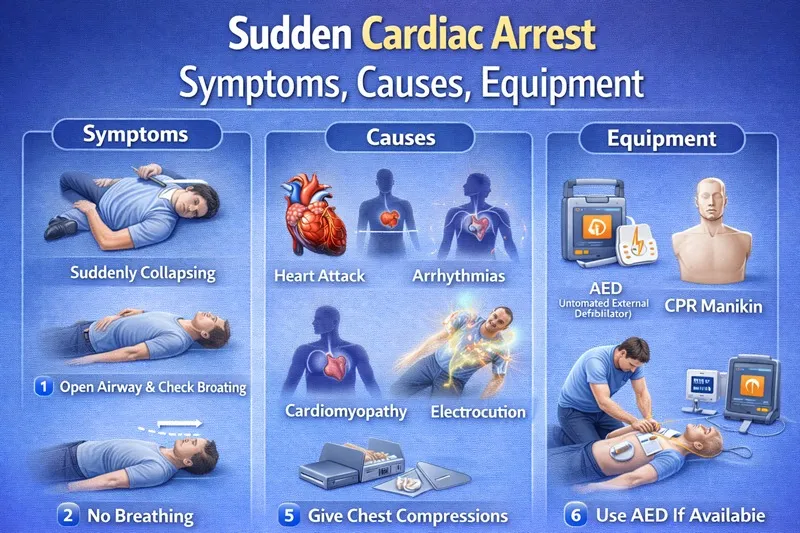
Symptoms of Sudden Cardiac Arrest
Sudden cardiac arrest symptoms appear abruptly and
dramatically.
Common Warning Signs
- Sudden
collapse
- Loss
of consciousness
- No
pulse
- No
breathing or abnormal gasping
Possible Early Warning Symptoms (Minutes to Hours Before)
Some people may experience warning signs before SCA,
including:
- Chest
discomfort
- Shortness
of breath
- Palpitations
- Dizziness
or fainting
- Extreme
fatigue
These symptoms should never be ignored, especially in
individuals with heart disease.
Causes of Sudden Cardiac Arrest
Sudden cardiac arrest is usually caused by an abnormal heart
rhythm (arrhythmia), most commonly ventricular fibrillation.
1. Heart Rhythm Disorders
Irregular electrical activity prevents the heart from
pumping blood properly.
2. Coronary Artery Disease
Blocked or narrowed arteries reduce blood flow to the heart,
increasing the risk of fatal arrhythmias.
3. Heart Attack
Damage to heart muscle can disrupt electrical signals and
trigger SCA.
4. Cardiomyopathy
Enlarged or thickened heart muscle can interfere with normal
heart rhythm.
5. Congenital Heart Conditions
Structural heart defects present from birth can increase SCA
risk, even in young people.
6. Severe Electrolyte Imbalance
Abnormal potassium or magnesium levels can affect heart
rhythm.
7. Drug Use and Medications
Certain drugs, including illicit substances and some
medications, can trigger dangerous arrhythmias.
8. Physical Stress or Trauma
Extreme exertion, electric shock, or blunt chest trauma can
also cause SCA.
Who Is at Higher Risk of Sudden Cardiac Arrest?
People at higher risk include:
- Individuals
with heart disease
- Previous
heart attack survivors
- People
with heart failure
- Family
history of sudden cardiac death
- Athletes
with undiagnosed heart conditions
- Older
adults, though SCA can affect any age
Equipment Used in Sudden Cardiac Arrest
Timely use of proper equipment can mean the difference
between life and death.
1. Automated External Defibrillator (AED)
The AED is the most critical piece of equipment for treating
sudden cardiac arrest.
What It Does
- Analyses
heart rhythm
- Delivers
an electric shock if needed
- Restores
normal heart rhythm
Why It’s Life-Saving
- Simple
voice-guided instructions
- Can
be used by non-medical people
- Widely
placed in public areas
Early defibrillation greatly increases survival chances.
2. CPR Equipment
Although CPR can be performed without equipment, certain
tools enhance effectiveness.
Examples
- CPR
face shields or masks
- Bag-valve
masks (BVM) in medical settings
These help provide oxygen while performing chest
compressions.
3. Cardiac Monitors
Used in ambulances and hospitals.
Purpose
- Monitor
heart rhythm
- Guide
advanced treatment
4. Oxygen Supply Equipment
- Oxygen
cylinders
- Oxygen
masks
Used to support breathing once circulation is restored.
5. Advanced Life Support Equipment
Used by trained professionals:
- Defibrillators
- IV
medications
- Airway
management devices
Immediate Response to Sudden Cardiac Arrest
If someone collapses suddenly:
- Check
responsiveness
- Call
emergency services
- Start
CPR immediately
- Use
an AED as soon as available
- Continue
until help arrives
Quick action saves lives.
Prevention of Sudden Cardiac Arrest
While not all cases can be prevented, risk can be reduced
by:
- Managing
heart disease
- Controlling
blood pressure and cholesterol
- Avoiding
smoking and drug abuse
- Regular
medical check-ups
- Screening
for heart conditions in high-risk individuals
Life After Surviving Sudden Cardiac Arrest
Survivors often require:
- Heart
rhythm monitoring
- Medications
- Implantable
cardioverter-defibrillators (ICDs)
- Lifestyle
changes
With proper care, many survivors return to a good quality of
life.
Conclusion
Sudden cardiac arrest is a medical emergency that demands
immediate action. Recognizing the symptoms, understanding the causes, and
knowing about the life-saving equipment used in treatment can dramatically
improve survival outcomes.
Every minute counts. Awareness, preparedness, and quick
response save lives.
At Aarogyaa Bharat, we are committed to spreading reliable,
easy-to-understand health information that empowers individuals, caregivers,
and communities to act confidently in emergencies.