Introduction :
In this blog, we’ll break down the main types of hospital beds, their features, and who they are best suited for — so you can make a smart and informed decision for your loved one or facility.
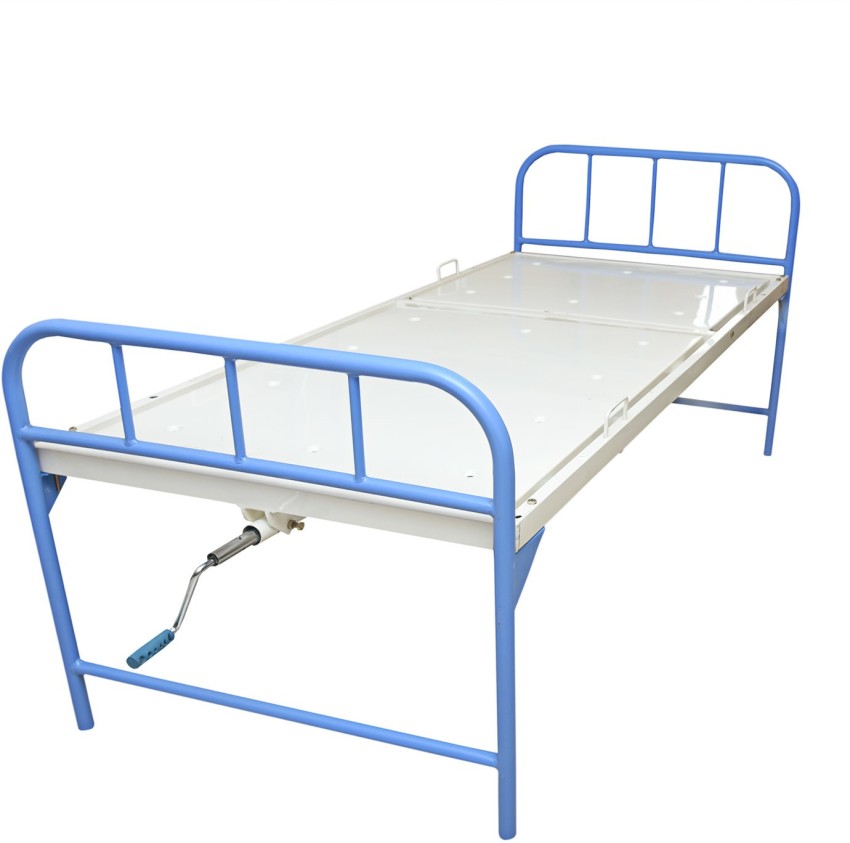
1. Manual Hospital Beds
Overview:
Manual hospital beds require hand cranks to adjust the height and head/foot sections. They're affordable but need physical effort for adjustments.
Best For:
Patients with limited repositioning needs
Hospitals with basic setups
Short-term recovery use
Features:
No electricity required
Lower cost
Durable build
Basic adjustability
Limitation:
Caregivers must be physically involved for every adjustment.

2. Semi-Electric Hospital Beds
Overview:
These beds feature an electric motor to adjust the head and foot sections, while the height is adjusted manually.
Best For:
Home caregivers
Elderly or post-operative patients
Mid-range budgets
Features:
Electric adjustments for comfort
Manual crank for height control
Better than manual beds in ease of use
Limitation:
Height still needs manual adjustment.

3. Fully Electric Hospital Beds
Overview:
All bed functions — including height, head, and leg positions — are controlled via remote or panel, offering full independence and ease.
Best For:
Long-term or palliative care
Home recovery setups
Disabled or completely bedridden patients
Features:
Easy remote operation
Adjustable to multiple positions
Often includes side rails for added safety

4. ICU Hospital Beds
Overview:
Designed for intensive care units, these beds support critical care equipment, monitoring systems, and full adjustability.
Best For:
Critical patients
Trauma or surgery units
Ventilator-dependent patients
Features:
Integrated scales, oxygen holders
Central locking wheels
CPR and Trendelenburg position features
Anti-bedsore mattresses

5. Bariatric Hospital Beds
Overview:
These are built for obese or overweight patients, with higher weight capacities and wider frames.
Best For:
Obese or bariatric patients
Nursing homes
Long-term home care
Features:
Heavy-duty frame
High-capacity motor
Reinforced mattress support

6. Pediatric Hospital Beds
Overview:
Specifically designed for infants and children, these beds are safer, smaller, and more comfortable for young patients.
Best For:
Pediatric hospitals
Home care for chronically ill children
Features:
Child-safe rails
Fun themes and soft padding
Height-appropriate design
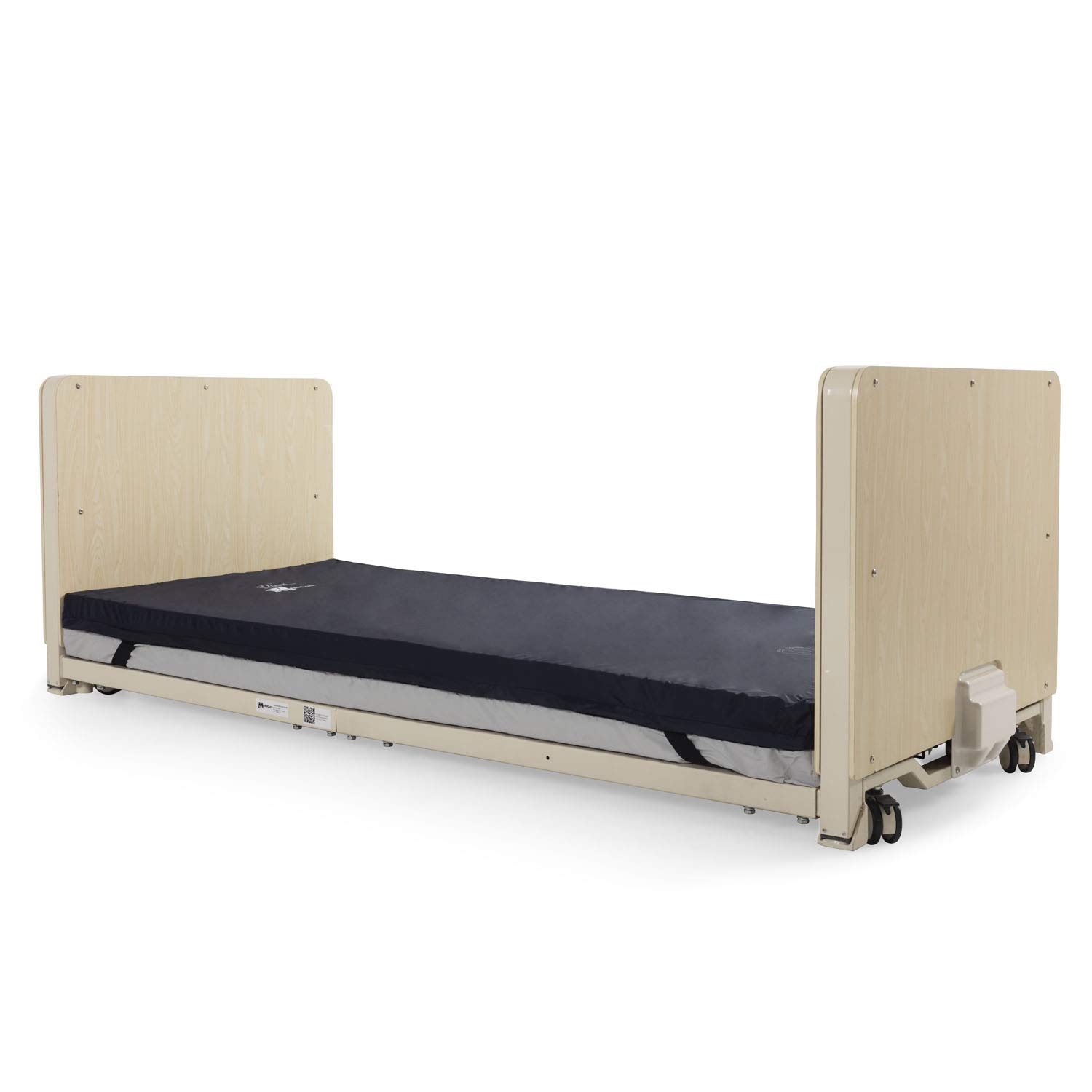
7. Low Hospital Beds
Overview:
Low hospital beds are closer to the ground, which helps prevent falls and is easier for patients to get in and out of.
Best For:
Elderly patients
People with dementia or high fall risk
Home care settings
Features:
Fall-prevention design
Easy access
Can be paired with floor mats for extra safety

8. Air & Alternating Pressure Beds
Overview:
These beds use alternating pressure air mattresses to prevent bedsores in patients who can’t move frequently.
Best For:
Paralysed or comatose patients
Long-term bedridden care
ICU and palliative setups
Features:
Pressure-relieving air cycles
Customizable firmness
Backup power support
How to Choose the Right Hospital Bed?
Before selecting a hospital bed, consider:
Duration of use: Short-term or long-term?
Patient’s mobility: Can the user operate the bed?
Room space: Will the bed fit?
Weight capacity: Especially important for bariatric care
Caregiver support: Will the caregiver need help with adjustments?
You can buy or rent hospital beds online through trusted platforms like Aarogyaa Bharat for doorstep delivery and service support.
Frequently Asked Questions (FAQs)
1. Which hospital bed is best for home care?
A fully electric bed is ideal for home care due to its ease of use and comfort features, especially for long-term or elderly patients.
2. Can I rent a hospital bed instead of buying?
Yes, many medical suppliers like Aarogyaa Bharat offer hospital beds on rent, which is a cost-effective option for short-term needs.
3. What is the weight limit of bariatric hospital beds?
Bariatric beds typically support 500 to 1000 lbs and are built with reinforced frames and high-powered motors.
4. Do hospital beds come with mattresses?
Most hospital beds include a basic mattress, but specialty mattresses like air pressure or memory foam are available separately or as an upgrade.
5. Are hospital beds covered under health insurance or government schemes?
Some government health programs or insurance providers may cover hospital bed costs. It’s advisable to check eligibility before purchase.
Final Thoughts
Choosing the right hospital bed is not just a purchase — it’s a vital step in healing and comfort. Whether you're caring for a loved one at home or managing a healthcare facility, understanding the types of hospital beds can help you provide the best support and recovery.
If you're looking to rent or buy a hospital bed, explore premium options at Aarogyaa Bharat — your one-stop destination for medical equipment delivery across India.