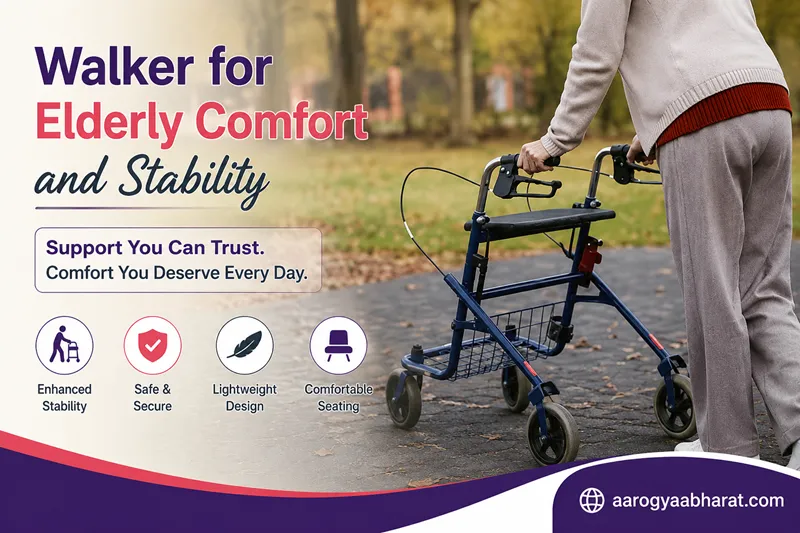
Why Comfort and Stability Matter for Elderly Mobility
As people grow older, walking and moving around can become more difficult than before. Age-related issues such as weaker muscles, joint pain, arthritis, reduced balance, slower reflexes, and fatigue often make everyday activities tiring and sometimes unsafe. Simple tasks like walking indoors, standing for long periods, visiting hospitals, shopping, or moving outdoors may feel challenging for elderly individuals.
In many cases, the fear of falling also affects confidence and independence, causing seniors to avoid movement altogether. This is why mobility aids that provide both comfort and stability are extremely important. A well-designed walker helps seniors move safely, reduces pressure on joints and muscles, improves posture, and supports more balanced walking. With the right walker, elderly individuals can stay active and independent without relying heavily on family members or caregivers.
Platforms like Aarogyaa Bharat continue to support elderly healthcare through Hospital Pages focused on rehabilitation and mobility care, City Pages that help users locate suitable mobility aids nearby, and Healthcare Calculator tools that simplify product comparison according to individual mobility needs.
What is a Comfort and Stability Walker?
A comfort and stability walker is a specially designed mobility aid that provides safe support and improved walking comfort for elderly individuals who experience balance problems, weakness, joint pain, or mobility limitations. Unlike basic walking aids that only provide support, these walkers are built to make movement smoother, safer, and less tiring.
Modern walkers include features such as lightweight yet durable frames, adjustable height settings, ergonomic hand grips, anti-slip rubber tips or smooth wheels, padded seating options, and foldable designs. These features help seniors walk with greater comfort while reducing physical strain and fatigue during daily activities.
Whether used indoors or outdoors, comfort and stability walkers help elderly users maintain confidence and independence in their routine lives. Aarogyaa Bharat offers different types of walkers to help users choose suitable mobility solutions according to their physical condition and lifestyle.
Benefits of Using a Walker for Comfort and Stability
Using a walker provides many important benefits for elderly users:
- Improves balance and walking confidence
- Reduces the risk of slips and falls
- Minimizes pressure on weak joints and muscles
- Helps maintain proper posture while walking
- Makes daily activities easier and less tiring
- Supports independent indoor and outdoor movement
- Encourages regular physical activity and mobility
- Helpful during recovery from surgery or injury
Walkers are especially useful for seniors dealing with arthritis, age-related weakness, or recovery after medical procedures because they provide reliable support along with better comfort during movement.
Types of Walkers for Elderly Comfort and Stability
Different walkers are designed for different mobility needs. Choosing the right type depends on the user’s balance condition, strength, and lifestyle.
| Walker Type | Best For | Key Features | Support Level |
|---|---|---|---|
| Standard Walker | Maximum balance support | Strong frame, anti-slip support | High |
| Two-Wheel Walker | Smooth indoor movement | Front wheels, lightweight design | Medium-High |
| Rollator Walker | Comfortable long-distance walking | Brakes, seat, storage basket | High |
| Foldable Walker | Easy portability and storage | Foldable compact frame | Medium |
Important Features to Look for Before Buying
Before purchasing a walker, it is important to focus on features that improve comfort, safety, and convenience:
- Adjustable height for proper posture
- Ergonomic hand grips for better comfort
- Lightweight yet durable frame
- Anti-slip rubber tips or smooth wheels
- Reliable braking system for better control
- Foldable design for easy storage and transport
- Padded seating for resting during long walks
- Storage pouches or baskets for convenience
Aarogyaa Bharat simplifies the buying process with expert guidance and Healthcare Calculator tools that help users compare walkers according to their requirements.
How to Use a Walker Safely
Using a walker correctly is important for improving stability and preventing accidents. Elderly users should:
- Adjust the walker according to their height
- Keep elbows slightly bent while holding the grips
- Maintain an upright posture while walking
- Move the walker slowly before stepping forward
- Avoid leaning heavily on one side
- Use the walker on dry and stable surfaces
- Walk slowly and carefully around corners or obstacles
Caregivers should also help maintain clutter-free pathways inside the home to improve walking safety and confidence.
Advantages of Comfort & Stability Walkers
- Better balance and stability during walking
- Reduced risk of falls and injuries
- Comfortable support for daily movement
- Less strain on joints and muscles
- Suitable for indoor and outdoor use
- Supports independent mobility for seniors
- Encourages an active and confident lifestyle
Indoor and Outdoor Use of Walkers
Comfort and stability walkers are designed for both indoor and outdoor mobility. Indoors, they help seniors move safely around bedrooms, kitchens, hallways, and living spaces. Outdoors, they provide stable support in parks, sidewalks, hospitals, shopping areas, and community spaces.
Walkers with larger wheels are useful for uneven outdoor surfaces, while lightweight compact designs improve movement in smaller indoor spaces. This flexibility allows elderly individuals to remain active and independent throughout the day.
Safety Tips for Daily Walker Use
To improve safety while using a walker:
- Wear comfortable non-slip footwear
- Check wheels, brakes, and rubber tips regularly
- Avoid wet or slippery floors
- Walk at a slow and controlled speed
- Ensure proper lighting during nighttime movement
- Avoid carrying heavy objects while walking
- Remove loose rugs and wires from walking areas
These simple precautions can significantly reduce fall risks and improve overall mobility safety.
Maintenance Tips for Long-Term Durability
Regular maintenance helps keep walkers safe and reliable for long-term use:
- Clean the walker frame and wheels regularly
- Inspect screws and folding joints for stability
- Replace worn-out rubber tips or damaged wheels
- Lubricate moving parts when needed
- Store the walker in a dry and safe place
Proper maintenance improves product lifespan and ensures consistent mobility support.
Latest Innovations in Comfort & Stability Walkers (2026)
Modern walkers in 2026 are more advanced and user-friendly than ever before. New features include:
- Ultra-light aluminium frames
- Ergonomic comfort grips
- Silent smooth-rolling wheels
- Improved braking systems
- Foldable travel-friendly designs
- Shock-absorbing technology
- Posture-support mechanisms
These innovations focus on improving comfort, portability, and safer daily movement for elderly users.
Conclusion
A comfort and stability walker is an essential mobility aid that helps elderly individuals move more safely, comfortably, and confidently in their daily lives. By improving balance, reducing physical strain, and lowering fall risks, walkers support greater independence and a better quality of life for seniors.
Choosing the right walker, understanding its features, and following proper safety practices can make everyday movement easier and more comfortable both indoors and outdoors.
Aarogyaa Bharat continues to support elderly healthcare through mobility products, Hospital Pages, City Pages, and Healthcare Calculator tools that help users make informed healthcare decisions.