Aarogyaa Bharat (aarogyaabharat.com) provides trusted mobility aids like walkers and walking sticks designed to enhance safety, stability, and independent living for seniors across India.
Understanding Mobility Support Needs for Seniors
As seniors age, balance and muscle strength naturally
decline, making simple activities such as walking across a room or climbing
small steps more challenging. Some elderly individuals only require mild
support to maintain balance, while others need stronger stability during
movement. Choosing the right mobility aid depends on how much assistance is
needed and the individual’s physical condition. Many caregivers assess walking
patterns, posture, and recovery needs before deciding between a walker or a walking
stick. Exploring rehabilitation categories and mobility aid sections helps
families understand how different support tools can be integrated into daily
routines, ensuring that seniors remain active while reducing fall risks.
What is a Walker and How Does It Help Seniors
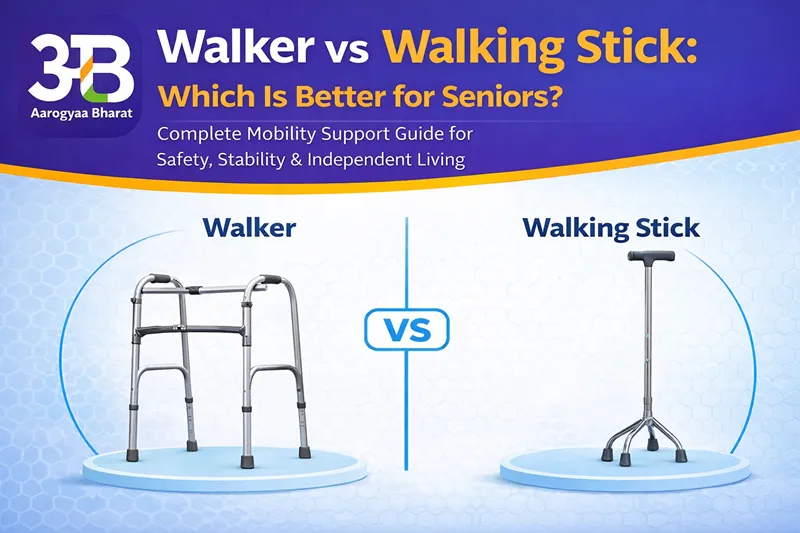
A walker is a mobility aid designed to provide maximum
stability and weight-bearing support, making it ideal for seniors who
experience weakness, post-surgery recovery, or difficulty maintaining balance.
Walkers distribute body weight evenly and create a strong support base,
allowing users to move safely without putting excessive pressure on joints.
Seniors recovering from fractures, joint replacement surgeries, or neurological
conditions often benefit from walkers because they reduce the risk of sudden
falls. Families frequently combine walkers with hospital pages that
include patient beds, transfer aids, and bedside support accessories to create
a complete mobility-friendly home setup that encourages safe movement.
What is a Walking Stick and When is it Useful
A walking stick, also known as a cane, provides lighter
support compared to a walker and is best suited for seniors who have mild
balance issues or need assistance during longer walks. Walking sticks help
maintain posture and reduce strain on one side of the body, making them useful
for individuals with minor joint discomfort or early-stage mobility challenges.
Seniors who remain active and walk independently may prefer a walking stick
because it is lightweight and easy to carry. Caregivers often explore mobility
aid categories and rehabilitation sections to compare walking sticks with other
support tools, ensuring that the chosen aid matches the user’s strength and
lifestyle.
Key Differences Between Walker and Walking Stick
The main difference between a walker and a walking stick
lies in the level of support they provide. Walkers offer four-point stability
and allow users to distribute weight evenly, making them suitable for seniors
who require strong assistance. Walking sticks provide single-point support and
are ideal for individuals who only need minimal balance help. Choosing the
right option depends on medical advice, daily activity levels, and the home
environment. Families often compare mobility aids across hospital pages and elderly care categories to determine which solution offers the best
combination of safety and comfort.
Walker vs Walking Stick Comparison Table
|
Feature |
Walker |
Walking
Stick |
|
Stability
Level |
High
stability |
Moderate
support |
|
Weight
Bearing |
Supports full
body weight |
Supports
partial balance |
|
Best For |
Post-surgery,
weak balance |
Mild mobility
issues |
|
Mobility
Speed |
Slower but
safer |
Faster
walking movement |
|
Indoor Safety |
Excellent |
Moderate |
|
Outdoor
Convenience |
Good with
wheels |
Very
convenient |
When a Walker is the Better Choice for Seniors
A walker is usually recommended when seniors experience
frequent imbalance, weakness after surgery, or difficulty standing for long
periods. Individuals who rely on furniture or walls for support often benefit
from switching to a walker because it provides consistent stability. Walkers
are especially helpful for seniors who need assistance during rehabilitation,
allowing controlled movement that promotes gradual strength improvement.
Caregivers exploring rehabilitation categories often combine walkers with physiotherapy
equipment such as exercise pedals and balance training tools to create
structured recovery routines that improve mobility safely.
When a Walking Stick is the Better Option
Walking sticks are more suitable for seniors who can walk
independently but need extra support during longer distances or uneven
surfaces. They are lightweight, easy to carry, and allow faster movement
compared to walkers. Seniors with mild arthritis or occasional balance issues
may find a walking stick sufficient for maintaining stability. Families
exploring mobility aid sections and elderly care categories often compare
different walking stick designs, including adjustable and ergonomic models, to
ensure comfort and proper posture during daily use.
Health Conditions That Influence the Choice
Medical conditions play a major role in deciding between a
walker and a walking stick. Seniors recovering from hip or knee surgery often
require walkers because they provide strong weight-bearing support, while
individuals with mild joint pain or early-stage balance issues may benefit from
walking sticks. Neurological conditions such as stroke recovery may require
walkers during early rehabilitation stages before transitioning to lighter
support aids. Caregivers frequently explore hospital pages and
physiotherapy categories to match mobility aids with medical recommendations,
ensuring that seniors receive the right level of support throughout recovery.
Safety Considerations for Both Mobility Aids
Regardless of whether a walker or walking stick is chosen,
safety remains the top priority. Proper height adjustment is essential to
maintain correct posture and prevent strain on shoulders or wrists. Seniors
should use non-slip footwear and avoid walking on wet or uneven surfaces
without assistance. Caregivers should regularly inspect rubber tips, handles,
and structural components to ensure that mobility aids remain stable over time.
Combining mobility aids with hospital support accessories such as grab bars,
anti-slip mats, and bedside rails available within elderly care sections
enhances overall safety and reduces fall risks.
Role of Walkers and Walking Sticks in Rehabilitation
Both walkers and walking sticks can be valuable tools during
rehabilitation depending on the stage of recovery. Walkers are often introduced
first to provide maximum support during early recovery, while walking sticks
may be used later as strength and balance improve. Physiotherapists frequently
recommend gradual transitions from walker to walking stick to encourage
independent movement. Families exploring rehabilitation categories often
combine mobility aids with physiotherapy equipment to create comprehensive
recovery plans that promote steady progress.
Cost and Practical Considerations
Budget and lifestyle also influence the choice between
walkers and walking sticks. Walking sticks are generally more affordable and
require minimal maintenance, while walkers may involve a higher investment due
to additional features such as wheels or seats. Families often use healthcare
calculators and elderly care planning tools to estimate long-term costs when
mobility aids are part of a broader home healthcare setup that includes beds,
wheelchairs, and rehabilitation accessories. Evaluating both short-term and
long-term needs ensures that caregivers make financially practical decisions
without compromising safety.
Conclusion
Choosing between a walker and a walking stick depends on the
senior’s balance level, health condition, and daily mobility needs. Walkers
provide strong stability and are ideal for individuals requiring maximum
support, while walking sticks offer lighter assistance for seniors who remain
relatively active. By exploring hospital pages, rehabilitation
categories, mobility aid sections, and healthcare planning tools, families can
create a complete support system that improves safety, independence, and
overall quality of life for elderly loved ones.