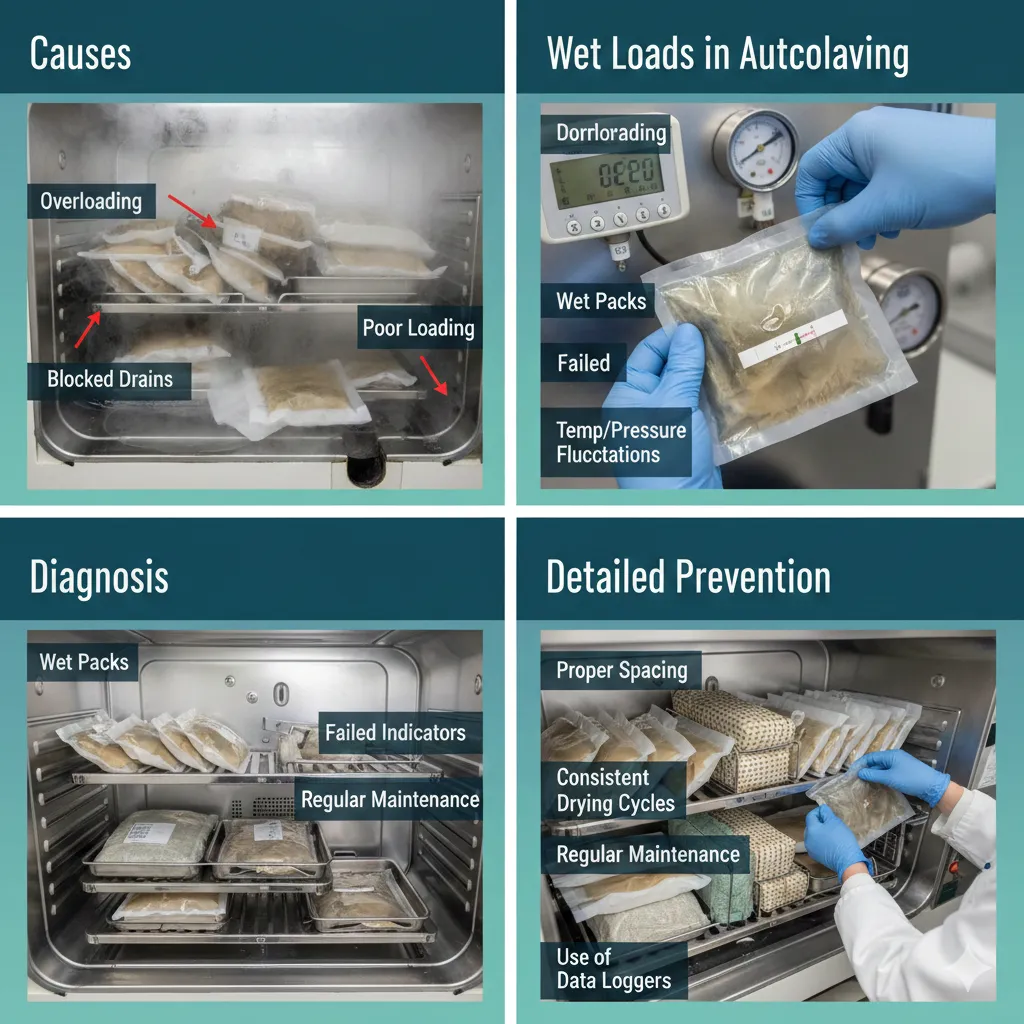
What Is a Wet Load in Autoclaving?
A wet load refers to a condition where sterilized
instruments, packs, trays, or wraps remain wet after completion of the
autoclave cycle, including the drying phase.
Examples of wet loads:
- Condensation
inside instrument trays
- Damp
linen packs
- Moist
paper-plastic pouches
- Water
droplets on rigid containers
According to sterilization standards, any moisture on
sterilized items renders them non-sterile, regardless of whether the exposure
phase was successful.
In this comprehensive guide from Aarogyaa Bharat, we
explain:
- What
wet loads are
- Why
they occur
- How
to diagnose root causes
- Why
wet loads are unsafe
- Step-by-step
prevention strategies
- Best
practices for hospitals and CSSD units
Why Wet Loads Are a Serious Problem (Not Just Cosmetic)


Wet loads are not acceptable in healthcare sterilization for
the following reasons:
1. Loss of Sterility
Moisture allows microorganisms to wick through packaging,
breaking the sterile barrier.
2. Increased Infection Risk
Wet instruments increase the risk of:
- Surgical
Site Infections (SSIs)
- Post-operative
complications
- Cross-contamination
3. Non-Compliance With Standards
Wet loads violate:
- AAMI
ST79
- CDC
infection control guidelines
- NABH
& JCI requirements
4. Costly Reprocessing
All wet items must be:
- Quarantined
- Re-cleaned
- Re-sterilized
This leads to workflow delays, overtime costs, and OT scheduling disruptions.
Common Causes of Wet Loads in Autoclaves
Wet loads almost never have a single cause. They typically
result from a combination of equipment, loading, packaging, and process issues.
1. Improper Loading of the Autoclave


Incorrect loading is the most frequent cause of wet loads.
Common loading errors:
- Overloading
the chamber
- Stacking
trays too tightly
- Placing
heavy metal trays above lighter packs
- Blocking
air removal pathways
Why this causes wet loads:
Steam cannot circulate properly, and trapped air prevents effective drying.
Best practice:
- Maintain
space between trays
- Follow
manufacturer-recommended load configurations
- Avoid
mixing heavy and light items inappropriately
2. Incorrect Packaging Materials or Techniques


Packaging plays a critical role in moisture retention.
Common packaging issues:
- Using
low-quality wraps
- Over-wrapping
instrument sets
- Sealing
pouches incorrectly
- Using
damaged or expired packaging
Why this causes wet loads:
Poor packaging traps moisture or prevents proper evaporation during drying.
Best practice:
- Use
validated sterilization wraps and pouches
- Avoid
excessive layers
- Ensure
seals are intact and breathable
3. Excessive Instrument Weight or Tray Density
Heavy instrument sets - especially orthopaedic or robotic
trays - are notorious for causing wet loads.
Typical problems:
- Dense
metal mass retains heat and moisture
- Inadequate
drying time for heavy loads
Why this causes wet loads:
Metal cools unevenly, causing condensation when chamber pressure drops.
Best practice:
- Use
extended dry times for heavy sets
- Break
large sets into smaller trays when possible
4. Inadequate Drying Phase Settings
Autoclave drying parameters are often misconfigured.
Drying issues include:
- Drying
time too short
- Insufficient
vacuum pulses
- Faulty
vacuum pump performance
Why this causes wet loads:
Moisture is not fully evacuated from packs before cycle completion.
Best practice:
- Validate
drying time based on load type
- Regularly
test vacuum efficiency


Steam quality is a hidden but critical factor.
Steam issues include:
- Excess
moisture (wet steam)
- Non-condensable
gases
- Contaminants
from boiler systems
Why this causes wet loads:
Wet steam introduces additional moisture that drying systems cannot fully
remove.
Best practice:
- Monitor
steam quality regularly
- Ensure
boiler maintenance and filtration
6. Autoclave Mechanical or Maintenance Issues
Faulty equipment often leads to persistent wet loads.
Common equipment problems:
- Leaking
door gaskets
- Malfunctioning
vacuum pumps
- Blocked
drain lines
- Faulty
temperature or pressure sensors
Why this causes wet loads:
Autoclave cannot achieve proper vacuum or pressure differentials for drying.
Best practice:
- Schedule
preventive maintenance
- Investigate
repeated wet load incidents immediately
How to Diagnose Wet Loads (Root Cause Analysis)


When a wet load occurs, do not ignore it. Follow a
structured diagnostic approach.
Step-by-Step Diagnosis Checklist
- Stop
distribution immediately
- Do
not release wet items
- Review
cycle printouts
- Temperature
- Pressure
- Drying
time
- Inspect
loading pattern
- Overloading
- Tray
placement
- Check
packaging integrity
- Wrap
damage
- Pouch
seals
- Assess
equipment performance
- Vacuum
test
- Bowie-Dick
test
- Document
findings
- Required
for NABH & infection control audits
What To Do If a Wet Load Is Found
Immediate Actions:
- Quarantine
the entire load
- Label
as “NOT STERILE”
- Inform
CSSD supervisor or infection control team
Reprocessing Protocol:
- Open
packs
- Re-clean
instruments if required
- Re-package
using correct materials
- Re-sterilize
with corrected parameters
Never attempt to air-dry or towel-dry wet sterile items.
Detailed Prevention Strategies for Wet Loads
1. Standardize Loading Protocols
- Train
staff using visual load diagrams
- Separate
heavy and light loads
2. Optimize Packaging Selection
- Use
breathable, validated wraps
- Avoid
over-packing trays
3. Validate Sterilization Cycles
- Different
cycles for:
- Linen
- Instruments
- Heavy
orthopaedic trays
4. Improve Staff Training
- Continuous
CSSD education
- Annual
competency assessments
5. Strengthen Equipment Maintenance
- Scheduled
preventive maintenance
- Immediate
investigation of repeat failures
6. Monitor with Quality Indicators
- Wet
load incident tracking
- Cycle
failure trend analysis
Compliance With Standards & Guidelines
Wet load prevention is mandated by:
- AAMI
ST79 – Steam sterilization standards
- CDC
Guidelines – Infection control
- NABH
/ JCI – Accreditation requirements
Failure to address wet loads can result in:
- Non-compliance
findings
- Patient
safety incidents
- Accreditation
risks
How Aarogyaa Bharat Supports Safe Sterilization Practices
At Aarogyaa Bharat, we support hospitals and CSSD units
with:
- High-quality
autoclaves
- Sterilization
accessories & consumables
- Expert
guidance on equipment selection
- Training-aligned
equipment solutions
Our focus is patient safety, compliance, and operational
efficiency.
Frequently Asked Questions (FAQs)
Q1. Is a wet load considered sterile?
No. Any moisture invalidates sterility and the load must be reprocessed.
Q2. Can wet loads be air-dried and reused?
No. Air-drying does not restore sterility.
Q3. Are wet loads caused only by equipment failure?
No. Loading, packaging, steam quality, and cycle selection are equally
responsible.
Q4. How often should autoclaves be tested for drying
efficiency?
Regularly, especially after maintenance or cycle modifications.
Conclusion
Wet loads in autoclaving are preventable failures - not
unavoidable accidents. By understanding their causes, diagnosing them
correctly, and implementing structured prevention strategies, hospitals can
protect patients, maintain compliance, and improve CSSD efficiency.
In sterilization, dry means safe. Anything less is a risk.