What Is an Invasive Ventilator?
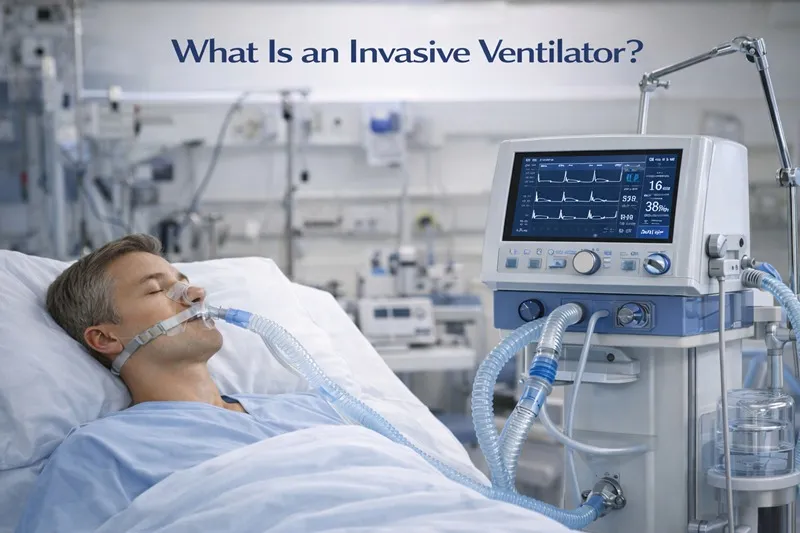
An invasive ventilator is a medical device that supports or
completely takes over breathing by delivering air directly into the lungs
through an artificial airway. This airway is created using:
- Endotracheal
tube - inserted through the mouth or nose into the windpipe
- Tracheostomy
tube - surgically placed through the neck into the windpipe
Because the airway is directly accessed, this form of
ventilation is called invasive.
Invasive ventilators are typically used in:
- Intensive
Care Units (ICUs)
- Emergency
departments
- Operation
theatres
- Trauma
and critical care settings
Why Invasive Ventilation Is Sometimes Necessary
Non-invasive methods (like masks or nasal devices) are
preferred whenever possible. However, there are situations where non-invasive
ventilation is not enough.
Invasive ventilation becomes essential when:
- The
patient cannot protect their airway
- Breathing
effort is extremely weak
- Oxygen
levels remain critically low
- Carbon
dioxide levels are dangerously high
- The
patient is unconscious or heavily sedated
In these cases, invasive ventilation can be life-saving.
How Does an Invasive Ventilator Work? (Simple
Explanation)
In normal breathing, the brain sends signals to the lungs to
inhale and exhale. When this process fails, an invasive ventilator steps in.
Step-by-Step Working
- Airway
Placement
A tube is inserted into the windpipe to create a secure airway.
- Air
and Oxygen Delivery
The ventilator pushes a controlled mixture of air and oxygen into the lungs.
- Breath
Regulation
The machine controls: - Breathing rate
- Volume or pressure of air
- Oxygen concentration
Carbon dioxide-rich air is allowed to flow out of the lungs.
Continuous Monitoring
The ventilator can fully control breathing or assist the
patient’s own efforts, depending on the mode selected.
Importance of Invasive Ventilation in Critical Care
Invasive ventilators are used when the body is under extreme stress and organs are at risk of failure.
Why They Are So Important
- Maintain
oxygen supply to the brain and heart
- Prevent
respiratory collapse
- Buy
time for treatment to work
- Support
patients during major surgeries
- Enable
recovery from severe infections or injuries
Without invasive ventilation, survival in many critical
conditions would not be possible.
Common Medical Conditions That Require Invasive
Ventilation
Invasive ventilators are used in a wide range of serious
conditions, including:
- Severe
pneumonia
- Acute
Respiratory Distress Syndrome (ARDS)
- Severe
COVID-19 or other viral infections
- Major
trauma or chest injury
- Stroke
affecting breathing centres
- Drug
overdose causing respiratory depression
- Severe
sepsis
- During
general anaesthesia for major surgeries
Types of Invasive Ventilators
Invasive ventilators are classified based on where they are
used and the level of control they provide.
1. ICU Ventilators
These are advanced ventilators used in intensive care units.
Key Features
- Multiple
ventilation modes
- High
precision control
- Detailed
monitoring and alarms
Best Used For
- Critically
ill patients requiring long-term ventilation
2. Operating Theatre Ventilators
Used during surgeries that require general anaesthesia.
Key Features
- Short-term
controlled ventilation
- Integration
with anaesthesia systems
3. Transport Ventilators (Invasive Mode)
Portable ventilators capable of invasive ventilation.
Best Used For
- Ambulances
- Inter-hospital
transfers
- Emergency
transport
4. Long-Term Invasive Ventilators
Used for patients with chronic respiratory failure.
Best Used For
- Neuromuscular
diseases
- Spinal
cord injuries
- Long-term
ICU or home care via tracheostomy
Ventilation Modes Used in Invasive Ventilation
Ventilation modes determine how much work the ventilator
does versus the patient.
Common Modes Include
- Volume-Control
Ventilation - fixed air volume per breath
- Pressure-Control
Ventilation - fixed pressure per breath
- Assist-Control
Mode - supports patient-initiated breaths
- SIMV
(Synchronized Intermittent Mandatory Ventilation) - allows spontaneous
breathing between mandatory breaths
- Pressure
Support Ventilation - helps during recovery and weaning
These modes are selected based on the patient’s condition
and recovery stage.
Benefits of Invasive Ventilation
1. Life-Saving in Severe Conditions
Invasive ventilators can completely replace breathing when
the body cannot do it at all.
2. Precise Control Over Breathing
Doctors can accurately control:
- Oxygen
levels
- Air
pressure
- Breathing
rate
This precision protects vital organs.
3. Essential During Major Surgeries
Invasive ventilation ensures stable breathing while the
patient is under anaesthesia.
4. Supports Recovery from Critical Illness
By reducing the work of breathing, the body can focus energy
on healing.
5. Allows Advanced Monitoring
Invasive ventilators provide detailed data that helps
clinicians make rapid, informed decisions.
Risks and Challenges of Invasive Ventilation
While invasive ventilators are essential, they come with
risks, especially if used for long periods.
Possible Complications
- Ventilator-associated
pneumonia
- Lung
injury from high pressure or volume
- Throat
or airway injury
- Muscle
weakness
- Difficulty
in weaning
This is why invasive ventilation is used only when medically
necessary and under close supervision.
Sedation and Comfort in Invasive Ventilation
Most patients on invasive ventilation receive:
- Sedation
for comfort
- Pain
management as needed
This helps reduce anxiety, discomfort, and resistance to the
ventilator.
Weaning Off an Invasive Ventilator
Weaning is the gradual process of reducing ventilator
support.
Doctors assess:
- Lung
function
- Oxygen
levels
- Strength
of breathing muscles
- Overall
stability
Successful weaning is a key milestone in recovery.
Invasive Ventilation in Long-Term Care
Some patients require prolonged invasive ventilation through
a tracheostomy.
With proper training and support:
- Long-term
care is possible
- Quality of life can be maintained
Conclusion
An invasive ventilator is one of the most powerful tools in
modern critical care medicine. While its use signifies serious illness, it also
represents advanced medical support, precision, and hope during the most
critical moments.
Understanding the importance, types, and benefits of
invasive ventilation helps patients and families navigate difficult situations
with clarity rather than fear. Invasive ventilators do not replace life they
protect it while recovery takes place.
At Aarogyaa Bharat, we are committed to making healthcare
knowledge simple, compassionate, and accessible because informed understanding
brings confidence, even in critical times.