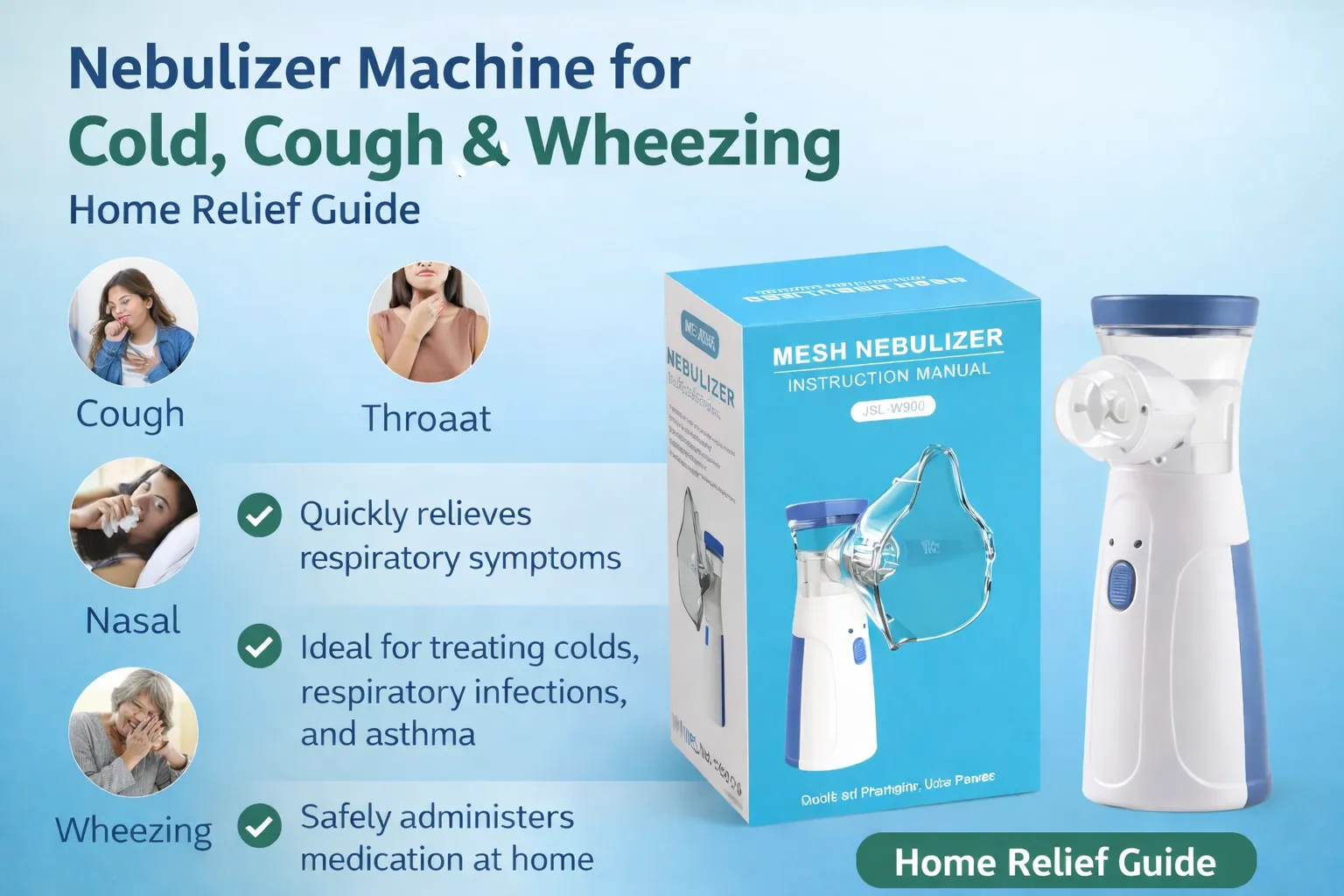
In recent years, nebulizer machines have become a
cornerstone of modern home respiratory care for managing cold, cough, and
wheezing safely and effectively. Unlike tablets or syrups that take time to
work through the digestive system, nebulizers deliver medication directly into
the lungs in the form of fine mist, offering faster relief, better absorption,
and targeted treatment. This makes them especially useful for children,
seniors, and patients who struggle with inhalers or oral medicines.
At Aarogyaa Bharat, we have seen a sharp rise in demand for
nebulizer machines for home use, particularly during winter months, pollution
peaks, post-COVID recovery phases, and allergy seasons. Families increasingly
prefer nebulizers because they are non-invasive, easy to operate, and capable
of providing hospital-grade respiratory relief without repeated clinic visits.
More importantly, nebulizers empower caregivers to manage mild to moderate
respiratory flare-ups at home, reducing anxiety and emergency dependency.
This comprehensive guide explains in maximum depth how
nebulizer machines help with cold, cough, and wheezing, who should use them,
how they work, their benefits, safety precautions, medicine compatibility,
device selection tips, and how to integrate them into everyday home care
routines for faster, safer breathing relief.
What Is a Nebulizer Machine and How It Works
A nebulizer machine is a medical device that converts liquid
medication into a fine mist that can be inhaled deeply into the lungs through a
mask or mouthpiece. This mist allows medication to reach the airways directly,
where it can reduce inflammation, loosen mucus, open narrowed bronchial
passages, and improve airflow almost immediately. Unlike oral medicines,
nebulizers bypass the digestive system entirely, ensuring faster onset of
action and higher therapeutic efficiency.
Nebulizers typically consist of three main components: the
main compressor unit, a medication cup, and an inhalation mask or mouthpiece.
The compressor pushes air through the medication cup, breaking the liquid
medicine into microscopic droplets. These droplets are then inhaled by the
patient over a 5-15-minute session, depending on the medicine type and dosage
volume.
Modern nebulizers are designed to be quiet, portable, and
user-friendly, making them ideal for home use. Some models run on electricity,
while others operate on rechargeable batteries or USB power, offering
flexibility for travel and emergency situations. Advanced nebulizers also
include mesh technology, which produces ultra-fine mist particles that
penetrate deeper into the lungs with minimal noise.
For patients suffering from cold, cough, and wheezing,
nebulizers provide a powerful way to deliver bronchodilators, saline solutions,
mucolytics, and anti-inflammatory medications exactly where they are needed
most.
Why Cold, Cough, and Wheezing Should Not Be Ignored
Many people treat cold, cough, and wheezing as routine
illnesses that will resolve on their own. While this may be true in mild cases,
these symptoms often signal underlying airway inflammation, mucus build up, or
bronchial constriction that can worsen without proper intervention. In children
and elderly individuals, even minor respiratory infections can progress rapidly
into serious breathing complications.
Wheezing, in particular, is a warning sign that airways are
narrowed or obstructed, often due to asthma, allergic reactions, viral
infections, or bronchitis. Persistent wheezing indicates that the lungs are
struggling to move air in and out efficiently, which can lead to oxygen
deprivation, fatigue, anxiety, and sleep disturbances.
Coughing that lasts longer than a few days may be caused by
thick mucus trapped in the airways, making breathing difficult and increasing
infection risk. Night-time cough is especially concerning because it disrupts
sleep and worsens oxygen levels during rest.
Using a nebulizer early during respiratory flare-ups helps
prevent symptom escalation, reduces hospital visits, and promotes faster
recovery by clearing airways and delivering medication precisely to inflamed
lung tissue.
How a Nebulizer Helps in Cold, Cough, and Wheezing
One of the most important benefits of nebulizer therapy is
its ability to open airways quickly. Bronchodilator medications delivered
through a nebulizer relax the muscles around the bronchial tubes, allowing them
to widen and improve airflow almost immediately. This is especially valuable
for patients experiencing wheezing or chest tightness.
Nebulizers also help loosen and thin mucus, making it easier
to cough out. Saline and mucolytic medications delivered via nebulization
hydrate airway linings and break down thick secretions, reducing chest
congestion and improving breathing comfort.
For patients with allergic or viral airway inflammation,
nebulized corticosteroids reduce swelling inside the bronchial passages, easing
cough severity and wheezing intensity. This targeted anti-inflammatory effect
significantly speeds up symptom relief compared to oral medications.
Another major advantage is ease of use. Nebulizers require
minimal breathing coordination, making them ideal for young children, elderly
patients, and severely ill individuals who cannot use inhalers properly.
Who Should Use a Nebulizer for Cold, Cough, and Wheezing
Children are one of the biggest beneficiaries of nebulizer
therapy because they often struggle with inhaler techniques. Nebulizers allow
them to breathe normally while receiving medication, making treatment
stress-free and more effective.
Elderly individuals with weak lungs, arthritis, or
coordination problems also benefit greatly from nebulizer machines, as they
eliminate the need for precise inhalation timing required by inhalers.
Patients with asthma, bronchitis, COPD, post-COVID lung
damage, allergic rhinitis, and recurrent respiratory infections are frequently
prescribed nebulizer therapy for flare-ups involving cough and wheezing.
Individuals with severe chest congestion, breathing
difficulty, or night time wheezing episodes also find nebulizers far more
effective than oral syrups or steam inhalation.
Common Medications Used in Nebulizers
Nebulizers can deliver a wide range of medications depending
on the patient’s condition. Bronchodilators such as salbutamol and Levo
salbutamol are commonly used to relieve wheezing and chest tightness.
Saline solutions are used to hydrate airways and loosen
mucus, making them highly effective for dry cough and thick phlegm build up.
Mucolytic agents like acetylcysteine help break down
stubborn mucus in patients with severe chest congestion.
Inhaled corticosteroids such as budesonide are used to
reduce airway inflammation in asthma and allergic bronchitis cases.
Antibiotics may also be prescribed in nebulized form for
specific bacterial infections under medical supervision.
Nebulizer vs Inhaler for Cold and Wheezing
- While inhalers are compact and convenient, they require proper inhalation technique, which many patients especially children and seniors struggle to master. Incorrect inhaler use leads to poor medication delivery and reduced treatment effectiveness.
- Nebulizers, by contrast, allow passive inhalation, ensuring that medication reaches deep into the lungs regardless of breathing coordination. This makes them far more reliable during severe respiratory distress or fatigue.
- For mild symptoms, inhalers may be sufficient. However, during acute flare-ups involving intense cough, wheezing, or chest congestion, nebulizers provide faster and more comprehensive relief.
Types of Nebulizer Machines for Home Use
Compressor nebulizers are the most common and affordable
models. They are reliable, durable, and compatible with most medications,
making them ideal for family use.
Ultrasonic nebulizers operate quietly and deliver mist
rapidly but may not be suitable for all medication types.
Mesh nebulizers are the most advanced models, offering
ultra-quiet operation, high efficiency, and portability. They are ideal for
children, night-time use, and frequent travelers.
Choosing the right nebulizer depends on patient age,
medication type, noise sensitivity, portability needs, and budget.
Safety Guidelines for Nebulizer Use
- Always use only doctor-prescribed medication and dosage. Never mix medicines unless instructed by a medical professional.
- Clean and disinfect the nebulizer components after each use to prevent bacterial contamination and respiratory infections.
- Use distilled or sterile water for dilution to avoid mineral build up and microbial growth.
- Ensure proper mask fitting, especially for children, to prevent medication wastage.
- Store the nebulizer in a clean, dry place away from dust and moisture.
When to Seek Medical Attention Despite Nebulizer Use
- If wheezing, breathlessness, or coughing worsens despite nebulizer therapy, immediate medical attention is necessary.
- Persistent fever, bluish lips, chest pain, or severe fatigue indicate serious respiratory distress and should never be ignored.
- Nebulizers are a supportive therapy tool, not a substitute for professional medical diagnosis and treatment.
Quick Decision Guide Table
|
Symptom
Scenario |
Nebulizer
Helpful? |
Medication
Type |
|
Mild cold
with nasal congestion |
Sometimes |
Saline |
|
Chest
congestion with cough |
Yes |
Saline,
mucolytics |
|
Wheezing due
to asthma |
Yes |
Bronchodilators |
|
Allergic
bronchitis |
Yes |
Steroids |
|
Severe
breathlessness |
Yes
(Emergency) |
Combined
therapy |
Conclusion
Cold, cough, and wheezing may seem like routine respiratory
issues, but when they persist or worsen, they can significantly impact quality
of life and lead to serious complications. Nebulizer machines offer one of the
safest, fastest, and most effective ways to manage these symptoms at home,
especially for children, seniors, and patients with chronic respiratory
conditions.
By delivering medication directly into the lungs, nebulizers
provide immediate relief from airway inflammation, chest congestion, and
wheezing, reducing the need for repeated hospital visits and emergency
interventions. With proper device selection, medication guidance, and hygiene
practices, nebulizer therapy can become a powerful home care tool for long-term
respiratory wellness.
At Aarogyaa Bharat, we offer a wide range of high-quality
nebulizer machines designed for safe, comfortable, and effective home use.
Whether you are managing seasonal cough, asthma flare-ups, or post-viral
breathing difficulties, our expert team is here to help you choose the right
nebulizer solution for your family’s respiratory needs.
If you or your loved one is struggling with cold, cough, or
wheezing, Aarogyaa Bharat is always here to help you breathe easier, recover
faster, and live healthier.