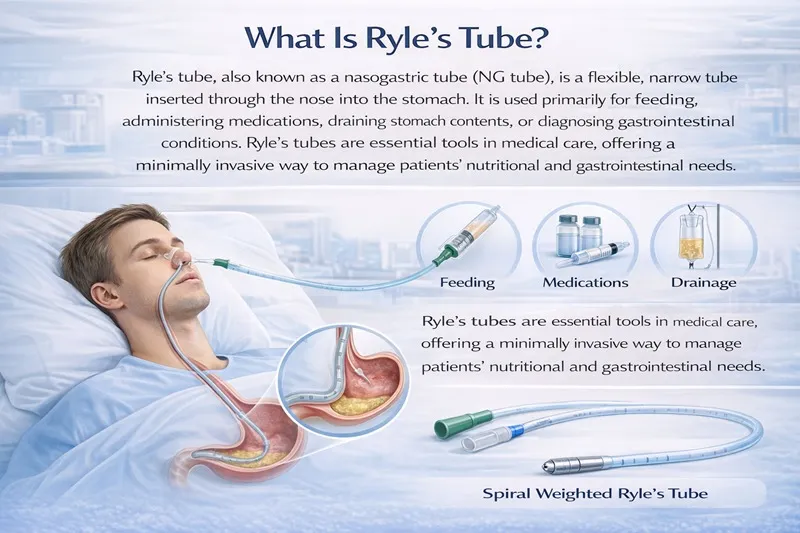
What Is a Ryle’s Tube?
A Ryle’s tube is a thin, flexible medical tube that is
inserted through the nose, passes down the throat (oesophagus), and ends in the
stomach. It is also known as a nasogastric (NG) tube.
Doctors use a Ryle’s tube when a patient:
- Cannot
eat or drink normally
- Needs
liquid nutrition directly into the stomach
- Requires
stomach contents to be removed or drained
- Needs
medications to be delivered safely
Though simple in design, it becomes a critical bridge
between treatment and recovery.
Why Is It Called a Ryle’s Tube?
The tube is named after Dr. John Alfred Ryle, a British
physician who contributed significantly to clinical medicine. Over time, the
term “Ryle’s tube” became widely used, especially in India and many
Commonwealth countries, to describe nasogastric feeding tubes.
Why Is a Ryle’s Tube Used?
A Ryle’s tube is used whenever the digestive system is
functional, but oral feeding is not possible or safe.
Common Medical Situations
- After
abdominal or gastrointestinal surgery
- Stroke
patients with swallowing difficulty
- Unconscious
or semi-conscious patients
- Severe
weakness, coma, or neurological conditions
- Poisoning
or overdose cases (for gastric lavage)
The tube ensures that the body continues to receive
essential support even when normal eating is not possible.
How Does a Ryle’s Tube Work?
Once correctly placed in the stomach:
- Liquid
food can be given slowly and safely
- Medicines
can be administered without swallowing
- Stomach
contents like gas, blood, or toxins can be removed
Small side holes near the tip allow smooth flow while
reducing the risk of blockage.
What Is a Ryle’s Tube Made Of?
Modern Ryle’s tubes are made from medical-grade materials
such as:
- PVC
(Polyvinyl Chloride)
- Polyurethane
- Silicone
These materials are chosen because they are:
- Flexible
- Safe
for internal use
- Resistant
to stomach acids
- Comfortable
for short- to medium-term placement
How Is a Ryle’s Tube Inserted?
The insertion process is done by trained medical
professionals and usually involves:
- Measuring
the correct tube length
- Lubricating
the tube
- Gently
inserting it through the nostril
- Guiding
it down into the stomach
- Confirming
correct placement
Placement is always checked before feeding or medication is
started to ensure patient safety.
Is a Ryle’s Tube Painful?
A Ryle’s tube may feel uncomfortable, especially during
insertion, but it is usually not painful. Most patients describe:
- A
mild gagging sensation initially
- Nasal
discomfort that reduces with time
Once properly placed, patients generally adapt within a few
hours.
What Are the Main Uses of a Ryle’s Tube?
1. Enteral Feeding
Liquid nutrition is delivered directly into the stomach when
oral feeding is not possible.
2. Medication Administration
Essential medicines can be given safely in liquid form.
3. Gastric Decompression
Excess gas or fluids are removed to relieve pressure,
especially after surgery.
4. Gastric Lavage
Used in emergency cases like poisoning to wash out stomach
contents.
How Long Can a Ryle’s Tube Be Used?
Ryle’s tubes are generally meant for short- to medium-term
use (a few days to a few weeks). If feeding is required for longer durations,
doctors may recommend alternative feeding methods based on patient condition.
Care and Safety While Using a Ryle’s Tube
Proper care is essential to prevent complications:
- Always
confirm tube placement before feeding
- Flush
the tube regularly to prevent blockage
- Maintain
nasal and oral hygiene
- Feed
slowly and in an upright position
- Watch
for signs like coughing, breathing difficulty, or discomfort
With correct care, Ryle’s tubes are very safe and effective.
Advantages of Using a Ryle’s Tube
- Maintains
nutrition and hydration
- Reduces
risk of aspiration compared to forced oral feeding
- Simple
and cost-effective solution
- Life-saving
in critical care situations
Limitations and Risks
While extremely useful, improper use can lead to:
- Tube
blockage
- Nasal
irritation
- Incorrect
placement if not checked
These risks are minimized when insertion and care are done
by trained professionals.
Conclusion
So, what is a Ryle’s tube?
It is a simple yet powerful medical device that quietly supports recovery when
patients need it most. Whether delivering nutrition, medications, or relieving
gastric pressure, the Ryle’s tube plays a vital role in patient care across
hospitals and homes.
At Aarogyaa Bharat, we believe that understanding medical
tools builds confidence for caregivers, families, and healthcare professionals
alike. Clear knowledge leads to safer care and better recovery outcomes.