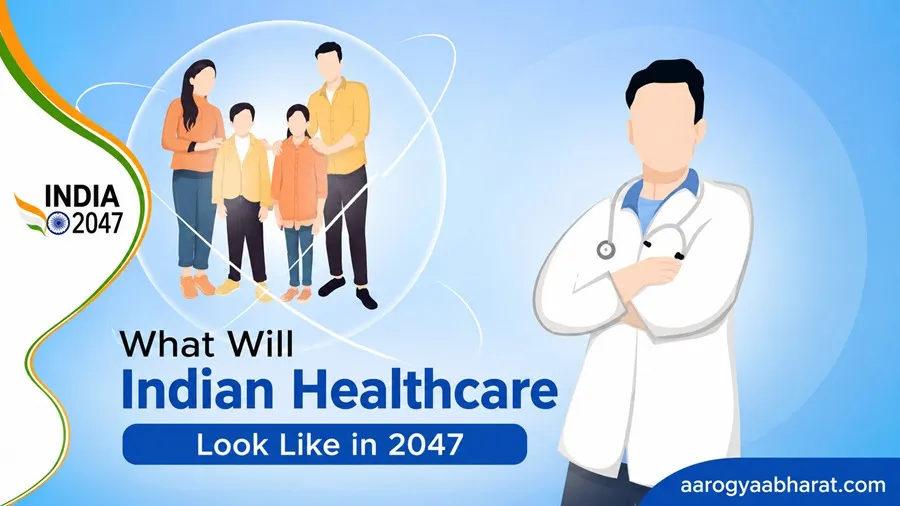
India’s Healthcare Future Is Entering a New Era
By 2047, India is expected to become one of the world’s
largest and most advanced healthcare ecosystems driven by technology,
innovation, digital infrastructure, and patient-centred care. As the nation
moves toward the vision of Viksit Bharat, healthcare will no longer be limited
to hospitals and
clinics alone because it will become deeply connected with artificial
intelligence, smart technologies, remote healthcare systems, and preventive
wellness. The healthcare transformation already visible today is only the
beginning of a much larger revolution that will reshape how Indians access,
experience, and manage healthcare in the future. India’s healthcare system in
2047 is likely to be smarter, faster, more affordable, and significantly more
accessible for people across both urban and rural regions.
Digital Healthcare Will Become the New Standard
By 2047, digital healthcare is expected to become a normal
part of everyday life in India because most healthcare services will likely be
connected through digital platforms, mobile applications, cloud-based systems,
and smart healthcare networks. Patients may no longer need to carry physical
reports or wait in long
hospital queues because medical records, prescriptions, appointments,
and diagnostics could be managed digitally in real time. Telemedicine services
will become more advanced and widely accepted, allowing patients to consult
doctors from anywhere in the country within minutes. Digital healthcare systems
will improve efficiency, reduce treatment delays, and make healthcare more
accessible for millions of people.
Artificial Intelligence Will Transform Medical Care
Artificial Intelligence is expected to become one of the
strongest pillars of India’s healthcare future because AI-powered systems will
likely support diagnostics, disease prediction, patient
monitoring, treatment planning, and healthcare management. AI may help
doctors detect diseases earlier through faster analysis of medical reports,
scans, and patient data, improving treatment outcomes and reducing healthcare
complications. AI-powered healthcare assistants and chatbots could provide
instant healthcare guidance, symptom analysis, appointment scheduling, and
preventive healthcare support for patients across India. Rather than replacing
doctors, AI will most likely work alongside healthcare professionals to improve
efficiency, accuracy, and patient care quality.
Smart Hospitals Will Redefine Healthcare Infrastructure
Hospitals in 2047 are expected to become highly advanced
smart healthcare centers powered by automation, artificial intelligence,
robotics, and connected healthcare systems. Smart ICUs, automated patient
monitoring systems, robotic surgeries, digital emergency response systems,
and AI-assisted diagnostics may become standard features in modern hospitals.
Real-time healthcare data and integrated hospital management systems will help
improve patient flow, reduce waiting times, and support faster clinical
decisions. Hospitals may also use predictive analytics to manage resources more
efficiently and prepare for healthcare emergencies before they escalate. This
transformation will improve healthcare quality while increasing operational
efficiency across the healthcare sector.
Home Healthcare Will Grow Rapidly
By 2047, home
healthcare is expected to become one of the fastest-growing parts of
India’s healthcare system because many patients will prefer receiving
treatment, monitoring, rehabilitation, and elderly care from the comfort of
their homes. Advanced portable medical devices, AI-powered monitoring systems,
smart wearables, oxygen support systems, and remote healthcare technologies
will allow doctors to monitor patients in real time without requiring long
hospital stays. Home
healthcare services may become more affordable and technologically
advanced, reducing pressure on hospitals while improving patient comfort and
recovery experiences. This shift will be especially important for elderly care
and chronic disease management in the future.
Preventive Healthcare Will Become a National Priority
India’s healthcare future will likely focus heavily on
prevention rather than only treatment because preventive healthcare helps
reduce disease burden, healthcare costs, and hospital overcrowding. Wearable
health devices, AI-driven wellness platforms, digital fitness tracking, and
preventive healthcare programs may help people monitor their health
continuously and detect risks early. Regular health screening, personalized
wellness recommendations, nutrition monitoring, and mental health support could
become integrated into daily life. As healthcare awareness increases, citizens
may focus more on healthy lifestyles, fitness, stress management, and long-term
wellness to avoid serious medical conditions in the future.
Rural Healthcare Will Become More Connected
One of the most important healthcare transformations by 2047
will likely be the improvement of rural healthcare infrastructure across India.
Villages and remote regions may gain better access to telemedicine services,
digital diagnostics, portable healthcare devices, mobile medical units, and
AI-assisted healthcare systems. Internet connectivity and digital healthcare
platforms could help rural populations connect with specialist doctors without
traveling to major cities.
Portable healthcare technologies and decentralized healthcare models may help
bring essential medical services directly to underserved communities. This
healthcare inclusion will play a major role in reducing the gap between urban
and rural healthcare accessibility.
Emergency Healthcare Systems Will Become Faster and
Smarter
By 2047, emergency healthcare systems in India are expected
to become more advanced through GPS-enabled ambulances, AI-assisted emergency
response systems, real-time hospital coordination, and digital
patient monitoring. Smart emergency systems may help ambulances identify
the nearest available hospitals, ICU
beds, and emergency resources instantly. AI-powered emergency management
systems could improve treatment prioritization and reduce delays during
critical situations. Portable diagnostic devices and connected healthcare
networks may allow emergency teams to begin treatment before patients even
reach hospitals. Faster
and more organized emergency healthcare systems will help save lives and
improve healthcare preparedness nationwide.
Healthcare Accessibility Will Improve Significantly
Healthcare accessibility is expected to improve dramatically
by 2047 because advancements in digital healthcare, affordable medical
technology, and decentralized healthcare systems will help bring medical
services closer to people. Patients may access healthcare guidance,
diagnostics, prescriptions, and specialist consultations more conveniently
through digital platforms and mobile healthcare systems. Affordable healthcare
solutions and government-supported healthcare programs may also reduce
financial barriers for lower-income populations. Greater accessibility will
help ensure that healthcare services are available not only in metro cities but also in smaller
towns and villages across India.
Personalized Healthcare Will Become More Common
Future healthcare systems in India may focus more on
personalized medicine and patient-specific treatment plans because AI and
healthcare data analytics can help doctors understand individual patient needs
more accurately. Genetic testing, personalized wellness programs, targeted
therapies, and predictive healthcare systems may improve treatment
effectiveness while reducing side effects and unnecessary procedures.
Personalized healthcare could help patients receive treatments designed
specifically for their health conditions, lifestyle patterns, and medical
history. This patient-centred approach may significantly improve healthcare
outcomes in the future.
Medical Equipment and Technology Will Become More
Advanced
Medical
equipment in 2047 is expected to become more portable, connected, and
intelligent through advancements in AI, robotics, automation, and digital
technologies. Portable diagnostic devices, wearable health trackers, robotic
surgical systems, AI-assisted imaging technologies, and smart rehabilitation
equipment may become widely available across healthcare facilities. Home-use
medical devices may also become more affordable and easier to operate, allowing
patients to monitor their health independently. Technological advancement in
medical equipment will improve healthcare efficiency, patient safety, and
treatment quality throughout India.
Healthcare Startups Will Drive Innovation
India’s
healthcare startup ecosystem is expected to become one of the
strongest in the world by 2047 because innovation-driven companies will
continue solving healthcare challenges related to accessibility, affordability,
diagnostics, patient care, and digital healthcare systems. Startups may lead
advancements in telemedicine, AI healthcare, wearable technologies, emergency
healthcare systems, home healthcare services,
and preventive wellness platforms. These companies will likely play a major
role in accelerating healthcare modernization while creating employment and
supporting economic growth across the country.
Mental Health and Wellness Will Receive Greater Attention
By 2047, mental health is expected to become a central part
of India’s healthcare system because awareness around emotional well-being,
stress management, and psychological health is steadily increasing. Mental
healthcare services may become more accessible through digital therapy
platforms, AI-powered counseling systems, wellness applications, and integrated
mental health support programs. Schools, workplaces, and healthcare
institutions may focus more on emotional wellness alongside physical health. A
balanced healthcare system that prioritizes both physical and mental well-being
will be essential for long-term national productivity and social stability.
Challenges Will Still Exist but Progress Will Continue
Even by 2047, India’s healthcare system may continue facing
challenges such as population pressure, healthcare affordability,
infrastructure expansion, and workforce requirements. However, advancements in
technology, healthcare awareness, digital infrastructure, and medical
innovation are expected to improve healthcare systems significantly compared to
today. Continuous collaboration between government organizations, healthcare
providers, startups, and technology companies will remain important for addressing
future healthcare demands effectively. The overall direction of Indian
healthcare is expected to remain strongly positive and innovation-driven.
The Vision of Viksit Bharat Through Healthcare
Healthcare will play one of the most important roles in
achieving the vision of Viksit Bharat by 2047 because a healthy population
directly contributes to productivity, economic growth, innovation, and social
development. A modern healthcare system built on accessibility, affordability,
technology, and preventive care will strengthen India’s future across every
sector. By focusing on digital healthcare, AI innovation, smart infrastructure,
and inclusive healthcare systems, India has the opportunity to become a global
leader in healthcare transformation over the coming decades.
Conclusion
Indian healthcare in 2047 is expected to become more digital, connected, intelligent, and patient-focused than ever before. Artificial Intelligence, smart hospitals, home healthcare, preventive wellness, digital healthcare platforms, and advanced medical technologies will reshape how healthcare is delivered across the country. Rural healthcare accessibility, emergency response systems, personalized treatment, and healthcare affordability are also likely to improve significantly. While challenges will continue evolving, the future of Indian healthcare remains highly optimistic because innovation, technology, and healthcare awareness are growing rapidly. As India moves toward the vision of Viksit Bharat, healthcare transformation will remain one of the strongest foundations for building a healthier, smarter, and more developed nation.