Teeth are one of the most underappreciated yet essential
assets of the human body. They don’t just enhance our smile and appearance they
play a crucial role in speech, chewing, digestion, and overall oral health.
Healthy teeth help maintain proper jaw alignment, enable clear communication,
and support good nutrition.
However, modern lifestyles, dietary habits, stress, and lack
of oral hygiene awareness have made dental problems extremely common across all
age groups. Ignoring minor tooth issues can often lead to pain, infections,
tooth loss, and even systemic health complications.
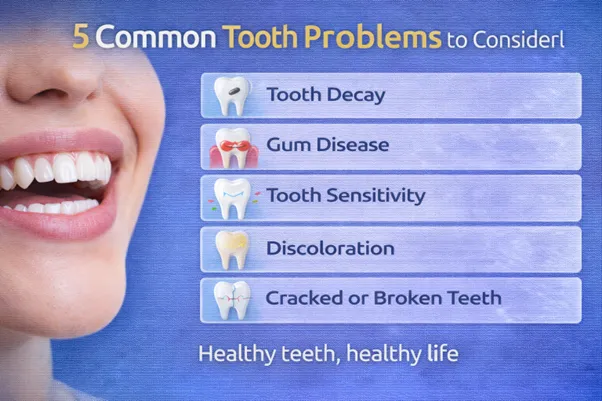
In this detailed guide by Aarogyaa Bharat, we explore five
common tooth problems, their causes, symptoms, prevention tips, and when to
seek professional care so you can protect your oral health proactively.
1. Tooth Decay (Dental Cavities)
What is Tooth Decay?
Tooth decay is one of the most widespread dental problems
worldwide. It occurs when acids produced by bacteria in plaque erode the tooth
enamel, leading to cavities.
Common Causes
- Frequent
consumption of sugary or starchy foods
- Poor
brushing and flossing habits
- Acidic
beverages like soft drinks
- Dry
mouth or reduced saliva flow
Symptoms
- Tooth
sensitivity to hot, cold, or sweet foods
- Visible
holes or dark spots on teeth
- Toothache
or discomfort while chewing
Why It Matters
Untreated cavities can progress to deeper layers of the
tooth, causing infections, abscesses, and eventually tooth loss.
Prevention Tips
- Brush
twice daily with fluoride toothpaste
- Floss
regularly to remove plaque between teeth
- Limit
sugary snacks and drinks
- Schedule
routine dental check-ups
2. Gum Disease (Gingivitis & Periodontitis)
What is Gum Disease?
Gum disease is an infection of the tissues that surround and
support the teeth. It starts as gingivitis and can progress to periodontitis if
left untreated.
Common Causes
- Plaque
and tartar buildup
- Smoking
or tobacco use
- Poor
oral hygiene
- Hormonal
changes and systemic diseases
Symptoms
- Red,
swollen, or bleeding gums
- Persistent
bad breath
- Receding
gums
- Loose
teeth (in advanced stages)
Why It Matters
Advanced gum disease can lead to tooth loss and has been
linked to heart disease, diabetes, and other systemic conditions.
Prevention Tips
- Maintain
consistent oral hygiene
- Quit
smoking
- Get
professional dental cleanings
- Address
gum bleeding early
3. Tooth Sensitivity
What is Tooth Sensitivity?
Tooth sensitivity occurs when the protective enamel wears
down or gums recede, exposing the dentin layer of the tooth.
Common Causes
- Aggressive
brushing
- Enamel
erosion due to acidic foods
- Gum
recession
- Cracked
or chipped teeth
Symptoms
- Sharp
pain when consuming hot, cold, or sweet foods
- Discomfort
while brushing
Why It Matters
Sensitivity can impact daily eating habits and may signal
underlying dental issues.
Prevention Tips
- Use
a soft-bristled toothbrush
- Switch
to desensitizing toothpaste
- Avoid
overly acidic foods
- Seek
dental evaluation if sensitivity persists
4. Tooth Discoloration and Staining
What Causes Tooth Discoloration?
Tooth discoloration can be extrinsic (surface stains) or
intrinsic (internal discoloration).
Common Causes
- Coffee,
tea, tobacco, and red wine
- Poor
oral hygiene
- Certain
medications
- Aging
and enamel thinning
Symptoms
- Yellow,
brown, or Gray stains
- Uneven
tooth color
Why It Matters
While often cosmetic, discoloration can affect confidence
and may sometimes indicate enamel damage.
Prevention Tips
- Maintain
proper brushing and flossing
- Limit
staining foods and beverages
- Consider
professional teeth cleaning or whitening
- Avoid
tobacco products
5. Cracked or Broken Teeth
What Causes Tooth Damage?
Cracked or broken teeth often result from physical trauma or
excessive pressure on teeth.
Common Causes
- Biting
hard foods or objects
- Teeth
grinding (bruxism)
- Accidents
or injuries
- Large
fillings weakening the tooth
Symptoms
- Sharp
pain while chewing
- Sensitivity
to temperature
- Visible
cracks or chips
Why It Matters
Cracks can worsen over time, leading to infection or tooth
loss if untreated.
Prevention Tips
- Avoid
chewing hard objects like ice
- Wear
a mouthguard if you grind your teeth
- Seek
immediate dental care after injury
Why Early Dental Care is Important
Many tooth problems begin silently and worsen gradually.
Early diagnosis not only reduces pain and discomfort but also minimizes
treatment costs and prevents complications.
At Aarogyaa Bharat, we strongly advocate preventive dental
care and awareness to help individuals make informed health decisions.
Frequently Asked Questions (FAQs)
Q1. How often should I visit a dentist?
Ideally, every six months for routine check-ups and
professional cleaning.
Q2. Can tooth problems affect overall health?
Yes. Poor oral health has been linked to heart disease,
diabetes, and respiratory infections.
Q3. Is tooth pain always serious?
Not always, but persistent or severe pain should never be ignored as it may indicate infection or damage.
ConclusionTeeth play a far greater role in our health than we often realize. From digestion to communication and self-confidence, maintaining healthy teeth is essential for overall well-being. Understanding common tooth problems empowers you to take timely action and avoid long-term complications.