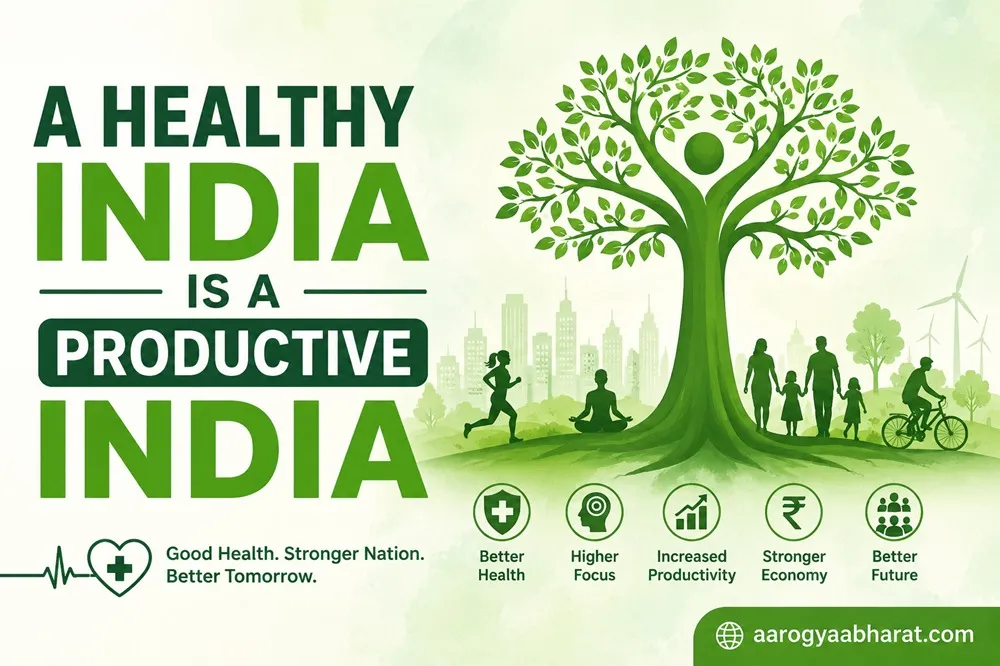
Health Is the Foundation of National Growth
A nation’s true strength is not measured only by its
infrastructure, industries, or technology but also by the health and well-being
of its people. A healthy population creates a stronger workforce, improves
productivity, reduces economic burden, and contributes directly to national
development. As India moves toward the vision of Viksit Bharat, healthcare and
wellness are becoming essential pillars of economic growth. When
people are physically and mentally healthy, they can work more efficiently, support their families
better, and contribute positively to society. Investing in healthcare is
not only about saving lives but also about building a stronger and more
productive India.
Healthy Citizens Create a Strong Workforce
India has one of the largest working populations in the
world, and the productivity of this workforce plays a major role in economic
development. Healthy employees are more energetic, focused, and capable of
performing efficiently in their daily work. Good health reduces absenteeism,
improves workplace performance, and supports long-term career growth. On the
other hand, poor health conditions, untreated diseases, and lack of medical
care can reduce productivity and increase economic losses for businesses and
industries. A healthier workforce allows companies, startups, factories, hospitals, and service sectors
to operate more efficiently and contribute more effectively to the country’s
economy.
Preventive Healthcare Reduces Economic Burden
Preventive healthcare is one of the most important aspects
of building a productive nation because early detection and disease prevention
help reduce long-term medical expenses and healthcare pressure. Regular health
checkups, vaccinations, fitness awareness, balanced nutrition, and early
diagnosis help prevent serious illnesses before they become critical.
Preventive healthcare not only improves individual health but also reduces the
financial burden on families, employers, and healthcare systems. When fewer
people suffer from severe diseases, healthcare costs decrease, productivity
improves, and economic stability becomes stronger. Prevention-focused healthcare systems are
essential for sustainable national development.
Healthcare Accessibility Improves National Productivity
Accessible healthcare services allow people to receive
timely medical treatment and recover faster from illnesses or injuries. In many
cases, delayed treatment leads to complications that affect a person’s ability
to work and live normally. Expanding healthcare access across cities, towns, and rural villages
helps ensure that people remain healthy and active contributors to the economy.
Telemedicine services, digital healthcare platforms, affordable diagnostics,
and home healthcare solutions are helping millions of Indians access healthcare
more efficiently. Better healthcare accessibility means healthier citizens, and
healthier citizens create a more productive nation.
Mental Health Is Equally Important for Economic Growth
Mental health has become a major factor in workplace
productivity and overall quality of life. Stress, anxiety, burnout, and mental
health disorders can reduce concentration, lower work performance, and affect
personal relationships. As awareness around mental wellness grows in India,
organizations and healthcare providers are increasingly focusing on emotional
well-being along with physical health. Counseling services, wellness programs,
work-life balance initiatives, and mental healthcare support are becoming
essential parts of modern healthcare systems. A mentally healthy population is
more creative, motivated, and capable of contributing positively to national
growth and innovation.
Fitness and Wellness Support Long-Term Development
Fitness
and wellness are becoming increasingly important in modern India as
people recognize the connection between healthy lifestyles and long-term
productivity. Regular exercise, healthy eating habits, proper sleep, and
physical activity improve energy levels, reduce lifestyle diseases, and
strengthen overall well-being. Wellness-focused lifestyles also help reduce
healthcare costs associated with obesity, diabetes, heart disease, and
hypertension. Corporate wellness programs, fitness awareness campaigns, sports
activities, and preventive healthcare initiatives are encouraging healthier
habits among citizens. A nation that prioritizes wellness builds a healthier
workforce and a stronger economy.
Healthcare Infrastructure Drives Economic Progress
Strong healthcare infrastructure supports both public health
and economic development. Hospitals,
diagnostic centers, emergency care systems, rehabilitation services,
and medical technology industries create employment opportunities while
improving healthcare quality. Investment in healthcare infrastructure also
attracts innovation, medical tourism, and healthcare startups that contribute
to economic expansion. As India continues to modernize its healthcare
ecosystem, sectors such as digital healthcare, AI-based diagnostics, home
healthcare, and medical
equipment manufacturing are generating new business opportunities and
employment across the country. Healthcare growth itself is becoming a powerful
economic engine.
Rural Healthcare Development Supports Inclusive Growth
India’s economic progress cannot be complete without strong
rural healthcare systems because a large part of the population still lives in
villages and semi-urban regions. Limited healthcare access in rural areas
affects productivity, education, employment, and quality of life. Strengthening
rural healthcare through telemedicine, mobile clinics, digital
diagnostics, emergency
healthcare services, and affordable treatment helps create healthier
rural communities. When rural populations receive better healthcare, they
become more productive, financially stable, and capable of contributing to
local and national economic growth. Inclusive healthcare development is
essential for building a balanced and developed India.
Technology Is Improving Healthcare Efficiency
Technology is transforming healthcare delivery and improving
productivity across India’s medical ecosystem. Telemedicine platforms, digital
health records, AI-powered diagnostics, wearable devices, and remote patient
monitoring systems are making healthcare services faster, smarter, and more
efficient. Technology reduces treatment delays, improves patient management,
and supports better decision-making for healthcare professionals. Digital
healthcare also reduces travel time and operational costs, allowing people to access
healthcare services more conveniently. As healthcare technology
continues to evolve, India’s healthcare system will become more connected,
efficient, and productivity-driven.
Healthy Children Build a Strong Future
The future of India depends heavily on the health and
development of children because healthy children grow into productive adults
who contribute positively to society and the economy. Proper nutrition,
vaccinations, physical activity, education, and preventive healthcare are
essential for ensuring healthy childhood development. Malnutrition, poor
healthcare access, and untreated illnesses can affect learning ability,
physical growth, and future productivity. Investing in child healthcare and
wellness creates long-term social and economic benefits for the country. A
healthy younger generation strengthens the future workforce and supports sustainable
national progress.
Workplace Wellness Is Becoming More Important
Modern workplaces are increasingly recognizing the
importance of employee health and wellness for long-term business success.
Companies are investing in health insurance, wellness programs, fitness
initiatives, ergonomic workspaces, and mental health support to improve
employee satisfaction and productivity. Healthy employees are more motivated,
engaged, and capable of performing at higher levels. Workplace wellness
programs also help reduce absenteeism, healthcare costs, and burnout. As
India’s economy grows, employee wellness will continue becoming an essential
part of organizational growth and workforce management.
Economic Growth and Healthcare Go Hand in Hand
Healthcare and economic growth are deeply connected because
healthier populations contribute more effectively to industries, businesses,
education systems, and innovation. Countries with strong healthcare systems
often experience better workforce productivity, higher life expectancy, and
stronger economic performance. India’s healthcare transformation is creating
opportunities not only for better medical care but also for long-term economic
development. By improving healthcare accessibility, affordability, and wellness
awareness, India can strengthen its workforce and support sustainable
economic growth for future generations.
Challenges Still Need Attention
Despite major improvements, India still faces healthcare
challenges such as unequal healthcare access, rising medical costs, lifestyle
diseases, and shortages of healthcare infrastructure in some regions. Rural
healthcare systems require further strengthening, and preventive healthcare
awareness still needs expansion among many communities. Addressing these
challenges will require collaboration between government organizations,
healthcare providers, startups, businesses, and citizens. Continued investment
in healthcare infrastructure, education, wellness programs, and digital
healthcare systems will be essential for building a healthier and more
productive India.
The Future of a Healthy and Productive India
India’s future depends on creating a society where
healthcare, wellness, and productivity work together to support national
development. As healthcare technology, preventive care, fitness awareness, and
medical accessibility continue improving, India will move closer to becoming a
healthier and economically stronger nation. The healthcare revolution taking
place today will not only improve quality of life but also create a more
productive workforce capable of driving innovation, business growth, and social
progress. A healthy India will naturally become a more successful, resilient,
and developed India under the vision of Viksit Bharat.
Conclusion
A healthy population is one of the greatest assets any nation can have because health directly impacts productivity, economic growth, education, and overall national progress. By focusing on preventive healthcare, wellness, healthcare accessibility, mental health, and medical infrastructure, India can create a stronger workforce and a more stable economy. Healthcare investment is not only a social necessity but also a long-term economic strategy that benefits every citizen and industry. As India moves toward the vision of Viksit Bharat, building a healthy nation will remain one of the most important steps toward creating a productive, prosperous, and future-ready India.