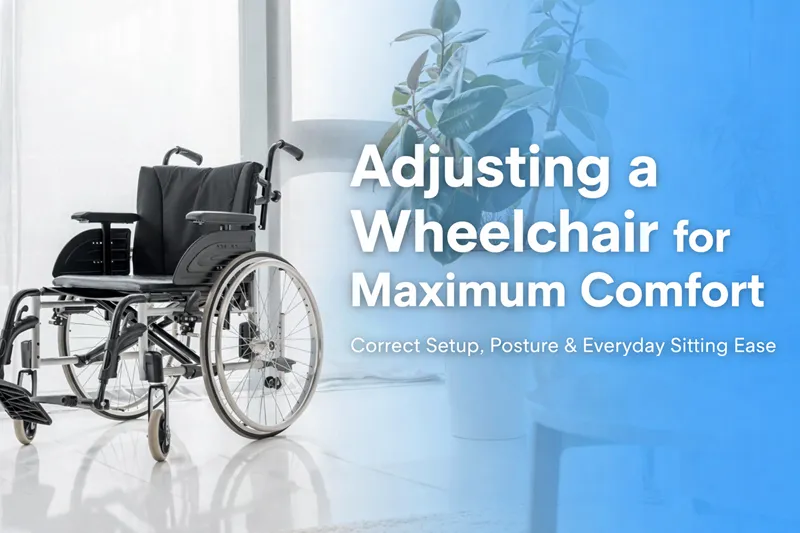
At Aarogyaa Bharat Live
Healthy, Live Better, we regularly meet families who have invested in a good
wheelchair but are unhappy with comfort. In most cases, the problem is not the
wheelchair itself, but the way it has been set up for the user’s body,
condition, and daily routine.
This detailed, humanized
guide explains how to adjust a wheelchair for maximum comfort, especially for Indian
home-care environments, where users often sit for long hours and caregivers
manage daily mobility.
Why Proper Wheelchair
Adjustment Is So Important
An incorrectly adjusted
wheelchair slowly creates stress on the body. The discomfort may start small,
but over time it leads to real health problems.
Problems Caused by Poor
Adjustment
- Lower back, upper back, and neck pain
- Slouching and spinal misalignment
- Shoulder, elbow, and wrist strain
- Pressure sores on hips and tailbone
- Faster tiredness and discomfort
- Reduced sitting tolerance and confidence
Benefits of Correct
Adjustment
When a wheelchair is adjusted
properly, it helps to:
- Distribute body weight evenly
- Maintain natural posture and alignment
- Improve blood circulation and breathing
- Reduce pain and fatigue
- Increase confidence, safety, and independence
A well-adjusted wheelchair supports
the body instead of fighting it.
Step-by-Step Guide to
Adjusting a Wheelchair for Maximum Comfort
1. Adjust the Seat Height
Correctly
Seat height affects posture,
leg comfort, circulation, and ease of transfers.
Correct Position
- Thighs resting comfortably on the seat
- Feet flat on footrests
- Knees bent naturally (around 90–100°)
Common Problems
- Too high: pressure under thighs, numbness
- Too low: knee strain, hip discomfort
Correct seat height is the
foundation of comfort.
2. Set the Footrests at
the Right Height
Footrests are often ignored,
but they are critical for posture and circulation.
Correct Adjustment
- Feet fully supported
- No dangling legs
- Ankles relaxed and aligned
Benefits
- Reduces leg swelling
- Improves blood flow
- Prevents sliding forward in the seat
Incorrect footrest height
pulls the body into poor posture.
3. Adjust Backrest Angle
& Back Support
The backrest supports the
spine and determines how long a user can sit comfortably.
Ideal Backrest Setup
- Slight recline (not completely upright)
- Supports the natural curve of the lower back
- Allows shoulders to relax
Add Lumbar Support If
- The backrest feels flat
- The user complains of lower back pain
Good back support prevents
slouching and fatigue.
4. Choose the Right Seat
Cushion
A seat cushion is not
optional, especially for elderly or long-term users.
Benefits of a Proper
Cushion
- Prevents pressure sores
- Improves pelvic alignment
- Reduces hip and tailbone pain
- Enhances back support effectiveness
Tip :- Pressure-relief or memory-foam cushions are ideal for long sitting hours.
5. Adjust Armrests for
Shoulder Comfort
Incorrect armrest height is a
major cause of shoulder and neck pain.
Correct Armrest Position
- Elbows bent comfortably
- Shoulders relaxed (not raised)
- Forearms resting evenly
Detachable armrests are
especially useful for safe transfers.
6. Head & Neck Support
(When Needed)
For elderly, weak, or
long-term users, head and neck support becomes important.
Why It Helps
- Prevents neck strain
- Supports upright posture
- Reduces fatigue during long sitting
Especially helpful for
Parkinson’s patients, stroke recovery, and bedridden users.
How Often Should a
Wheelchair Be Re-Adjusted?
Wheelchair comfort is not a
one-time setup.
Re-check Adjustments:
- After surgery or recovery changes
- When pain or discomfort appears
- If daily sitting hours increase
- Every few months for elderly users
As the body changes, the
wheelchair must adapt.
Indian Home-Care Tips for
Better Comfort
- Choose foldable wheelchairs for small homes
- Avoid uneven floors for long sitting
- Check brakes before every use
- Encourage posture change every 30–60 minutes
- Balance wheelchair sitting with bed rest
Indian home environments
require extra attention to comfort and safety.
Common Adjustment Mistakes
to Avoid
- Keeping footrests too high or too low
- Sitting fully upright for long hours
- Using a hard seat without cushioning
- Ignoring back and lumbar support
- Forgetting to readjust armrests after transfers
Avoiding these mistakes
prevents long-term pain.
Conclusion:
A wheelchair does not become
comfortable because it is expensive it becomes comfortable because it is adjusted
correctly for the user’s body, health condition, and daily routine.
Simple changes to seat
height, footrests, back support, cushions, and armrests can dramatically reduce
pain, prevent pressure sores, and increase sitting tolerance. These adjustments
restore confidence, dignity, and ease, especially for elderly users and
long-term home-care patients.
At Aarogyaa Bharat Live Healthy, Live Better, we believe true comfort comes from understanding the user not just selling equipment. The right adjustment transforms a wheelchair from a necessity into a supportive companion for everyday life.