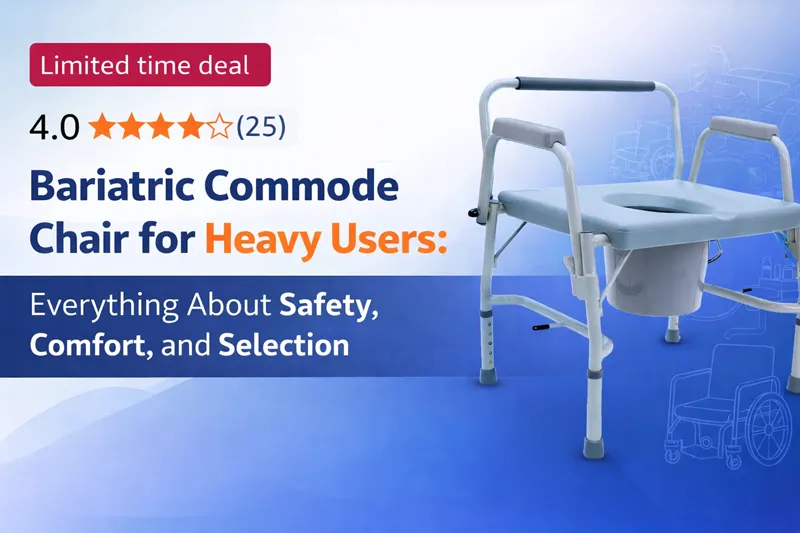
This is where a bariatric commode chair for heavy users becomes
essential. Bariatric commode chairs are purpose-built to handle higher weight
capacities while ensuring comfort, hygiene, and confidence for the user and ease
of care for caregivers. For families providing home care, selecting the right
bariatric commode chair is not just about convenience it is about safety,
long-term usability, and preserving dignity in daily life.
What Is a Bariatric Commode Chair
A bariatric commode chair is a heavy-duty toileting chair
specifically designed for users with higher body weight and broader body
dimensions. Unlike standard commode chairs, bariatric models feature reinforced
frames, wider seats, stronger joints, and higher weight-bearing capacity. These
chairs are engineered to remain stable under increased load without wobbling or
bending, ensuring safe sitting and standing movements. Bariatric commode chairs
may be stationary or mobile, and many include features such as padded seats,
extra-wide armrests, height adjustment, and reinforced legs to provide maximum
support and comfort.
Why Heavy Users Need a Bariatric Commode Chair
Heavy users face unique challenges when using regular
toileting aids. Standard commode chairs often have limited weight capacity,
narrow seating, and weaker frames, which can result in discomfort, imbalance,
or even structural failure. For heavy users, sitting down and standing up
requires additional support to avoid joint strain and loss of balance. A
bariatric commode chair is designed to distribute body weight evenly, reduce
pressure on joints, and provide stable support during every movement. This significantly
lowers the risk of falls, injuries, and embarrassment caused by equipment
failure.
When a Bariatric Commode Chair Is Necessary
A bariatric commode chair becomes necessary when a user
exceeds the safe weight limit of a standard commode chair or feels
uncomfortable due to narrow seating or instability. It is commonly required for
obese individuals, patients recovering from surgery who have gained weight due
to immobility, people with limited mobility combined with high body weight, and
individuals managing chronic conditions that affect movement. It is also
recommended as a preventive solution to avoid accidents, rather than waiting for
a standard chair to fail.
Key Structural Features of a Bariatric Commode Chair
The most defining feature of a bariatric commode chair is
its reinforced structure. The frame is usually made from heavy-gauge steel or
reinforced aluminium designed to support significantly higher loads. Welded
joints are thicker and stronger to prevent bending or cracking over time. Legs
are wider and often fitted with reinforced anti-slip rubber tips to improve
floor grip. The seat is extra wide and reinforced to prevent flexing
underweight. These structural enhancements ensure long-term durability and consistent
safety even with daily use.
Seat Width and Comfort for Heavy Users
Comfort is a critical consideration for heavy users, as
narrow or poorly designed seats can cause pressure points, discomfort, and
reduced confidence. Bariatric commode chairs feature wider seats that
accommodate larger body sizes without squeezing or imbalance. Many models
include padded seating to reduce pressure on thighs and hips, making prolonged
sitting more comfortable. Smooth seat edges and ergonomic shaping help prevent
skin irritation and improve overall sitting experience, which is especially important
for users who may need to sit for longer durations.
Armrests and Back Support Importance
Armrests play a vital role in bariatric commode chairs by
providing leverage and support during sitting and standing. Extra-wide,
reinforced armrests allow users to distribute weight evenly and reduce strain
on knees and lower back. Back support adds additional stability and confidence,
particularly for users with weak core strength or balance issues. Together,
these features help heavy users move safely and independently with reduced risk
of tipping or slipping.
Height Adjustment and Weight Distribution
Height-adjustable bariatric commode chairs allow
customization according to user height and bed or floor level. Proper height
alignment ensures that the user’s feet rest flat on the floor, improving
balance and reducing joint stress. Adjustable height also helps caregivers
assist more safely by minimizing awkward lifting or bending. Correct weight
distribution across the frame enhances stability and prolongs the life of the
chair.
Mobility Options: Fixed vs Wheelchair Bariatric Commode
Chairs
Bariatric commode chairs are available in fixed and
wheelchair-style designs. Fixed bariatric commode chairs are ideal for users
who can walk short distances but need strong seated support. Wheelchair
bariatric commode chairs are designed for users with very limited mobility and
allow caregivers to move the user without lifting. These models include
heavy-duty wheels and strong braking systems to maintain safety during movement
and toileting. Choosing between fixed and mobile designs depends on the user’s
mobility level and caregiving needs.
Safety in Daily Use for Heavy Users
Safety is the primary reason to choose a bariatric commode
chair. High weight capacity alone is not enough; the chair must remain stable
during every movement. Anti-slip legs or lockable wheels prevent sudden shifts
on smooth or wet floors. Reinforced frames prevent wobbling, and wide bases
improve balance. When used correctly, bariatric commode chairs significantly
reduce fall risk compared to standard chairs or unsupported bathroom use.
Hygiene and Cleaning Considerations
Bariatric commode chairs are designed with removable,
heavy-duty buckets that can handle increased use without cracking or leaking.
Buckets are made from non-porous materials for easy cleaning and odor control.
Smooth surfaces and durable coatings allow thorough disinfection, which is
especially important for long-term use. Maintaining hygiene not only protects
health but also preserves dignity and comfort for the user.
Bariatric Commode Chair vs Standard Commode Chair
The difference between a bariatric and standard commode
chair lies in strength, size, and safety margin. Standard chairs are designed
for average users and may fail under higher weight. Bariatric chairs are
engineered for heavier loads, wider body dimensions, and repeated stress. Using
a bariatric chair when needed prevents accidents, discomfort, and frequent
replacements, making it a smarter long-term choice.
Renting or Buying a Bariatric Commode Chair
Renting a bariatric commode chair is suitable for short-term
needs such as post-surgery recovery or temporary weight-related mobility
issues. Buying is recommended for long-term care, chronic conditions, or
ongoing obesity management, as it ensures constant availability and
familiarity. Aarogyaa Bharat offers both rental and purchase options to
accommodate different care durations and budgets.
Price Considerations and Long-Term Value
Bariatric commode chairs are priced higher than standard
models due to reinforced materials, wider seating, and higher safety standards.
While the initial cost may seem significant, the long-term value is
substantial. A well-built bariatric chair reduces medical risks, prevents
injuries, and avoids frequent replacements. For heavy users, investing in the
right equipment is far more cost-effective than dealing with accidents or
equipment failure.
Comparison Table: Bariatric vs Standard Commode Chair
|
Feature |
Bariatric
Commode Chair |
Standard
Commode Chair |
|
Weight
capacity |
Very high |
Limited |
|
Seat width |
Extra wide |
Standard |
|
Frame
strength |
Reinforced
heavy-duty |
Basic |
|
Stability |
Excellent |
Moderate |
|
Suitable for
heavy users |
Yes |
No |
Common Mistakes to Avoid When Choosing a Bariatric
Commode Chair
One common mistake is choosing a standard commode chair assuming it will be sufficient for a heavy user. Another is ignoring seat width and focusing only on weight capacity, which can still result in discomfort. Families also sometimes overlook armrest strength and brake quality in mobile models. Proper assessment of body weight, mobility level, and daily usage frequency helps avoid these mistakes.
Conclusion
A bariatric commode chair for heavy users is not a luxury but a necessity for safe, dignified, and effective home care. By providing reinforced strength, wider comfort, and superior stability, it addresses the unique challenges faced by heavy users and their caregivers. Choosing the right bariatric commode chair reduces risk, improves confidence, and enhances quality of life. Aarogyaa Bharat remains committed to delivering reliable, patient-centric home healthcare solutions that meet real-world needs with compassion and quality.