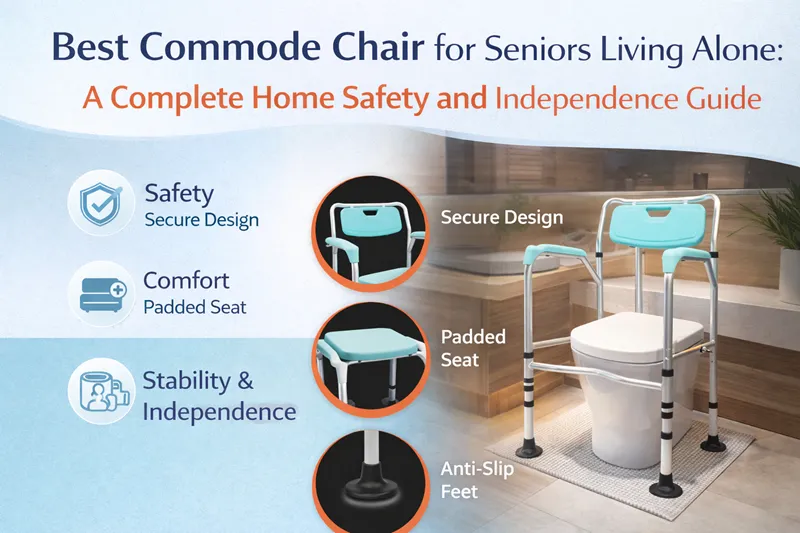
For seniors, even a minor slip can lead to fractures, hospitalization, long recovery periods, and loss of independence. That is why choosing the best commode chair for seniors living alone is not just about comfort. It is about preventing emergencies, maintaining dignity, reducing fear, and supporting safe daily routines without depending on someone’s presence every time. This guide covers everything seniors and families should know: when a commode chair becomes necessary, what features matter most for solo living, which type is safest for different mobility levels, how to set it up at home, what mistakes to avoid, and how to make toileting as safe and stress-free as possible.
Why Seniors Living Alone Need Extra Bathroom Safety
A senior living alone does not have immediate help available
during urgent moments. Night-time bathroom visits, sudden dizziness, knee pain,
balance issues, or urgency can become dangerous if the bathroom is far from the
bed or the senior is rushing. Even if a senior manages well during the day,
weakness can increase at night due to low blood pressure, dehydration,
medications, or sleepiness. The simple act of standing up quickly and walking
to the toilet can cause imbalance, leading to falls. When someone lives alone,
a fall is more serious because help may not arrive quickly. A commode chair
reduces this risk by bringing toileting support closer, reducing walking
distance, and providing stable arm support for safe sitting and standing.
What Makes a Commode Chair “Best” for Seniors Living
Alone
For seniors living alone, the “best” commode chair is not
necessarily the most expensive model, but the one that balances safety, ease of
use, comfort, and low maintenance. It must be stable enough to prevent
wobbling, simple enough to use without assistance, and hygienic enough to
manage with minimal effort. It should support the senior’s daily routine
without making them feel dependent or embarrassed. It should also fit the home
layout, whether the senior lives in a small apartment, a house with a distant
bathroom, or a home with narrow hallways. Most importantly, it should reduce
the need for risky movements like squatting, bending too much, or walking long
distances at night.
Understanding When a Senior Should Start Using a Commode
Chair
Many families wait too long to introduce a commode chair,
assuming it is only for bedridden patients. In reality, seniors living alone
benefit from commode chairs even at early stages of mobility decline. If a
senior has knee pain, arthritis, frequent night-time urination, dizziness, slow
walking speed, breathlessness, or fear of slipping in the bathroom, they are
already a suitable candidate. Seniors recovering from surgery, with chronic
illnesses like COPD or heart disease, or with neurological issues like
Parkinson’s or mild stroke effects should also consider a commode chair.
Starting early prevents accidents and keeps the senior confident and
independent longer.
Types of Commode Chairs Suitable for Seniors Living Alone
For seniors living alone, choosing the right type of commode
chair depends on mobility level. A standard bedside commode chair without
wheels is often the safest option for seniors who can walk a few steps because
it provides maximum stability and requires no brake handling. A foldable
commode chair is ideal for small homes or seniors who want to store it
discreetly. A height-adjustable commode chair is highly recommended because it
can be tuned to the senior’s comfort and reduces strain while standing. A commode
chair with wheels is useful only if the senior has caregiver support because
wheels require correct brake usage; for someone living alone, wheels may
increase risk unless the chair is mainly used as a transport chair under
assistance. Some seniors may benefit from a commode chair that can be
positioned over a western toilet, especially if they can reach the bathroom but
struggle to sit down and stand up.
Best Safety Features to Look For (Non-Negotiable for Solo
Seniors)
When a senior lives alone, safety features become
non-negotiable. The commode chair should have a strong frame that does not
flex. Steel frames usually provide better stability and longer life. The chair
should have anti-slip rubber tips on all legs to prevent shifting. If wheels
exist, brakes must be strong and easy to lock, but again, for solo living,
non-wheeled chairs are generally safer. Armrests should be wide, sturdy, and
comfortable because they act as support handles for sitting and standing. The seat
height should match the senior’s knee height so that feet remain flat on the
floor and standing requires less effort. A backrest improves confidence and
posture support, especially for seniors with weak balance. A bucket with a lid
is helpful for hygiene and odor control, particularly when the chair is placed
in the bedroom.
Choosing the Right Height for Maximum Independence
Height is one of the most important factors for seniors
living alone because they cannot rely on someone to lift or support them. The
seat height should allow the senior to sit with knees near a 90-degree bend and
feet flat on the floor. If the chair is too low, standing becomes difficult and
increases fall risk. If it is too high, feet may not grip the floor, causing
instability. Adjustable-height commode chairs are ideal because they can be
fine-tuned and adjusted as the senior’s condition changes. Correct height also
reduces knee pain, hip stress, and fear of standing up.
Comfort and Dignity: Why These Matter More When Living
Alone
Seniors living alone often avoid discussing toileting
difficulties because they feel embarrassed or fear losing independence. A
commode chair should support dignity by being comfortable, easy to use, and
easy to clean. A comfortable seat reduces hesitation to use the chair,
especially at night. Padded seats may help seniors with sensitive skin or low
body fat. Smooth seat edges reduce pressure on thighs. A stable chair reduces
fear, and reduced fear increases independence. When a senior feels confident using
the commode chair alone, they are less likely to take dangerous risks like
rushing to the bathroom in the dark.
Placement Tips: Where to Keep the Commode Chair for Best
Results
For seniors living alone, placement is critical. The commode
chair should be placed close enough to the bed that the senior can reach it
without long walking. At night, it should be accessible without obstacles like
rugs, tables, wires, or slippers. The floor should be flat and dry. If the
commode chair is in the bedroom, consider privacy screens or placement near a
corner for discretion. Keep a night lamp or motion-sensor light nearby to
reduce disorientation. Place tissues, sanitizer, and a small trash bin within
reach. If the senior uses a walker, ensure the walker can be positioned close
to the chair to support transfers safely.
Hygiene Management for Seniors Living Alone
Hygiene must be manageable for the senior without heavy
effort. Choose a commode chair with a removable bucket that is easy to lift and
clean. Buckets with lids help control smell. Non-porous plastic buckets are
easier to wash. Seniors should use mild disinfectant regularly to prevent odor
and infection risk. If the senior cannot clean the bucket independently,
consider setting a routine for caregiver visits or family support for cleaning
tasks. Hygiene becomes easier when the chair is designed well wide bucket
access, smooth surfaces, and easy removal are key.
Steel vs Plastic: Which Is Better for Seniors Living
Alone
For solo seniors, steel commode chairs are often preferred
because they are more stable and durable. A stable chair reduces fear and
improves confidence. Plastic commode chairs are lightweight and easier to move,
but they may feel less grounded, especially for seniors with balance issues.
High-quality plastic chairs can still be safe, but for long-term solo living,
steel usually provides better peace of mind. If the senior is very lightweight
and only needs occasional use, a strong plastic chair may be sufficient, but
stability should always be prioritized.
Commode Chair vs Raised Toilet Seat: Which Works Better
for Solo Seniors
If a senior can safely walk to the bathroom, a raised toilet
seat with arm support may help with sitting and standing. However, it does not
solve the risk of walking to the bathroom at night. A commode chair is safer
for seniors with urgency, frequent urination, dizziness, or poor balance. Many
homes use both: a bedside commode chair for night-time and a raised toilet seat
for daytime. This combination provides maximum independence and safety for solo
living.
Common Mistakes Families Make When Buying for Seniors
Living Alone
One common mistake is buying a commode chair with wheels
assuming it is more advanced, but wheels can increase risk if the senior
forgets to lock brakes. Another mistake is choosing the cheapest model without
checking stability, armrest strength, or height adjustment. Some families
choose a chair that is too low, causing difficulty in standing. Another mistake
is placing the chair far away or in a cluttered area, which defeats the purpose
of safety. The best commode chair is one that is easy to access, safe to use
alone, and simple to maintain.
Practical Table: Best Commode Chair Type by Senior
Condition
|
Senior
Situation |
Best
Commode Chair Type |
Why It
Works Best |
|
Mild knee
pain, still mobile |
Height-adjustable
stationary commode chair |
Safer
sit-stand, no rolling risk |
|
Frequent
night urination |
Bedside
commode chair without wheels |
Reduces
walking at night |
|
Arthritis and
weak legs |
Steel commode
chair with strong armrests |
More
stability and support |
|
Small home,
limited space |
Foldable
commode chair |
Easy storage,
space-saving |
|
Very weak or
semi-bedridden |
Wheelchair
commode chair with caregiver support |
Movement
without lifting |
Conclusion
For seniors living alone, the best commode chair is one that
prioritizes stability, simplicity, comfort, and independence. It should reduce
night-time fall risk, support safe sitting and stand, and be easy to clean
without heavy effort. A height-adjustable steel commode chair without wheels is
often the best overall choice for solo seniors because it provides maximum
stability and confidence. Choosing the right commode chair early can protect
independence for years by preventing accidents and reducing fear. Aarogyaa
Bharat remains committed to helping families and seniors choose safe,
dignified, and practical home healthcare solutions that truly fit real-life
needs.