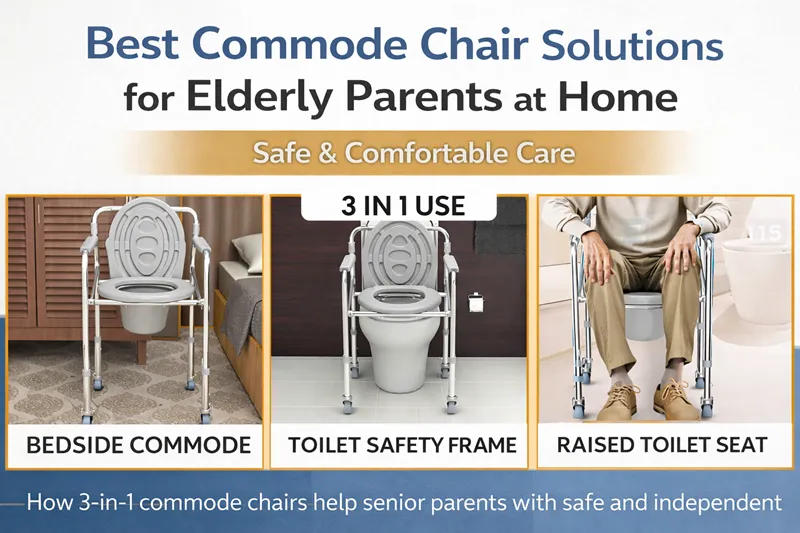
Toileting, in particular, becomes one of the most dangerous daily routines, especially in Indian homes where bathrooms are frequently located at a distance from bedrooms, floors are tiled and slippery, lighting may be insufficient at night, and space is limited. A commode chair for elderly parents is not just a mobility aid but a critical home-care safety solution that reduces fall risk, preserves dignity, and restores confidence, while also offering peace of mind to family members and caregivers who worry constantly about night-time accidents and bathroom-related injuries. At Aarogyaa Bharat, we regularly interact with families who believe their parents are “managing fine” until a fall, near-miss, or severe joint pain makes daily toileting unsafe. Many elderly parents hesitate to admit difficulty due to pride or fear of becoming a burden, which further increases risk. Introducing a commode chair early allows elderly parents to toilet safely within their own room, reducing physical strain and emotional stress while maintaining independence. This proactive approach transforms elder care from reactive crisis management into preventive, dignified support.
Why Toileting Is a Major Risk Area for Elderly Parents
Ageing naturally reduces muscle power, joint lubrication,
and coordination, making the sit-to-stand movement particularly painful and
unstable for elderly parents. Knees and hips often struggle to support body
weight, while spinal stiffness limits balance. Many elderly individuals also
experience urgency due to bladder issues, diabetes, prostate enlargement, or
medication side effects, causing them to rush to the bathroom. In Indian homes,
this usually involves walking across smooth tiled floors, navigating door
thresholds, and using bathrooms that lack grab bars or anti-slip features.
These conditions significantly increase fall risk, especially at night when
visibility is poor and reflexes are slow. A commode chair reduces or completely
eliminates these hazards by removing the need to walk to the bathroom during
vulnerable moments.
How a Commode Chair Preserves Dignity and Independence
Loss of independence is one of the most emotionally
distressing aspects of ageing. Elderly parents often feel embarrassed asking
for help with toileting and may attempt unsafe movements to avoid disturbing
family members. A commode chair restores dignity by allowing parents to manage
toileting independently or with minimal assistance in a familiar and private
environment. This independence boosts confidence, reduces anxiety, and
strengthens emotional well-being. Aarogyaa Bharat believes that preserving dignity
is just as important as preventing physical injury, and commode chairs play a
crucial role in achieving both.
Importance of Height, Stability, and Arm Support
For elderly parents, the ability to sit down and stand up
safely determines whether a toileting aid will be used confidently or avoided.
A commode chair with adjustable height allows the seat to be positioned so that
feet rest flat on the floor and knees are not excessively bent, reducing joint
pain and instability. Strong armrests enable parents to use upper body strength
to assist movement, reducing reliance on weak or painful legs. Non-slip rubber
feet provide stability on tiled floors, preventing sliding during transfers.
These features together create a predictable and secure toileting experience
that elderly parents can trust every day.
Night-Time Safety and Reduced Fall Risk
Night-time toileting is one of the most dangerous times for
elderly parents due to darkness, drowsiness, and stiffness after long periods
of rest. Many elderly individuals attempt to walk to the bathroom alone at
night to avoid waking family members, which significantly increases fall risk.
A commode chair placed beside the bed removes the need for night-time walking
entirely, allowing safe toileting with minimal movement. This not only prevents
injuries but also improves sleep quality, as parents no longer worry about
accidents or rushing in the dark.
Hygiene Management in Home Elder Care
Maintaining hygiene is a major concern when caring for
elderly parents, particularly in small homes where bedrooms and living areas
are close together. Commode chairs with removable buckets allow waste to be
managed discreetly and hygienically without repeated trips to the bathroom.
Cleaning routines are easier to maintain, and odour control is improved with
proper bucket design. This controlled hygiene approach is often more practical
and safer than relying solely on shared bathrooms, especially during illness or
reduced mobility periods.
Caregiver Relief and Family Peace of Mind
Supporting elderly parents with toileting can be physically
and emotionally exhausting for caregivers, especially during night-time
emergencies. Assisting parents to walk, balancing them on slippery floors, and
lifting weight repeatedly increases caregiver injury risk and burnout. A
commode chair simplifies caregiving by reducing movement and allowing
controlled assistance, protecting caregivers from back strain and fatigue.
Families often report reduced stress and improved household harmony once a commode
chair becomes part of daily care.
Comparison Table: Elderly Toileting With vs Without a
Commode Chair
|
Aspect |
With
Commode Chair |
Without
Commode Chair |
|
Distance to
toilet |
Minimal,
bedside use |
Long walk to
bathroom |
|
Fall risk |
Very low |
High |
|
Joint strain |
Reduced |
Severe |
|
Night-time
safety |
Excellent |
Poor |
|
Elder
independence |
High |
Low |
|
Caregiver
effort |
Reduced |
High |
|
Emotional
confidence |
Improved |
Reduced |
Choosing the Right Commode Chair for Elderly Parents
Selecting the right commode chair requires careful
consideration of the parent’s height, weight, medical condition, and home
layout. Stability, armrest strength, adjustable height, non-slip feet, and ease
of cleaning should be prioritised over appearance or price. Aarogyaa Bharat
helps families choose commode chairs specifically suited for elderly parents
and Indian home environments, ensuring long-term comfort and safety.
Long-Term Benefits of Using a Commode Chair
Over time, a commode chair helps elderly parents remain
confident, independent, and socially engaged rather than becoming fearful or
withdrawn. It prevents falls, reduces hospital visits, and supports healthy
toileting habits. Families experience fewer emergencies and greater peace of
mind, making the commode chair one of the most cost-effective and impactful
investments in elder care.
Conclusion
A commode chair for elderly parents is not a sign of dependency but a symbol of proactive, respectful, and responsible care. By reducing fall risk, preserving dignity, supporting caregivers, and adapting to Indian home realities, it transforms one of the most dangerous daily activities into a safe and manageable routine. For families committed to ageing-in-place with comfort and confidence, a commode chair is an essential part of compassionate home care. Aarogyaa Bharat remains dedicated to helping families make informed, safety-first decisions that protect their elderly parents every single day.