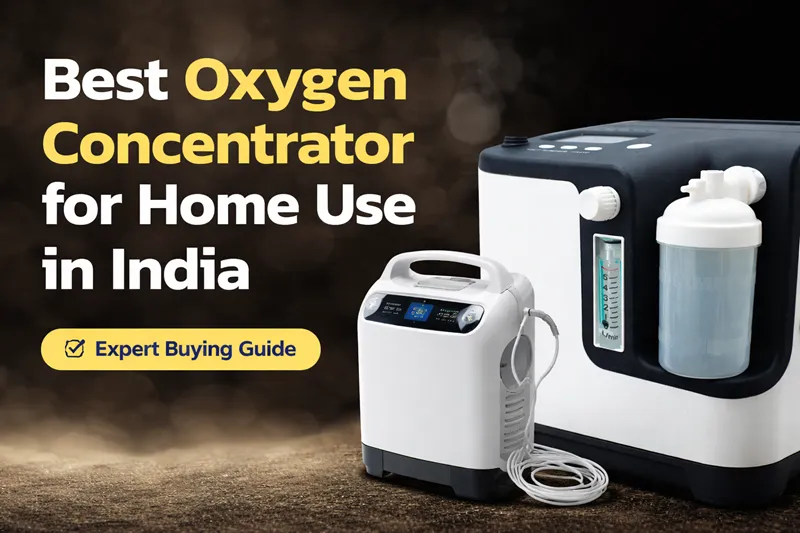
In India, respiratory health challenges are steadily
increasing due to multiple factors such as rising air pollution levels,
lifestyle-related lung diseases, post-COVID complications, smoking-related
conditions, and an aging population that requires long-term respiratory
support. What was once considered emergency hospital equipment has now become
an essential part of home healthcare for thousands of Indian families.
At Aarogyaa
Bharat, we interact daily with caregivers, doctors, and families who are
navigating this decision for the first time. We have seen how the right oxygen
concentrator can dramatically reduce hospital visits, improve sleep quality,
increase mobility, and restore confidence for patients. At the same time, we
have also witnessed how poorly chosen or low-quality devices can lead to
repeated breakdowns, anxiety, and unnecessary medical emergencies. This
detailed guide is written to help you confidently choose the best
oxygen concentrator for home use in India, without confusion or regret.
Understanding Oxygen Concentrators for Home Care
An oxygen concentrator is a medical device that draws in
ambient air, removes nitrogen, and delivers concentrated oxygen to the patient.
Unlike oxygen
cylinders, which require refilling and constant monitoring, concentrators
provide a continuous supply of oxygen as long as electricity is available. This
makes them especially suitable for long-term home use. For patients
suffering from chronic obstructive pulmonary disease (COPD), interstitial lung
disease, asthma, post-COVID lung damage, pneumonia recovery, or age-related
respiratory weakness, oxygen concentrators offer consistent therapy without the
logistical burden of cylinders. When used correctly under medical supervision,
they significantly improve quality of life and reduce dependence on hospitals.
Oxygen Concentrator Price in India: Why There Is Such a
Wide Range
One of the most frequently asked questions at Aarogyaa
Bharat is,
“Why does the oxygen concentrator price in India vary so much?”
This question arises because families often see prices
ranging from ₹30,000 to more than ₹3,50,000 and understandably feel confused.
The reason for this wide variation is that oxygen concentrators differ
significantly in terms of technology, oxygen delivery capacity, safety
mechanisms, durability, certifications, and long-term reliability.
In India, oxygen concentrator prices typically fall within
the following broad range:
- Entry-level
stationary concentrators start at around ₹30,000
- Mid-range,
medically certified home concentrators range between ₹50,000 and
₹1,20,000
- Portable
and premium concentrators can cost anywhere between ₹1,00,000 and
₹3,50,000
It is important to understand that the cheapest option is
rarely the safest or the most economical in the long run. A concentrator that
fails during the night, produces inconsistent oxygen purity, or lacks alarm
systems can cause serious health risks and emotional distress.
Why Oxygen Concentrator Prices Matter in India
In a country like India, where healthcare expenses are
largely out-of-pocket, purchasing decisions must balance affordability with
safety. An oxygen concentrator is not a luxury product; it is a life-support
device. Choosing a reliable concentrator often proves far more cost-effective
than repeated hospital admissions, emergency oxygen
cylinder refills, and constant travel for medical support. A
good oxygen
concentrator helps patients remain stable at home, improves sleep and
energy levels, reduces caregiver stress, and provides long-term financial
relief. Price matters because it directly reflects the device’s ability to
deliver consistent oxygen concentration, operate reliably for years, and
respond safely to power fluctuations and internal faults. At Aarogyaa
Bharat, we guide families to view price as an indicator of value, safety,
and longevity, rather than as a standalone number.
Key Factors That Influence Oxygen Concentrator Prices in
India
1. Type of Oxygen Concentrator: Stationary or Portable
Stationary oxygen
concentrators are designed primarily for indoor home use. They are
heavier, larger, and require a continuous power supply. Because they do not
include battery systems and advanced mobility features, they are significantly
more affordable. These models typically range between ₹40,000 and
₹80,000 and are ideal for elderly patients or individuals who require
oxygen primarily while resting or sleeping at home. Portable oxygen
concentrators are compact, lightweight, and battery operated. They allow patients
to move freely, travel, and maintain an active lifestyle. However, the advanced
technology required to compress oxygen into a smaller unit makes these devices
more expensive. Prices usually range between ₹1,00,000 and ₹3,50,000,
depending on battery life and oxygen delivery capacity. Many families
begin with a stationary unit and later transition to a portable model as
mobility needs increase. Both choices are valid when matched correctly to the
patient’s lifestyle and medical condition.
2. Oxygen Flow Rate and Delivery Capacity
Oxygen concentrators are classified by their oxygen flow
rate, measured in liters per minute (LPM). The flow rate required varies
depending on the severity of the patient’s condition and must always be
determined by a doctor.
- Concentrators
delivering 1–3 LPM are generally suitable for mild to moderate
conditions and typically cost around ₹45,000 to ₹60,000
- Devices
capable of 5 LPM or higher are designed for more severe
respiratory conditions and can cost ₹70,000 to ₹1,50,000 or more
Some concentrators provide continuous flow oxygen, while
others operate on pulse-dose technology. Pulse-dose devices are more
energy-efficient but may not be suitable for patients who require oxygen during
sleep or have irregular breathing patterns.
3. Brand Reputation and Medical Certifications
The brand and certification of an oxygen concentrator play a
critical role in both pricing and safety. Internationally certified and
well-established brands invest heavily in research, quality control, and
long-term reliability.
Certified concentrators typically guarantee:
- Oxygen
purity levels between 90% and 95%
- Built-in
alarms for power failure, low oxygen purity, and system faults
- Durable
compressors designed for continuous use
- Reliable
warranties and service networks
Uncertified or low-cost brands may appear attractive
initially, but they often fail prematurely, lack safety alarms, and require
frequent repairs. At Aarogyaa Bharat, we strongly recommend choosing certified
devices even if the upfront cost is slightly higher.
4. Additional Comfort and Safety Features
Modern oxygen
concentrators often include features that improve patient comfort and
caregiver convenience. These features increase cost but may be essential for
long-term use.
Such features include:
- Low-noise
operation for uninterrupted sleep
- Long
battery backup in portable models
- Touchscreen
or digital displays
- Auto-shutoff
and overheating protection
- Usage
data tracking for medical review
Not every feature is necessary for every patient, so careful
evaluation helps prevent unnecessary overspending.
5. Warranty, Maintenance, and After-Sales Support
Warranty coverage and service support are often overlooked
but are critical for uninterrupted oxygen therapy. Devices with 2–5 years
warranty and reliable service networks may cost more initially but
significantly reduce long-term stress and expenses.
Regular maintenance, filter replacement, and servicing
typically cost ₹5,000 to ₹10,000 per year. At Aarogyaa Bharat, we provide nationwide
service support, responsive helplines, and dependable maintenance assistance,
which families consistently appreciate during emergencies.
6. Taxes, Import Duties, and Regional Availability
In India, oxygen concentrators attract 18% GST,
and imported models are further affected by customs duties and currency
fluctuations. Locally manufactured or assembled models are often more
affordable and easier to service.
Price variations may also occur due to location. Metro
cities generally have better availability, while remote areas may face higher
delivery charges. Aarogyaa Bharat ensures transparent pricing and pan-India
delivery to minimize these disparities.
7. Energy Efficiency and Power Consumption
Energy-efficient concentrators may cost slightly more
upfront but reduce electricity bills significantly over time. Given India’s
variable power tariffs and frequent usage, energy efficiency becomes an
important long-term consideration.
Average Oxygen Concentrator Prices in India
|
Category |
Price Range (₹) |
Best Suited For |
|
Basic Stationary |
30,000 – 60,000 |
Mild respiratory needs |
|
Advanced Stationary |
60,000 – 1,20,000 |
Long-term home therapy |
|
Portable |
1,00,000 – 2,50,000 |
Mobility and travel |
|
Premium Portable |
2,50,000 – 3,50,000 |
Active or severe cases |
Practical Tips for Buying the Best Oxygen Concentrator
Always consult a doctor before purchase to confirm flow rate
and usage duration. Compare multiple certified brands and read verified user
reviews. Consider rentals or refurbished units for short-term needs. Factor in
long-term costs such as electricity, maintenance, and battery replacement. Most
importantly, buy only from trusted sellers with strong after-sales support.
Common Mistakes Families Should Avoid
Many families make the mistake of prioritizing price over
safety, ignoring certifications, overlooking noise levels, underestimating
maintenance needs, or purchasing from sellers without service support. These
mistakes often lead to greater costs and stress later.
Conclusion
The best oxygen concentrator for home use in India is one that delivers consistent oxygen purity, operates reliably over time, and supports both patient comfort and caregiver peace of mind. The true value of a concentrator lies not in its price tag, but in its ability to support life safely and continuously. At Aarogyaa Bharat, our goal is to help families make informed, confident decisions by offering certified products, transparent pricing, and dependable support. With the right oxygen concentrator, home care becomes safer, more affordable, and far less stressful.