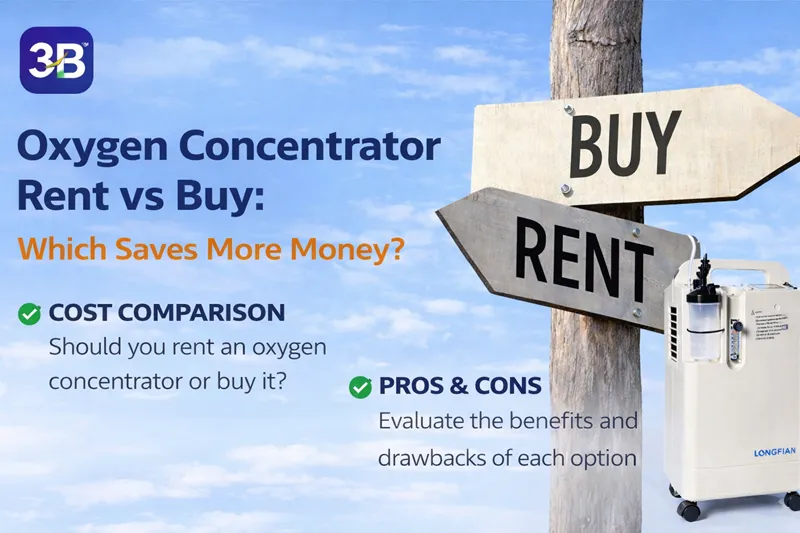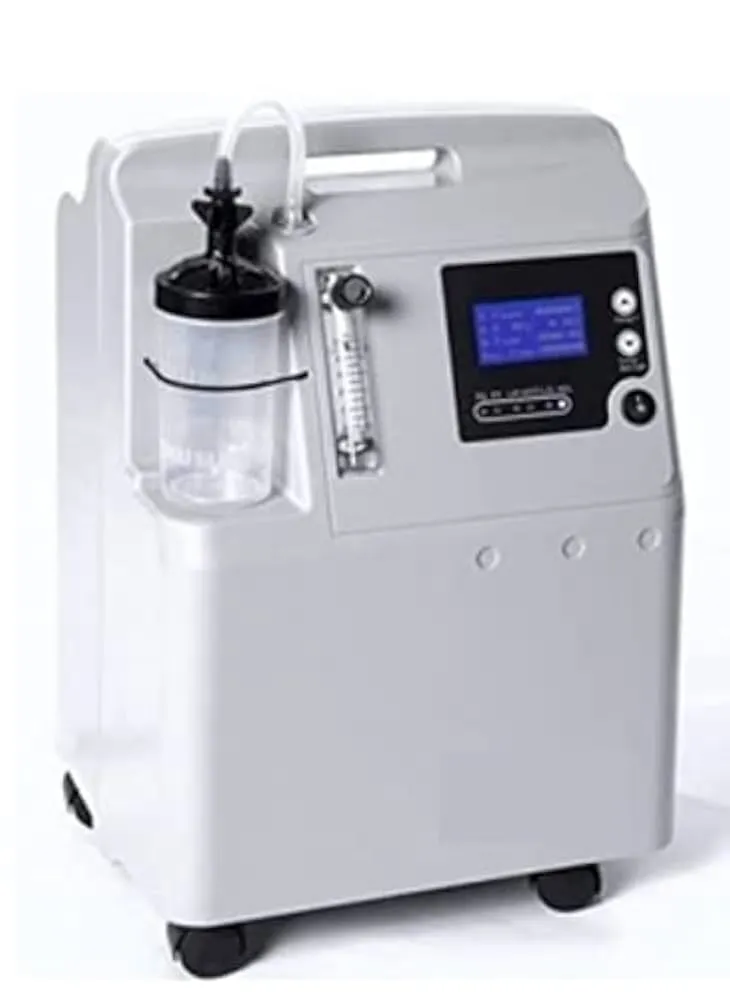
What is a Portable Oxygen Concentrator (POC)?
A portable oxygen concentrator (POC) is a medical device that takes in room air, filters nitrogen out, and delivers oxygen-rich air to the user through a nasal cannula. Unlike oxygen cylinders, concentrators don’t “run out” of oxygen they run on power (electricity or battery).
Portable concentrators are designed for:
-
Home mobility: moving room to room, short walks, stairs
-
Outdoor mobility: errands, travel, office use (depending on battery/runtime)
-
Backup support: during cylinder refills or short power interruptions (with extra battery/inverter)
Portable vs Stationary Concentrator: Which One Do You Need?
Many people confuse portable concentrators with regular home concentrators.
Stationary / Home concentrators
-
Continuous flow (usually 1–5 LPM, some go higher)
-
Runs on electricity, heavier
-
Great for long hours/day and sleep
-
Less expensive for higher oxygen needs
Portable oxygen concentrators
-
Lighter, travel-friendly
-
Often pulse dose (oxygen delivered when you inhale)
-
Battery-powered + AC/DC support
-
Best for mobility and moderate oxygen needs
Best approach for many families:
Use a stationary concentrator at home + portable concentrator for movement/travel.
Step 1: Know Your Prescription
Before looking at brands, confirm:
1) Do you need pulse dose or continuous flow?
-
Pulse dose: device detects inhalation and delivers oxygen in bursts. Good for many active users.
-
Continuous flow: oxygen flows continuously at a fixed LPM. Often recommended for sleep, severe cases, mouth-breathers, or certain clinical needs.
Most portable models are pulse dose.
If you require continuous flow, options become fewer and usually heavier.
2) Your required flow setting
Doctors may prescribe:
-
LPM (Liters Per Minute) for continuous flow
-
Setting levels (1–5/1–6) for pulse dose devices (not equal across brands)
Ask your clinician:
-
Required oxygen delivery at rest vs activity
-
Whether you can use pulse dose safely
-
Your SpO₂ targets (usually 90–94% depending on condition)
Step 2: What Makes a Portable Concentrator “Best” for Home Use?
Here are the real factors that matter.
1) Oxygen delivery performance
Your goal is stable SpO₂. A good POC should maintain oxygen saturation across:
-
Sitting/resting
-
Light movement inside home
-
Short outdoor walk (if you plan to use it outside)
2) Battery runtime and charging flexibility
Look for:
-
Minimum 2–4 hours for indoor mobility comfort
-
Swappable batteries (very useful)
-
AC charging (home) + DC charging (car)
3) Noise level for comfort
If you’ll use it while resting or in a quiet room:
-
Prefer models known for low noise
-
Check if “beeps/alerts” can be adjusted
4) Weight and portability
For home use, weight matters because you may carry it between rooms.
-
2–3 kg is manageable for many
-
3–5 kg might need a trolley/cart
5) Service support, filters, warranty, and spares
This is huge in India:
-
Availability of authorized service
-
Cost and availability of batteries
-
Warranty terms (especially compressor)
6) Cannula comfort and compatibility
Most POCs work with standard nasal cannulas. Consider:
-
Soft cannulas for long wear
-
Correct length to move around the house
Best Portable Oxygen Concentrators for Home Use: Categories That Make Sense
Instead of a random list, here’s a practical way to choose based on your needs.
Category A: Best for Daily Home Mobility - Light weight + Reliable Pulse Dose
Ideal for: mild–moderate oxygen needs, moving around home, short outings.
What to look for:
-
Weight under ~2.5–3.0 kg
-
Pulse dose settings up to 5 or 6
-
Good battery life with extra battery option
Why this category wins:
Most users want comfort, easy portability, and stable oxygen during light activity.
Category B: Best for Heavy Home Use - Long Hours + Strong Output
Ideal for: users needing oxygen many hours/day but still want portability.
What to look for:
-
Higher pulse settings
-
Robust compressor reputation
-
Easy serviceability, strong warranty
-
Ability to plug in and run continuously on AC power
Tip: If you need oxygen for long continuous hours, consider a stationary unit + portable for movement.
Category C: Best Continuous Flow Portable Options
Ideal for: those prescribed continuous flow but still need portability.
What to look for:
-
Continuous flow LPM capability (often up to 2 LPM on many portable continuous-flow models)
-
Acceptable weight (they are heavier)
-
Good battery + AC run support
Reality check:
True continuous-flow portability is limited and often compromises weight/runtime.
Category D: Best Value for Money - Budget-Friendly, Home-Focused
Ideal for: families managing cost, needing a reliable device for indoor mobility.
What to look for:
-
Verified oxygen output specs
-
Warranty and service network
-
Good return/replacement policy
-
Battery replacement costs
Warning: Avoid unknown brands with no service support—repairs and battery failures become expensive.
Key Features Checklist Before You Buy
Use this checklist while comparing models:
Oxygen & Therapy
-
Pulse dose or continuous flow (as prescribed)
-
Max setting meets doctor’s requirement
-
Works with nasal cannula comfortably
-
Performance at rest + light movement
Power & Battery
-
Battery runtime at your setting
-
Extra/swappable battery available
-
Charging time and charger type
-
Can run on AC power for long hours
Comfort & Practical Use
-
Weight is manageable for home use
-
Noise level comfortable
-
Display is readable (elder-friendly)
-
Easy to clean filters / easy maintenance
Service & Warranty
-
Authorized service in your city
-
Warranty duration + what’s covered
-
Availability of batteries & spares
-
Clear return policy (if performance mismatch)
Common Mistakes People Make While Buying a Portable Concentrator
Mistake 1: Assuming pulse “setting 3” equals 3 LPM
Pulse dose settings are not the same as LPM and vary by brand/model. Always compare based on clinical suitability, not just numbers.
Mistake 2: Ignoring service support and battery cost
Batteries are consumables and can be expensive. If spares aren’t easily available, the “cheap” purchase becomes costly later.
Mistake 3: Buying too heavy for daily use
A heavy unit might sit unused. If home mobility is your goal, prioritize weight and ergonomics.
Mistake 4: Not planning for power backup
A POC depends on electricity/battery. If your area has outages:
-
keep extra battery
-
consider inverter support
-
keep emergency cylinder backup if prescribed
Mistake 5: Not testing SpO₂ response
If possible, check oxygen saturation using a pulse oximeter during:
-
sitting
-
walking 3–5 minutes
to ensure the device meets your needs.
Maintenance Tips to Make Your POC Last Longer
A well-maintained concentrator performs better and lasts longer.
Daily/Weekly
-
Clean external surface with dry cloth
-
Keep device away from smoke, oil fumes, and dust-heavy areas
-
Check cannula for blockages
Filter care
-
Clean or replace filters as per manual
-
Dusty environments require more frequent cleaning
Battery health
-
Don’t store fully discharged for long periods
-
Use original charger
-
Avoid extreme heat exposure
Annual servicing
-
Recommended for high-use machines
-
Helps prevent unexpected breakdowns
Who Should Consider Renting vs Buying?
Consider renting if:
-
Short-term recovery (post-surgery, temporary lung infection)
-
Trial before buying
-
Uncertain oxygen requirement duration
Consider buying if:
-
Long-term therapy (COPD, pulmonary fibrosis, chronic respiratory failure)
-
Frequent mobility needs
-
You want independence from cylinder refills
Pro tip: Many families start with renting, then buy the exact model that worked best.
Portable Oxygen Concentrator for Home Use: Quick Recommendations by User Type
For seniors who stay mostly indoors
-
Prioritize: easy controls, low noise, AC use comfort, service reliability
-
Consider: lightweight POC + stationary backup
For patients who move around the house and do small walks
-
Prioritize: weight, battery, stable oxygen on light activity
For caregivers managing elderly patients
-
Prioritize: easy portability, quick cannula setup, clear alarms, quick service support
For users who want travel + home use
-
Prioritize: battery runtime, DC charging, compact size, accessories
Conclusion: Choose the Right POC Like a Pro
The “best” portable oxygen concentrator for home use is not the most expensive one - it’s the one that fits your prescription, daily routine, mobility level, and support availability.
Before you buy:
-
Confirm your prescription (pulse vs continuous)
-
Choose the right category (lightweight, high-output, continuous-flow, value)
-
Compare TCO: battery + service + warranty
-
Plan backup: extra battery/inverter/cylinder if needed
When chosen correctly, a portable concentrator becomes more than a device - it becomes freedom, mobility, and peace of mind.