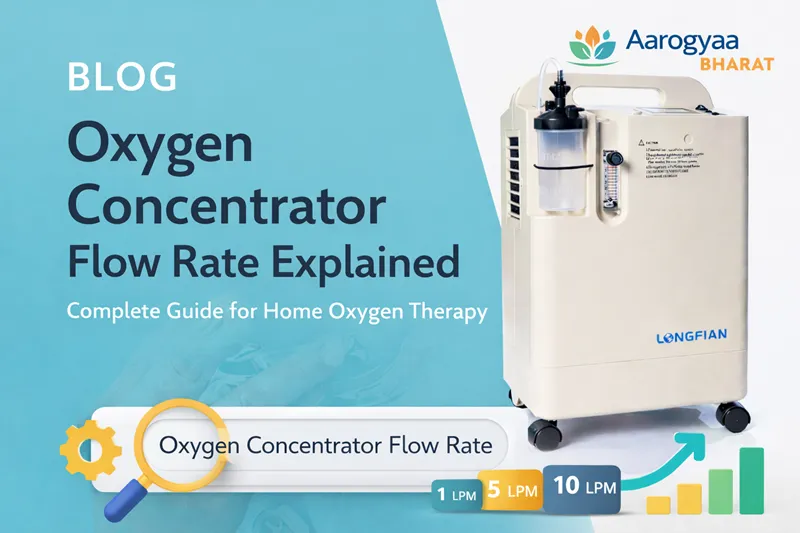
Among all technical parameters of an oxygen concentrator, flow rate is the single most critical factor that determines whether the therapy will be safe, comfortable, and medically beneficial. Flow rate, measured in liters per minute (LPM), defines how much oxygen is delivered to the patient in one minute, and even small mismatches between prescribed and actual flow can lead to under-oxygenation or oxygen overload.
For patients recovering from respiratory illnesses, chronic lung disease, post-COVID complications, or post-surgical breathing weakness, flow rate directly impacts fatigue levels, breathlessness, heart strain, and overall recovery speed. At Aarogyaa Bharat, we frequently receive calls from families who are confused between buying a 3 LPM, 5 LPM, or 10 LPM oxygen concentrator without understanding what those numbers actually mean. This guide is designed to eliminate that confusion by explaining flow rate in simple language while also offering deep technical clarity for informed decision-making.
What Is Oxygen Concentrator Flow Rate?
Flow rate refers to the volume of oxygen delivered per minute from the concentrator to the patient through a nasal cannula or oxygen mask. It is measured in liters per minute (LPM) and is displayed on the front flow meter of the machine. When a concentrator is set to 2 LPM, it means the device is releasing two liters of oxygen per minute into the patient’s airway, while a 5 LPM setting means five liters per minute.
The importance of flow rate lies in the fact that human lungs have a limited oxygen absorption capacity that varies from person to person depending on lung function, age, physical condition, and disease severity. Delivering less oxygen than required results in persistent breathlessness, low blood oxygen levels (SpO₂), fatigue, and strain on the heart, while delivering too much oxygen can cause nasal dryness, headaches, chest discomfort, and in some cases oxygen toxicity. Flow rate is therefore not just a machine setting; it is a medical dosage that must match a doctor’s prescription.
Why Flow Rate Accuracy Is Critical for Patient Safety
Correct flow rate selection is essential because oxygen behaves like a powerful drug inside the body, influencing brain function, heart rhythm, and cellular metabolism. If the flow rate is too low, patients may continue to suffer from hypoxia, which can lead to confusion, dizziness, organ damage, and delayed recovery. On the other hand, excessive oxygen flow can suppress the natural respiratory drive in certain patients, particularly those with COPD, leading to dangerous carbon dioxide retention.
Accurate flow rate ensures that blood oxygen saturation remains within the medically recommended range, usually between 92% and 96% for most patients, unless otherwise specified by a doctor. Maintaining this range helps reduce cardiac stress, improves sleep quality, boosts energy levels, and prevents long-term organ damage. At Aarogyaa Bharat, we always emphasize that oxygen therapy is not about using the highest possible flow rate, but about using the right flow rate consistently for sustained healing and comfort.
Types of Oxygen Concentrator Flow Rates
Low-Flow Oxygen Concentrators (1–3 LPM)
Low-flow oxygen concentrators are designed for patients who require light oxygen supplementation due to mild breathing difficulty or temporary oxygen needs. These machines are compact, energy-efficient, and usually quieter compared to higher-capacity models, making them suitable for home bedrooms and senior living environments. Patients recovering from mild respiratory infections, post-COVID fatigue, or early-stage COPD often benefit from low-flow oxygen support to stabilize oxygen saturation during rest or light physical activity.
These concentrators are commonly used by elderly patients who experience occasional breathlessness during sleep or exertion, as well as by individuals with mild heart or lung conditions that do not demand continuous high oxygen flow. Because of their lower power consumption and smaller compressor size, 1–3 LPM concentrators are more affordable and easier to maintain. However, they are not suitable for patients whose oxygen needs may increase suddenly or fluctuate significantly.
Medium-Flow Oxygen Concentrators (1–5 LPM)
Medium-flow oxygen concentrators represent the most widely used category for home oxygen therapy in India. These machines offer a balance between performance, portability, and long-term reliability, making them ideal for patients with moderate respiratory conditions. They are capable of delivering consistent oxygen purity at adjustable flow rates, which allows caregivers to fine-tune therapy based on changing medical needs or activity levels.
Patients with moderate COPD, pneumonia recovery, post-surgical respiratory weakness, or sleep-related hypoxia often require 2–5 LPM oxygen support for several hours a day or even 24/7 usage. High-quality 5 LPM concentrators maintain oxygen purity levels of 90–96%, ensuring that therapy remains effective even at higher flow settings. At Aarogyaa Bharat, this category is the most recommended for home care due to its versatility and safety margin.
High-Flow Oxygen Concentrators (5–10 LPM)
High-flow oxygen concentrators are built for patients with severe respiratory conditions that require sustained high oxygen volumes over long periods. These machines are equipped with heavy-duty compressors, reinforced cooling systems, and advanced alarm mechanisms to ensure continuous high-output performance without overheating or pressure loss. They are often prescribed for patients with severe COPD, advanced pneumonia, interstitial lung disease, or ICU-level home care requirements.
These concentrators are larger, heavier, and consume more electricity than low- or medium-flow models, but they provide the stability needed for critical oxygen therapy. Some 10 LPM machines also support dual-flow operation, allowing two patients to share oxygen from a single concentrator under medical supervision. While high-flow concentrators are more expensive, they are essential for patients whose survival and comfort depend on high-volume oxygen delivery.
Flow Rate vs Oxygen Purity - Understanding the Difference
Many buyers assume that a higher flow rate automatically means better oxygen quality, but this is a dangerous misconception. Flow rate refers to the speed of oxygen delivery, while oxygen purity refers to the concentration of oxygen in the airflow, usually expressed as a percentage. High-quality concentrators maintain oxygen purity levels of 90–96% across their full flow range, whereas low-grade machines may drop purity significantly at higher LPM settings.
If a concentrator delivers 5 LPM at only 80% purity instead of 93%, the patient is effectively receiving less usable oxygen despite the higher flow. This can result in ineffective therapy, persistent breathlessness, and delayed recovery. At Aarogyaa Bharat, we ensure that all concentrators meet medical oxygen purity standards even at their maximum rated flow, making them safe for long-term use and critical conditions.
How Doctors Determine the Right Flow Rate
Doctors determine the appropriate oxygen flow rate based on a combination of clinical assessments, diagnostic tests, and real-time oxygen saturation monitoring. The most commonly used tool is a pulse oximeter, which measures blood oxygen levels (SpO₂) through a fingertip sensor. If SpO₂ remains below 90–92% during rest or exertion, oxygen therapy is usually recommended, and the flow rate is adjusted to bring saturation back into the safe zone.
In more complex cases, doctors may use arterial blood gas analysis, chest X-rays, CT scans, and pulmonary function tests to evaluate lung efficiency and oxygen absorption capacity. Flow rates are then prescribed as part of a personalized oxygen therapy plan, often specifying different LPM values for rest, sleep, and physical activity. This is why self-adjusting oxygen flow without medical guidance is strongly discouraged.
Flow Rate Chart - Medical Quick Reference
| Medical Condition | Typical Flow Rate |
|---|---|
| Mild COPD | 1-2 LPM |
| Moderate COPD | 2-4 LPM |
| Severe COPD | 5-8 LPM |
| Post-COVID Recovery | 2-5 LPM |
| Pneumonia | 3-6 LPM |
| Sleep Apnea (with Oxygen) | 2-4 LPM |
| ICU-Level Home Care | 8-10 LPM |
| Interstitial Lung Disease | 5-10 LPM |
Always follow your doctor’s prescription when selecting oxygen flow rates.
Portable vs Stationary Concentrators – Flow Rate Differences
Portable oxygen concentrators are designed primarily for mobility and travel convenience rather than high-volume oxygen delivery. Most portable models operate in pulse-dose mode, releasing oxygen only when the patient inhales, which helps conserve battery life. Their maximum equivalent flow usually ranges between 1–5 LPM, making them suitable for mild to moderate oxygen needs during short trips or outdoor use.
Stationary oxygen concentrators, on the other hand, provide continuous flow oxygen and support higher flow rates up to 10 LPM. These machines are intended for long-term home therapy and critical respiratory care, where consistent oxygen delivery is required throughout the day and night. While portable units offer freedom of movement, they cannot replace stationary concentrators for patients with severe oxygen requirements.
Common Mistakes When Using Oxygen Flow Rate
One of the most common mistakes is increasing the flow rate without consulting a doctor, assuming that more oxygen will automatically improve breathing. This can lead to serious complications, especially in COPD patients, where excessive oxygen can suppress respiratory drive. Another frequent error is using underpowered machines at high flow settings, which results in reduced oxygen purity and ineffective therapy.
Additional mistakes include ignoring humidifier maintenance, which leads to dry nasal passages and throat irritation, and placing the concentrator too close to walls, which restricts airflow and causes overheating. At Aarogyaa Bharat, we educate every customer on correct installation, ventilation spacing, tubing management, and routine maintenance to prevent these issues.
How Aarogyaa Bharat Helps You Choose the Right Flow Rate
At Aarogyaa Bharat, we go beyond simply selling oxygen concentrators by providing personalized oxygen therapy guidance based on each patient’s medical condition and lifestyle needs. Our experts analyze doctor prescriptions, usage duration, power backup availability, and mobility requirements to recommend the most suitable LPM category. We also offer rental options for short-term oxygen needs, making high-quality therapy accessible without heavy upfront costs.
Our product range includes certified 3 LPM, 5 LPM, and 10 LPM concentrators with high oxygen purity, strong safety alarms, and long-term durability. We provide doorstep delivery, professional installation, accessories like humidifiers and nasal cannulas, and ongoing customer support across major Indian cities. This end-to-end service model ensures that families receive not just a machine, but a complete oxygen therapy solution.
Conclusion
Understanding oxygen concentrator flow rate is not optional; it is a life-critical decision that directly impacts patient safety, comfort, and recovery outcomes. Whether you are caring for a recovering patient, managing chronic respiratory disease, or arranging ICU-level home care, selecting the correct LPM capacity ensures that oxygen therapy delivers its full medical benefit without unnecessary risks.
For expert consultation, medically certified oxygen concentrators, and reliable home delivery, trust Aarogyaa Bharat India’s dependable partner in home healthcare and respiratory support.