Understanding Challenges of Indian Roads for Elderly
Mobility
Indian roads present unique challenges that make mobility
difficult for elderly individuals, especially those who rely on walking aids
for daily movement. Uneven pavements, potholes, sudden height differences,
gravel surfaces, and crowded streets can create instability and increase the
risk of falls. For seniors dealing with arthritis, muscle weakness, or balance
issues, these environmental factors can make even short distances difficult to
navigate. Traditional walkers without wheels require lifting, which becomes
impractical on rough surfaces, leading to fatigue and discomfort. In such
conditions, walkers with wheels offer a more practical solution by allowing
smoother movement and reducing strain on the user. Resources like Aarogyaa
Bharat Hospital Pages highlight how mobility challenges are directly linked to
environmental conditions, emphasizing the need for specialized walking aids for
outdoor use in India.
Why Walkers with Wheels Are Ideal for Indian Conditions
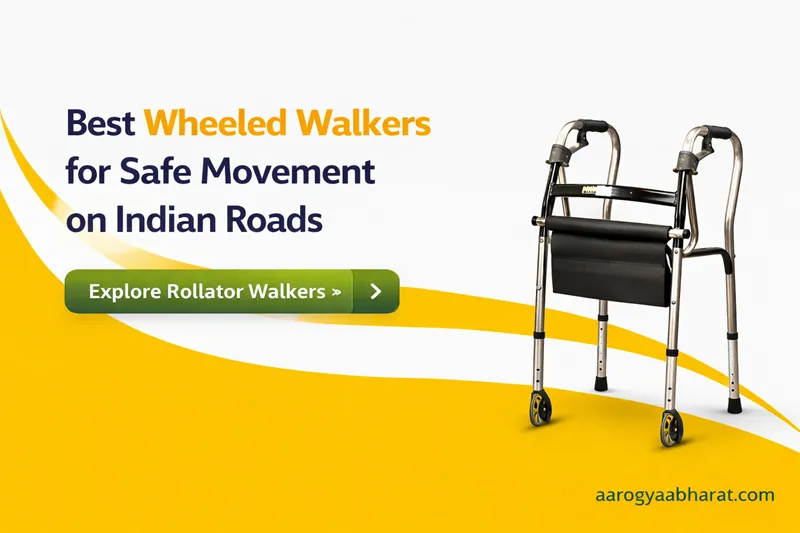
Walkers with wheels are specifically designed to address the
mobility challenges posed by uneven and unpredictable surfaces. Unlike standard
walkers, these devices allow users to glide over minor obstacles without
lifting the frame repeatedly, reducing effort and improving stability. The
presence of wheels enables continuous movement, which is particularly
beneficial on rough or slightly inclined roads. Additionally, wheeled walkers
help distribute body weight evenly, reducing pressure on joints and minimizing
fatigue during longer walks. Many models also come with braking systems that
provide additional control, allowing users to stop safely when needed. Tools
such as Healthcare Calculator can assist in determining the right walker
configuration based on the user’s physical condition and daily mobility
requirements.
Types of Wheeled Walkers Suitable for Indian Roads
There are several types of walkers with wheels available,
each suited for different levels of mobility and road conditions. Two-wheel
walkers are ideal for individuals who need stability along with moderate ease
of movement, making them suitable for semi-uneven surfaces. Three-wheel walkers
offer better manoeuvrability, especially in crowded areas, allowing users to
navigate narrow pathways with ease. Four-wheel rollators are the most advanced
option, providing maximum mobility with features such as seats, storage
baskets, and hand brakes, making them ideal for long-distance outdoor use.
Heavy-duty walkers with larger wheels are specifically designed for rough
terrains, offering enhanced shock absorption and durability. Availability of
these walker types across different cities can be explored through Aarogyaa
Bharat City Pages, helping users find suitable options locally.
Key Features to Look for in Walkers for Indian Roads
When selecting a walker with wheels for Indian roads,
certain features are essential to ensure safety and durability. Large wheels
are crucial for handling uneven surfaces, as they provide better traction and
stability compared to smaller wheels. Shock-absorbing mechanisms help reduce
the impact of bumps and rough patches, making movement more comfortable. Strong
and lightweight frames, typically made of aluminium or steel, ensure durability
without adding excessive weight. Adjustable height settings are important for
maintaining proper posture and reducing strain on joints. Additionally,
reliable braking systems are necessary for controlling movement on slopes or
crowded areas. Foldable designs also add convenience, allowing users to store
and transport the walker easily when not in use.
Benefits of Using Wheeled Walkers on Indian Roads
Using a wheeled walker significantly improves mobility and
safety for elderly individuals navigating Indian roads. These walkers reduce
physical effort by eliminating the need to lift the frame repeatedly, allowing
smoother and more continuous movement. They provide better balance and
stability, reducing the risk of falls on uneven surfaces. The presence of
wheels and brakes enhances control, enabling users to navigate slopes and
crowded areas with confidence. Additionally, walkers with seats offer the convenience
of resting during long walks, which is particularly useful in outdoor
environments. Over time, the use of wheeled walkers can improve physical
endurance, promote independence, and enhance overall quality of life for
seniors.
Comparison of Wheeled Walker Types for Indian Roads
|
Walker
Type |
Stability |
Manoeuvrability |
Best Use
Case |
Road
Suitability |
|
Two-Wheel
Walker |
High |
Moderate |
Semi-uneven
roads |
Good |
|
Three-Wheel
Walker |
Medium |
High |
Crowded urban
areas |
Very Good |
|
Four-Wheel
Rollator |
Medium |
Very High |
Long-distance
outdoor walking |
Excellent |
Safety Tips for Using Walkers on Indian Roads
- Always
use walkers with reliable braking systems
- Avoid
extremely uneven or slippery surfaces
- Wear
proper footwear for better grip
- Regularly
check wheels and frame condition
- Walk
at a steady pace to maintain balance
How Aarogyaa Bharat Supports Mobility Solutions in India
Aarogyaa Bharat plays a significant role in providing access
to high-quality mobility aids designed for Indian conditions. The platform
offers a wide range of walkers with wheels that cater to different needs, from
basic support to advanced outdoor mobility solutions. It also provides detailed
product information, comparisons, and expert guidance to help users make
informed decisions. By integrating healthcare insights with product
availability, Aarogyaa Bharat ensures that seniors and caregivers can find the
right walker suited for Indian roads. Additionally, the platform connects users
with healthcare providers, enabling a comprehensive approach to mobility and
rehabilitation.
Common Mistakes to Avoid When Choosing a Walker for
Indian Roads
Many individuals make the mistake of selecting walkers based
solely on price or appearance, without considering their specific mobility
needs and environmental conditions. Choosing a walker with small wheels can
make it difficult to navigate uneven surfaces, while opting for a non-foldable
model may reduce portability. Ignoring the importance of braking systems can
lead to safety risks, especially on slopes or crowded roads. Additionally,
selecting the wrong height can cause posture issues and increase strain on
joints. It is important to evaluate all features carefully and choose a walker
that aligns with both the user’s physical condition and the challenges of
Indian roads.
Future Innovations in Walkers for Indian Road Conditions
The design of mobility aids is evolving rapidly, with
manufacturers focusing on creating products that cater specifically to
challenging environments like Indian roads. Future walkers are expected to
feature advanced suspension systems that provide better shock absorption,
making movement smoother on rough terrains. Lightweight yet durable materials
will continue to improve portability without compromising strength. Smart
features such as automatic braking systems and stability sensors may enhance
safety further. Additionally, ergonomic designs will focus on improving comfort
and reducing strain during prolonged use. These innovations will make walkers
even more effective in addressing the unique challenges of Indian mobility
conditions.
Conclusion
Walkers with wheels are an essential mobility solution for elderly individuals navigating the challenging conditions of Indian roads. By providing stability, ease of movement, and enhanced safety, these walkers enable seniors to maintain independence and confidence in their daily activities. Choosing the right walker with appropriate features such as large wheels, strong frames, and reliable brakes can significantly improve mobility and reduce the risk of falls. Aarogyaa Bharat serves as a trusted platform that helps users find the best mobility aids along with expert guidance, ensuring that every senior can move safely and comfortably in diverse outdoor environments across India.