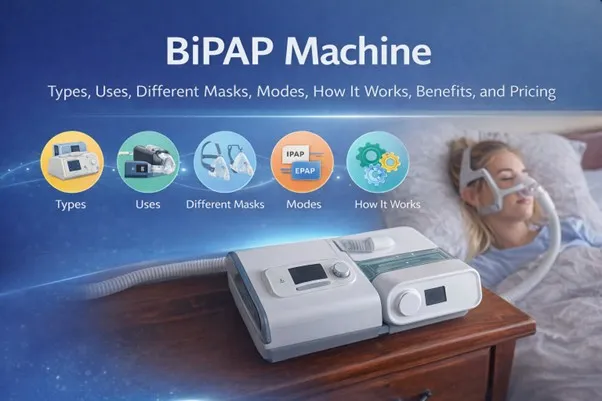
What Is a BiPAP Machine?
A BiPAP machine is a non-invasive ventilation (NIV) device that delivers two different air pressure levels:
- IPAP
(Inspiratory Positive Airway Pressure) - higher pressure during inhalation
- EPAP
(Expiratory Positive Airway Pressure) - lower pressure during exhalation
This dual-pressure system reduces breathing effort, improves
oxygenation, and enhances carbon dioxide removal.
BiPAP machine, BiPAP ventilation, BiPAP for breathing problems
BiPAP vs CPAP - Key Difference
|
Feature |
||
|
Pressure
Levels |
Single |
Dual (IPAP +
EPAP) |
|
Breathing
Comfort |
Moderate |
Very High |
|
COPD Use |
Limited |
Preferred |
|
CO₂ Removal |
Limited |
Excellent |
|
ICU Use |
Rare |
Common |
BiPAP
is recommended when CPAP is not sufficient or not tolerated.
How Does a BiPAP Machine Work?
A BiPAP machine synchronizes with the patient’s breathing
cycle.
Step-by-Step Working:
- Patient
inhales → machine delivers higher IPAP pressure
- Patient
exhales → machine drops to lower EPAP pressure
- Cycle
repeats breath-by-breath
- Sensors
adjust pressure in real time
- Oxygen
can be added if required
This reduces respiratory muscle fatigue and improves
gas exchange.
BiPAP
Breathing Cycle Illustration


Types of BiPAP Machines
1. Standard BiPAP (Spontaneous Mode)
- Patient
triggers breaths
- Used
in stable respiratory patients
2. BiPAP S/T (Spontaneous/Timed)
- Backup
respiratory rate included
- Used
for neuromuscular disorders
3. Auto BiPAP
- Automatically
adjusts pressure
- Used
in complex sleep apnea
4. BiPAP AVAPS
- Volume-assured
pressure support
- Used
in obesity hypoventilation & severe COPD
Types of BiPAP
machines
Common BiPAP Modes Explained
|
Mode |
Function |
|
S
(Spontaneous) |
Patient-triggered
breathing |
|
T (Timed) |
Machine-triggered |
|
S/T |
Hybrid with
backup rate |
|
AVAPS |
Maintains
target tidal volume |
Each mode is selected based on clinical diagnosis and ABG
reports.
Clinical Uses of BiPAP Machines
Respiratory Conditions
- Severe
obstructive sleep apnea
- COPD
exacerbation
- Obesity
hypoventilation syndrome
Neuromuscular Disorders
- ALS
- Muscular
dystrophy
- Spinal
cord injury
Hospital & ICU Use
- Acute
respiratory failure
- Post-extubation
support
- COVID-related
hypoxia
BiPAP for COPD, BiPAP for sleep apnea
BiPAP
Used in Home & Hospital
Different Types of BiPAP Masks
1. Nasal Mask
- Covers
nose only
- Suitable
for mild breathing issues
2. Oronasal (Full Face) Mask
- Covers
nose and mouth
- Most
common for BiPAP users
3. Nasal Pillow Mask
- Lightweight
and minimal
- Not
ideal for high pressures
4. Total Face Mask
- Used
in severe cases
- Minimizes
pressure sores
Mask selection directly affects comfort, leak control, and
therapy success.
Key Features of Modern BiPAP Machines
- Adjustable
IPAP & EPAP
- Ramp
time & Auto Start
- Leak
compensation
- Heated
humidifier
- Oxygen
entrainment
- Data
monitoring & apps
BiPAP machine
features
Benefits of Using a BiPAP Machine
- Reduced Breathing Effort
- Improved Oxygen Saturation
- Better Carbon Dioxide Removal
- Reduced Hospital Admissions
- Improved Sleep Quality
- Non-Invasive Ventilation
Who Should Use a BiPAP Machine?
BiPAP is recommended when:
- CPAP
therapy fails
- Patient
has severe respiratory disease
- CO₂
retention is present
- Patient
experiences breathlessness
Doctor prescription is mandatory.
BiPAP Machine Pricing in India (Indicative)
|
Type |
Price
Range |
|
Standard
BiPAP |
₹45,000 -
₹80,000 |
|
Auto BiPAP |
₹75,000 -
₹1,30,000 |
|
BiPAP AVAPS |
₹1,20,000 -
₹2,50,000+ |
Prices depend on brand, mode, humidifier, and accessories.
Maintenance & Care Tips
- Daily
mask cleaning
- Weekly
tubing wash
- Filter
replacement
- Humidifier
cleaning
- Annual
servicing
Proper care ensures long machine life and accurate therapy.
Future of BiPAP Technology
- AI-based
pressure adaptation
- Cloud-connected
monitoring
- Portable
BiPAP devices
- Hybrid oxygen-BiPAP systems
Conclusion
The BiPAP machine is a lifesaving, comfort-oriented
respiratory therapy device for patients who require advanced breathing support
beyond CPAP. Its dual-pressure mechanism reduces breathing effort, improves gas
exchange, and significantly enhances quality of life.
For patients with COPD, severe sleep apnea, neuromuscular
disorders, or respiratory failure, BiPAP therapy is often the most effective
non-invasive solution.
At Aarogyaa Bharat, we help patients and healthcare
providers choose the right BiPAP machine, mask, and mode tailored to clinical
needs and long-term comfort.