Understanding What Bariatric Care Really Means
Bariatric care refers to supporting individuals with higher
body weight in a manner that ensures safety, comfort, dignity, and independence
without placing undue stress on equipment or caregivers. Bariatric users may
include individuals with obesity, metabolic disorders, fluid retention, limited
mobility due to weight, or post-surgery recovery combined with higher body
mass. These users generate significantly higher dynamic forces during sitting,
standing, and repositioning than average-weight users. Equipment that is not
specifically designed for bariatric use may fail even if it appears stable
initially. Understanding bariatric care means recognising that standard commode
chairs are not interchangeable with bariatric models and that weight capacity
is only one of several critical factors.
Why a Special Buying Checklist Is Essential for Bariatric
Users
Unlike standard commode chair selection, bariatric chair
buying cannot rely on general specifications or assumptions. Bariatric users
place continuous stress on chair frames, joints, welds, legs, and armrests.
Repeated daily use amplifies even minor design weaknesses, leading to
progressive deformation and eventual failure. A structured buying checklist
ensures that all safety, comfort, durability, and usability factors are
evaluated together rather than in isolation. This approach prevents costly
mistakes and reduces the risk of accidents that could have lifelong
consequences.
Weight Capacity Is the First Non-Negotiable Criterion
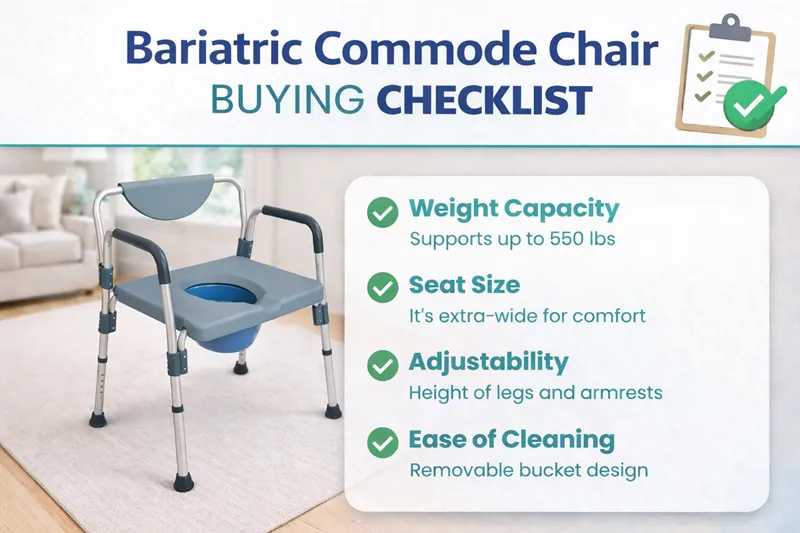
The most critical specification in a bariatric commode chair
is its certified weight capacity. This capacity must comfortably exceed the
user’s actual body weight to account for dynamic loading during transfers,
leaning, and assisted movements. Using a chair rated exactly at the user’s
weight is unsafe, as dynamic forces can exceed static weight by a significant
margin. A safety buffer of at least 25-30 percent above body weight is
recommended. Weight capacity should be verified through manufacturer documentation
rather than assumptions based on appearance.
Importance of Frame Material and Structural Reinforcement
Bariatric commode chairs must use heavy-gauge steel or
reinforced alloys capable of handling repeated high loads without bending or
fatigue. Thin tubing, lightweight metals, or poorly reinforced joints are major
red flags. Weld quality, cross-bracing, and frame geometry all contribute to
long-term stability. A robust frame ensures that the chair remains stable over
years of use rather than deteriorating gradually.
Seat Width and User Comfort Considerations
Seat width is often overlooked but is critical for bariatric
users. A seat that is too narrow causes discomfort, pressure points, and
instability, while a properly sized seat distributes weight evenly and improves
posture. Adequate width also allows safe transfers without friction or
imbalance. Comfort directly affects user confidence and willingness to use the
chair independently.
Stability and Base Design for High Load Use
Bariatric commode chairs must have a wide, stable base to
prevent tipping during lateral movement or uneven loading. Narrow bases may
feel unstable and increase fall risk. Stability is especially important in
Indian homes with tiled floors, where anti-slip rubber tips and proper leg
spacing prevent sliding.
Armrest Strength and Load-Bearing Capacity
For bariatric users, armrests are not just comfort features
but primary load-bearing components during transfers. Weak or poorly attached
armrests can fail under pressure, leading to sudden collapse. Armrests should
be firmly welded or bolted to the frame and designed to support significant
weight repeatedly.
Seat Height and Transfer Safety
Seat height must allow safe sitting and standing without
excessive strain on knees, hips, or lower back. Adjustable-height bariatric
commode chairs provide flexibility to match user needs and bed height. Proper
height reduces joint stress and improves transfer safety.
Hygiene and Ease of Cleaning in Bariatric Use
Bariatric care often involves long sitting durations, making
hygiene critical. Chairs should feature removable buckets with adequate
capacity, smooth surfaces, and materials resistant to odor and staining. Easy
cleaning prevents infections, skin issues, and caregiver stress.
Durability for Long-Term Bariatric Care
Many bariatric users require long-term or lifelong toileting
support. A bariatric commode chair must be designed for continuous daily use
without degradation. Durability ensures consistent safety and reduces
replacement costs over time.
Space and Accessibility in Indian Homes
Bariatric commode chairs are often larger, which can be
challenging in small Indian homes. Buyers must consider room layout, doorway
width, and placement options. Foldability is less important than stability in
bariatric models, but thoughtful placement ensures accessibility without
obstruction.
Caregiver Safety and Assistance Needs
Caregivers assisting bariatric users face higher physical
strain. A properly designed bariatric commode chair reduces lifting, sudden
movements, and emergency situations. This protects caregivers from injury and
burnout, supporting sustainable care.
Checklist Table for Bariatric Commode Chair Selection
|
Checklist
Item |
Why It
Matters |
What to
Look For |
|
Weight
Capacity |
Prevents
collapse |
25-30% safety
buffer |
|
Frame
Material |
Structural
integrity |
Heavy-gauge
steel |
|
Seat Width |
Comfort &
stability |
Wider
bariatric seat |
|
Base Design |
Tip
prevention |
Wide,
anti-slip base |
|
Armrest
Strength |
Transfer
safety |
Reinforced
armrests |
|
Seat Height |
Joint
protection |
Adjustable
height |
|
Bucket
Capacity |
Hygiene |
Large,
removable bucket |
|
Durability |
Long-term use |
Reinforced
joints |
|
Floor Grip |
Indian tiles |
Rubber
anti-slip tips |
|
Caregiver
Ease |
Safe
assistance |
Stable
transfers |
Common Mistakes When Buying Bariatric Commode Chairs
Common mistakes include choosing standard chairs due to
lower cost, ignoring dynamic load requirements, prioritising foldability over
strength, and failing to verify manufacturer weight ratings. These mistakes
often lead to unsafe use and early failure.
Cost vs Safety in Bariatric Chair Selection
While bariatric commode chairs may cost more initially, the
cost of injury, hospitalisation, or replacement far outweighs the upfront
investment. Safety and durability should always take priority over price when
selecting bariatric equipment.
Long-Term Health and Confidence Benefits
Using a properly selected bariatric commode chair improves
user confidence, reduces fear of collapse, and encourages consistent toileting
routines. This leads to better hygiene, fewer complications, and improved
mental well-being
Why Aarogyaa Bharat Follows a Checklist-Based Approach
Aarogyaa Bharat believes that bariatric care must be
systematic, not improvised. Our commode chairs are selected using strict
checklists that prioritise safety, durability, and dignity in Indian home-care
environments. This ensures reliable performance and peace of mind for families.
Conclusion
A bariatric commode chair buying checklist is essential for
ensuring safety, dignity, and long-term usability in bariatric home care. By
carefully evaluating weight capacity, frame strength, stability, comfort, and
hygiene, families can prevent accidents and support confident daily routines.
In Indian homes, where space and caregiving realities add complexity,
checklist-based selection is the safest approach. Aarogyaa Bharat remains
committed to guiding families toward bariatric care solutions that protect lives
and preserve dignity.