Many life-saving medical products such as vaccines, insulin, monoclonal antibodies, blood components, plasma, biologics, cell and gene therapies, and diagnostic reagents are extremely sensitive to temperature fluctuations. Even a short exposure to temperatures outside the recommended range can result in loss of potency, reduced efficacy, or complete product failure, putting patient safety at serious risk. Cold chain equipment therefore acts as a protective infrastructure, preserving product integrity, therapeutic effectiveness, and clinical trust across the healthcare supply chain.
As healthcare delivery expands globally and supply chains become more complex and geographically dispersed, the importance of robust, reliable, and compliant cold chain equipment continues to grow. From pharmaceutical factories and central warehouses to hospitals, laboratories, ambulances, and remote vaccination centers, cold chain equipment ensures that medical products reach patients exactly as intended by manufacturers.
Understanding Cold Chain Equipment in Healthcare
Cold chain equipment refers to a specialized set of storage, transportation, monitoring, and control systems designed to maintain predefined temperature ranges for medical products throughout their lifecycle. These systems prevent exposure to heat, freezing, or uncontrolled environmental conditions that could degrade sensitive healthcare products.
In healthcare, cold chain management spans multiple stages:
- Manufacturing and packaging
- Central and regional warehousing
- Transportation and logistics
- Hospital and laboratory storage
- Last-mile delivery and point-of-use handling
Each stage requires precise temperature control, continuous monitoring, and documented compliance to ensure patient safety and regulatory adherence. Cold chain equipment is therefore a foundational pillar supporting safe treatment delivery, accurate diagnostics, and successful public health programs.
Types of Cold Chain Equipment Used in Healthcare
Cold chain systems are composed of multiple interconnected equipment categories, each serving a specific role:
Medical Refrigerators
Used extensively in hospitals, clinics, pharmacies, and laboratories to store vaccines, insulin, reagents, and temperature-sensitive drugs within controlled ranges (typically +2°C to +8°C).
Deep Freezers and Ultra-Low Freezers
Essential for storing plasma, blood components, biologics, and advanced therapies that require sub-zero or ultra-low temperatures. These are commonly used in blood banks, research facilities, and biopharmaceutical operations.
Vaccine Storage Units
Specialized refrigerators designed with uniform cooling, temperature alarms, and backup systems to meet immunization program requirements.
Cold Boxes and Insulated Carriers
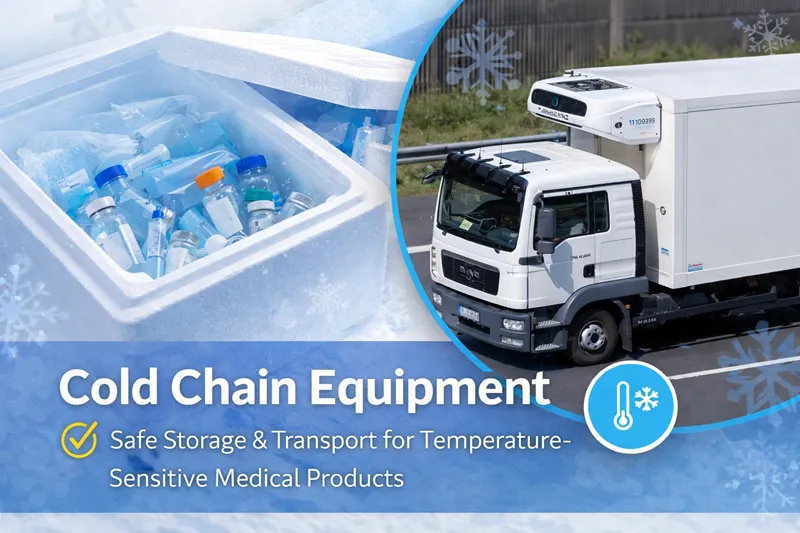
Portable solutions used for short-distance transport, outreach programs, emergency vaccination drives, and last-mile delivery. These often use ice packs or phase-change materials to maintain temperature stability.
Refrigerated Transport Vehicles
Temperature-controlled vans, trucks, and containers used for long-distance pharmaceutical and vaccine distribution. These vehicles ensure consistent thermal conditions across extended journeys.
Temperature Monitoring and Data Logging Systems
Digital sensors, alarms, and cloud-based monitoring solutions that provide real-time visibility, alerts, and compliance records throughout storage and transit.
Together, these components form an end-to-end cold chain ecosystem that ensures medical products remain safe, effective, and compliant.
Importance of Cold Chain Equipment for Patient Safety
Patient safety is directly linked to the effectiveness of cold chain equipment. Temperature excursions can cause irreversible damage to sensitive medical products, leading to:
- Reduced therapeutic effectiveness
- Ineffective vaccination and immunity failure
- Increased risk of adverse reactions
- Wastage of high-value medical supplies
- Delayed or compromised treatment outcomes
Cold chain equipment ensures that patients receive medicines and vaccines that perform exactly as clinically intended. In public health and emergency care settings, this reliability can mean the difference between disease prevention and outbreak escalation.
Role of Cold Chain Equipment in Vaccination and Public Health Programs
Vaccination programs are among the most cold chain-dependent healthcare operations. From national immunization schedules to emergency outbreak responses, vaccines must be stored and transported within strict temperature limits at all times.
Cold chain equipment enables:
- Safe vaccine storage at central and peripheral health facilities
- Reliable distribution to rural and remote areas
- Emergency immunization during disease outbreaks
- Large-scale public health campaigns and mass vaccination drives
In resource-limited settings, innovations such as solar-powered refrigerators and portable vaccine carriers ensure continuity of cold chain even where electricity or infrastructure is unreliable. Strong cold chain systems are therefore a cornerstone of global public health success.
Cold Chain Equipment in Pharmaceutical and Laboratory Operations
Pharmaceutical manufacturers and diagnostic laboratories rely heavily on cold chain equipment to maintain product stability and testing accuracy. Drug efficacy, shelf life, and regulatory compliance depend on consistent temperature control from production through distribution.
In laboratories, cold chain equipment ensures:
- Stability of diagnostic reagents
- Preservation of biological samples
- Accuracy of test results
- Compliance with accreditation standards
Advanced monitoring systems and alarm mechanisms allow immediate response to temperature deviations, reducing risk and protecting critical medical assets.
Importance of Monitoring, Compliance, and Quality Standards
Cold chain management is governed by strict regulatory guidelines that require documented temperature control and traceability. Modern cold chain equipment integrates:
- Digital temperature sensors
- Continuous data logging
- Automated alerts and alarms
- Audit-ready compliance reports
These features help healthcare providers meet national and international standards while minimizing product loss and operational risk. High-quality cold chain equipment therefore supports both clinical excellence and regulatory confidence.
Role of Aarogyaa Bharat in Cold Chain Equipment Sourcing
Aarogyaa Bharat plays a vital role in strengthening healthcare cold chain infrastructure by enabling access to quality-assured, compliant, and reliable cold chain equipment. The platform connects healthcare institutions with verified manufacturers and suppliers that meet stringent safety and performance standards.
Through simplified procurement, transparent specifications, and dependable sourcing, Aarogyaa Bharat helps hospitals, laboratories, and pharmaceutical distributors build robust cold chain systems that protect patient safety and operational efficiency.
Future of Cold Chain Equipment in Healthcare
The future of cold chain equipment is shaped by innovation, automation, and the growing reliance on temperature-sensitive therapies. Emerging trends include:
- IoT-enabled smart refrigerators
- Cloud-based temperature monitoring
- Energy-efficient cooling technologies
- Predictive maintenance and analytics
- Enhanced traceability across global supply chains
As biologics, personalized medicine, and global healthcare distribution continue to expand, cold chain equipment will become even more central to safe, equitable, and effective healthcare delivery worldwide.
Conclusion
Cold chain equipment ensures the safe storage and transportation of temperature-sensitive medical products, preserving their quality, effectiveness, and safety from manufacture to patient use. By maintaining strict temperature control and continuous monitoring, cold chain systems protect patient outcomes, support public health programs, and uphold trust in healthcare delivery. In modern healthcare, a strong cold chain is not just a logistical requirement it is a foundation of clinical reliability and patient safety.