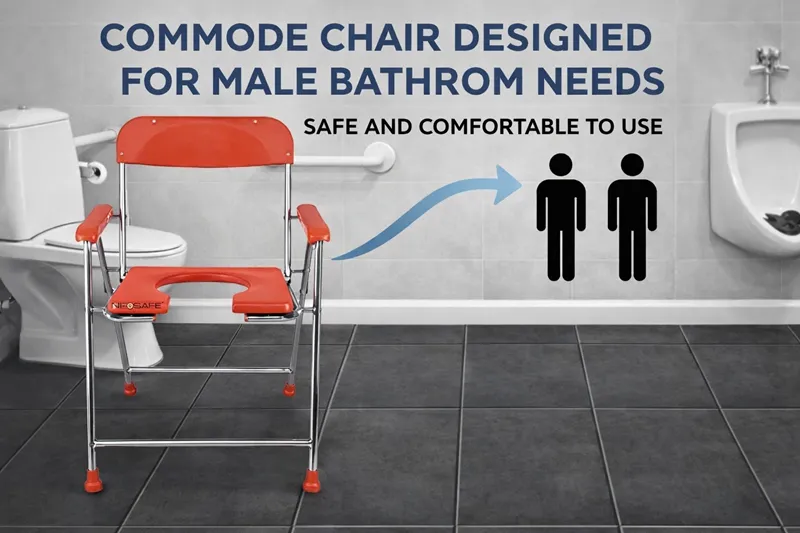
Conditions such as prostate enlargement, diabetes, neurological disorders, post-surgical weakness, obesity, arthritis, stroke, or ICU recovery commonly affect men’s toileting routines, increasing urgency, frequency, and the risk of accidents. In Indian homes, where bathrooms may be distant, floors slippery, Indian-style toilets still common, and privacy limited, these challenges are amplified. A commode chair for male toileting needs is therefore not just a mobility aid but a critical home-care solution that supports safety, hygiene, dignity, and confidence while reducing caregiver burden. At Aarogyaa Bharat, we frequently interact with families who focus only on mobility limitations when choosing toileting aids for male users, overlooking male-specific needs such as urinary urgency, difficulty aiming or standing for long periods, night-time frequency, and the emotional impact of dependency. Many men hesitate to ask for help or admit difficulty due to pride and cultural conditioning, often attempting unsafe movements to maintain independence. A commode chair offers a respectful and practical way to address these challenges, allowing men to manage toileting safely without compromising dignity or health.
Understanding Male-Specific Toileting Challenges
Male toileting difficulties often stem from a combination of
physical decline and medical conditions that affect bladder control, balance,
and endurance. Prostate enlargement, which is common with ageing, leads to
frequent urination, urgency, weak urine flow, and difficulty emptying the
bladder fully. Standing for long periods or rushing to the bathroom increases
the risk of dizziness and falls, especially for elderly men or those with low
blood pressure. Additionally, joint pain, muscle weakness, and reduced
coordination make squatting or standing over toilets unsafe. A commode chair
allows men to toilet in a seated, stable position, reducing strain and enabling
controlled hygiene without rushing or fear.
Importance of Safety and Stability for Male Users
For male users, the moments of standing, turning, and
sitting during toileting are the most dangerous, particularly when urgency is
involved. Loss of balance during these transitions can lead to serious injuries
such as hip fractures or head trauma. A commode chair provides a stable base
with non-slip feet or lockable castors, ensuring that the chair does not move
unexpectedly. Strong armrests allow men to use upper body strength to support
movements, reducing reliance on painful knees or weak legs. This stability is
crucial for men who may otherwise attempt unsafe bathroom trips to preserve
independence.
Hygiene and Posture Considerations
Proper hygiene requires sufficient time, balance, and
access, all of which are compromised when men struggle with standing or
squatting. A commode chair provides a comfortable seated posture that allows
thorough cleaning without strain. This is particularly important for men with
limited flexibility or obesity, where bending and twisting increase discomfort
and hygiene risk. By enabling a controlled posture, a commode chair reduces the
likelihood of incomplete cleaning, skin irritation, and urinary infections.
Night-Time Toileting and Reduced Accident Risk
Night-time toileting is a major concern for male users,
especially those with prostate-related frequency or diabetes. Getting out of
bed repeatedly at night, walking in low light, and rushing due to urgency
significantly increase fall risk. Many men avoid waking family members and
attempt to manage alone, which often leads to accidents. A commode chair placed
beside the bed allows safe night-time toileting with minimal movement,
improving safety and sleep quality while reducing anxiety and embarrassment.
Support During Post-Surgery and Medical Recovery
Men recovering from surgeries such as prostate procedures,
spinal surgery, joint replacement, or abdominal operations often experience
weakness, pain, and movement restrictions. Toileting during this phase requires
stable seating, reduced bending, and minimal walking. A commode chair supports
these needs by allowing toileting close to the bed in a seated posture that
protects surgical sites and conserves energy. This support accelerates recovery
by preventing strain and secondary injuries.
Emotional Dignity and Independence
For many men, independence is closely tied to self-esteem,
and needing help with toileting can feel humiliating. This emotional barrier
often leads men to hide difficulties or take risks. A commode chair restores a
sense of control by allowing men to manage toileting privately and safely. This
emotional reassurance reduces stress, improves cooperation with caregivers, and
encourages healthier toileting habits.
Caregiver Convenience and Reduced Physical Strain
Assisting male users with toileting often involves
supporting body weight, balancing during transfers, and managing urgency, all
of which place caregivers at risk of back injury and fatigue. A commode chair
simplifies caregiving by providing a controlled environment where caregivers
can assist without lifting or rushing. This improves caregiver safety and
sustainability of long-term home care.
Suitability for Indian Home Environments
Indian homes frequently present challenges such as narrow
bathrooms, tiled floors, shared spaces, and limited grab support. Commode
chairs designed for home use fit easily beside beds, in bedrooms, or near
bathrooms, eliminating the need for unsafe bathroom modifications.
Easy-to-clean surfaces and removable buckets support hygiene management without
repeated trips to the bathroom, making them practical for Indian households.
Comparison Table: Male Toileting With vs Without a
Commode Chair
|
Aspect |
With
Commode Chair |
Without
Commode Chair |
|
Toileting
posture |
Stable seated |
Standing or
squatting |
|
Fall risk |
Very low |
High |
|
Night-time
safety |
Excellent |
Poor |
|
Hygiene
control |
High |
Difficult |
|
Physical
strain |
Low |
High |
|
Emotional
comfort |
Improved |
Reduced |
|
Caregiver
effort |
Reduced |
High |
Choosing the Right Commode Chair for Male Toileting Needs
Families should select commode chairs with adjustable
height, strong armrests, stable non-slip feet or lockable castors, and easy
hygiene management. Chairs that provide comfortable seating and reliable
stability are particularly important for men with urgency or balance issues.
Aarogyaa Bharat assists families in choosing commode chairs that align with
male-specific toileting needs and Indian home conditions.
Long-Term Benefits for Men’s Health
Consistent use of a commode chair helps men maintain safe
toileting routines, reduce falls, prevent infections, and preserve
independence. Over time, this leads to improved confidence, reduced caregiver
stress, and better overall quality of life, especially for elderly men and
those with chronic conditions.
Why Aarogyaa Bharat Focuses on Male-Centric Toileting
Solutions
Aarogyaa Bharat understands that male toileting needs
involve physical, medical, and emotional factors that must be addressed
together. By recommending commode chairs tailored for male users, we help
families create safer, more respectful home-care environments that support
dignity and long-term well-being.
Conclusion
A commode chair for male toileting needs is a vital home-care solution that addresses safety, hygiene, dignity, and independence in one essential product. By reducing fall risk, supporting proper posture, enabling night-time safety, and minimising caregiver strain, it transforms daily toileting from a stressful challenge into a controlled and dignified routine. In Indian households where male health needs are often under-discussed, a commode chair provides practical support that protects both physical health and emotional confidence. Aarogyaa Bharat remains committed to guiding families toward thoughtful, safety-first solutions that improve daily living for men across all stages of care.