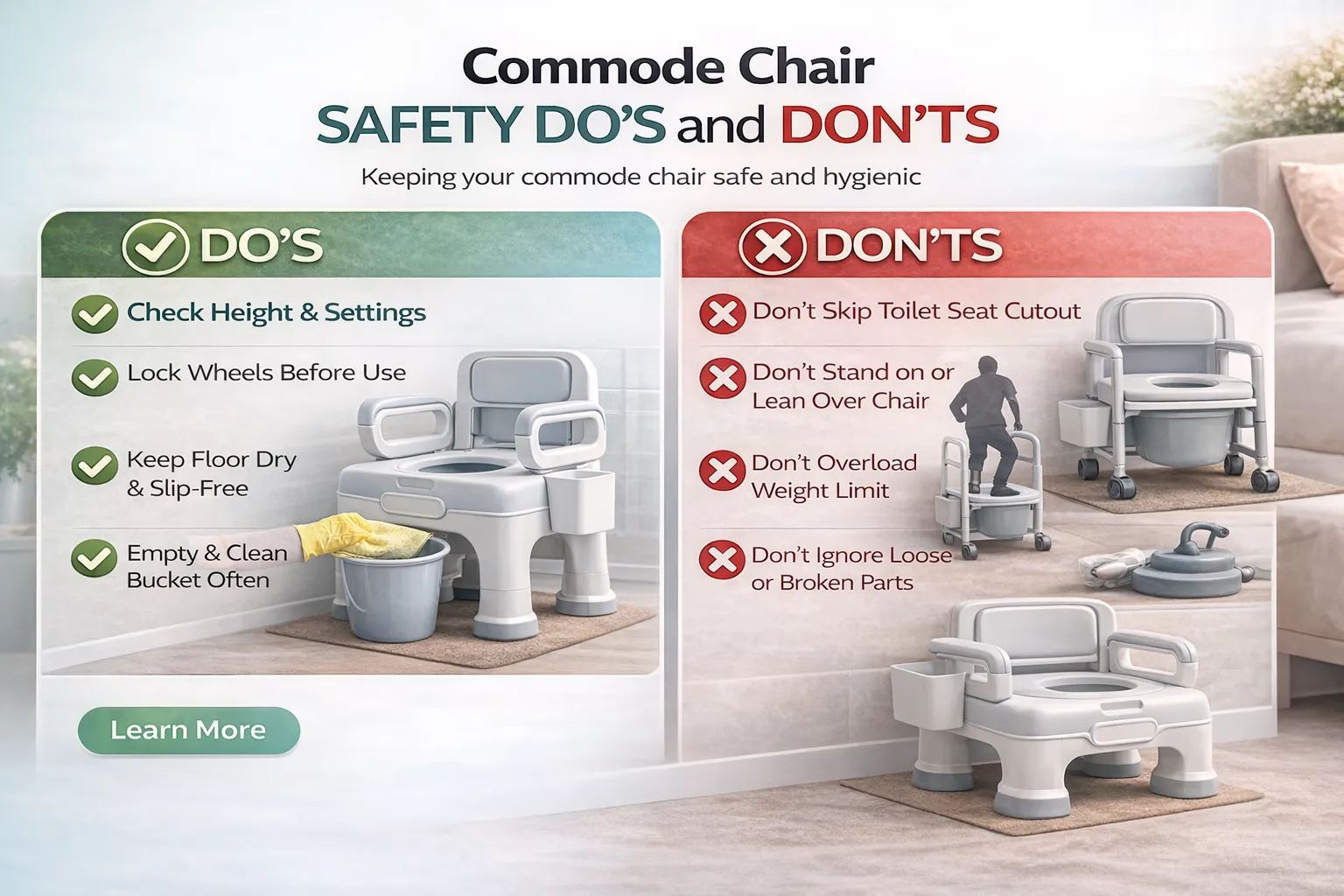
Why Commode Chair Safety Requires Special Attention
Unlike furniture or standard household items, a commode
chair is used under physical stress, emotional urgency, and often reduced
alertness, especially by elderly individuals, post-surgery patients, or people
with limited mobility. The chair must support body weight during sitting,
standing, leaning, and sometimes assisted transfers. Unsafe practices such as
placing the chair on uneven surfaces, ignoring weight limits, or rushing usage
can cause tipping, slipping, or collapse. Safety awareness transforms the
commode chair from a passive object into an actively protective tool.
Understanding the Most Common Commode Chair Accidents
Most commode chair accidents occur not due to manufacturing
defects but due to incorrect usage. Common incidents include slipping on tiled
floors, tipping due to uneven placement, armrest failure from excessive force,
falls during hurried transfers, and injuries caused by unstable seating height.
Night-time usage, fatigue, and poor lighting further increase risk.
Understanding these patterns helps families prevent accidents proactively
rather than reacting after injury occurs.
Importance of Correct Placement in the Home
Proper placement is the foundation of commode chair safety.
The chair should be placed on a flat, dry, non-slippery surface with adequate
space around it for safe transfers. It should be close enough to the bed or
resting area to minimise walking, especially at night. Placing the chair in
cramped corners, on slopes, or near loose rugs significantly increases fall
risk. Thoughtful placement ensures predictable, safe usage.
Do: Always Check Weight Limit Before Use
One of the most critical safety practices is ensuring that
the user’s body weight is well within the commode chair’s rated capacity.
Weight limits must account for dynamic forces during sitting and standing, not
just static body weight. Using a chair beyond its capacity can cause bending,
instability, or sudden collapse. Always choose a chair with a safety buffer
above the user’s weight.
Don’t: Assume All Commode Chairs Are Structurally Equal
A common mistake is assuming that all commode chairs look
similar and therefore function similarly. Lightweight, foldable, or low-cost
models may not provide the same stability or durability as reinforced designs.
Never assume suitability based on appearance alone. Structural integrity, frame
thickness, and reinforcement are critical safety factors.
Do: Ensure Proper Seat Height for Safe Transfers
Seat height plays a major role in preventing falls. A seat
that is too low strains knees and hips, while a seat that is too high reduces
balance during sitting. Proper height allows controlled sitting and standing
without sudden drops or excessive effort. Adjustable-height commode chairs
provide added safety for changing mobility needs.
Don’t: Rush Transfers During Urgency
Many accidents happen when users rush due to urgency or fear
of incontinence. Rushing leads to unsafe posture, missed hand placement, and
imbalance. Users should be encouraged to take their time and use armrests
properly. Caregivers should avoid pulling or pushing the user abruptly during
transfers.
Do: Use Armrests Correctly and Consistently
Armrests are designed to provide support during sitting and
standing. Users should be trained to place both hands firmly on armrests and
apply steady pressure rather than sudden force. Proper armrest use improves
balance and reduces strain on knees and hips.
Don’t: Use the Chair on Wet or Slippery Floors
Indian homes often have tiled floors that become slippery
when wet. Placing a commode chair on wet surfaces greatly increases slip risk,
even with rubber tips. Always ensure the floor is dry before use, especially
during night-time toileting or after bathroom cleaning.
Do: Secure Anti-Slip Rubber Tips Regularly
Rubber tips on commode chair legs provide essential grip.
Over time, these tips may wear out, loosen, or crack. Regular inspection and
replacement of worn tips ensure continued stability. Ignoring worn anti-slip
tips is a major safety risk.
Don’t: Ignore Signs of Wear and Instability
Creaking sounds, wobbling, bent frames, loose joints, or
visible rust are warning signs that should never be ignored. Continuing to use
a compromised chair increases accident risk. Immediate repair or replacement is
essential to maintain safety.
Do: Maintain Proper Lighting for Night-Time Use
Night-time toileting carries higher risk due to poor
visibility. Even when using a bedside commode chair, soft night lighting should
be provided to help users orient themselves safely. Avoid complete darkness
during night-time use.
Don’t: Leave the Chair Unclean or Wet
Poor hygiene can cause users to slip or hesitate during use.
Wet seats, soiled surfaces, or lingering odor reduce confidence and increase
accident risk. Always ensure the chair is clean and dry before use.
Do: Train Family Members and Caregivers
Everyone involved in caregiving should understand how to use
the commode chair safely. Training includes correct placement, transfer
assistance, hygiene routines, and emergency response. Consistent practices
across caregivers reduce confusion and risk.
Don’t: Use a Standard Chair for Bariatric Users
Using a standard commode chair for bariatric users is
extremely dangerous. Bariatric users require reinforced chairs designed to
handle higher loads and wider seating. Compromising on this can lead to
catastrophic failure.
Do: Reassess Safety as Health Conditions Change
Mobility, strength, and balance can change over time due to
recovery, ageing, or disease progression. Regularly reassessing whether the
commode chair still meets the user’s needs ensures continued safety and
comfort.
Commode Chair Safety Do’s and Don’ts Table
|
Category |
Do’s |
Don’ts |
|
Placement |
Flat, dry
surface |
Uneven or wet
floors |
|
Use safety
buffer |
Exceed weight
limit |
|
|
Transfers |
Use armrests
slowly |
Rush or pull |
|
Maintenance |
Inspect
regularly |
Ignore wear |
|
Provide
lighting |
Use in
darkness |
|
|
Hygiene |
Leave wet or
soiled |
|
|
User Type |
Match chair
to user |
Use wrong
model |
Psychological Safety and Confidence
Safety is not only physical but psychological. Users who
feel unsafe may rush, resist, or avoid toileting, leading to health
complications. Consistent safety practices build confidence, reduce anxiety,
and encourage proper use of the commode chair.
Long-Term Safety and Cost Prevention
Most serious home-care accidents are preventable through
correct safety practices. Preventing falls, injuries, and equipment failure
saves medical costs, reduces caregiver stress, and protects long-term quality
of life. Safety-focused usage extends the life of the commode chair and ensures
reliable performance.
Why Aarogyaa Bharat Emphasises Safety Education
Aarogyaa Bharat believes that true home healthcare goes
beyond product delivery to include education, awareness, and responsible usage.
Our safety guidelines are designed for real Indian homes, addressing common
risks and caregiving realities. By promoting safety-first practices, Aarogyaa
Bharat helps families protect loved ones every day.
Conclusion
Commode chair safety is not achieved by purchase alone but
through consistent adherence to proven dos and don’ts that prevent accidents
and preserve dignity. By ensuring correct placement, respecting weight limits,
maintaining hygiene, and avoiding common mistakes, families can transform the
commode chair into a reliable safety partner in home care. In Indian households
where caregiving is personal and continuous, safety awareness is an act of care
and responsibility. Aarogyaa Bharat remains committed to empowering families
with the knowledge and solutions needed for safe, confident, and compassionate
home healthcare.