A nebulizer machine has become one of the most trusted and
effective home-care devices for treating childhood respiratory problems. Unlike
tablets or syrups that take time to act, a nebulizer delivers medication
directly into a child’s lungs in the form of a fine mist, offering fast relief
from coughing, wheezing, breathlessness, and chest congestion. It is especially
useful for infants, toddlers, and young children who are unable to use inhalers
correctly due to poor coordination or fear of mouthpieces.
At Aarogyaa Bharat, we work closely with families who rely
on nebulizers to manage their children’s breathing issues safely at home. One
thing we observe repeatedly is that while parents are eager to use nebulizers,
many are unsure about the correct technique, safety precautions, cleaning
routines, and long-term usage guidelines. Small mistakes such as incorrect
dosage, poor hygiene, or improper positioning can reduce the effectiveness of
treatment and even increase the risk of infections.
This comprehensive guide explains everything parents and
caregivers must know about nebulizer use for children, including how nebulizers
work, when they are needed, how to use them safely, how to calm a child during
therapy, how to maintain hygiene, and how to choose the right nebulizer
machine. By the end of this guide, you will feel confident, informed, and fully
prepared to use nebulizer therapy safely for your child’s respiratory health.
Why Children Commonly Need Nebulizer Therapy
Children are naturally more vulnerable to respiratory
illnesses because their immune systems are still developing and their airways
are much narrower than those of adults. Even a small amount of inflammation or
mucus can significantly block airflow, making breathing difficult and
triggering coughing fits, wheezing, and breathlessness. This is why conditions
such as asthma, bronchiolitis, croup, pneumonia, and allergic bronchitis are
far more severe in children than in adults.
Seasonal changes further increase the risk of respiratory
problems in children. During winter, cold and dry air irritates airway linings
and thickens mucus, while monsoon humidity promotes mold growth and viral
infections. In summer, dust storms, pollen, and pollution spikes inflame
airways and worsen allergies. These environmental triggers make respiratory
flare-ups a recurring problem for many children throughout the year.
Another major reason children need nebulizer therapy is
difficulty using inhalers. Metered-dose inhalers require precise hand-breath
coordination, which most young children simply cannot manage. Even with
spacers, inhaler use may still be ineffective during severe breathing episodes
when the child is crying, panicking, or gasping for air. Nebulizers eliminate
this problem by allowing passive breathing during treatment.
For children who experience frequent hospital visits due to
asthma attacks or chest infections, a nebulizer becomes an essential home-care
device. It enables early symptom control, prevents emergencies, reduces
hospital dependency, and provides parents with peace of mind during respiratory
flare-ups.
How a Nebulizer Machine Works for Children
A nebulizer machine works by converting liquid medication
into a fine aerosol mist that can be inhaled deeply into the lungs. This mist
contains microscopic drug particles that travel through the nose or mouth into
the bronchi, bronchioles, and alveoli, where they directly treat inflamed
airways. Because the medication reaches the lungs directly, it works faster and
more efficiently than oral medicines.
There are three main types of nebulizer technologies:
compressor nebulizers, ultrasonic nebulizers, and mesh nebulizers. Compressor
nebulizers use compressed air to turn liquid medication into mist and are the
most commonly used for children due to their durability and medication
compatibility. Ultrasonic nebulizers use sound waves and are quieter, while
mesh nebulizers use a vibrating mesh to produce ultra-fine mist particles and
are extremely silent and portable.
In paediatric care, nebulizers are often used to deliver
bronchodilators that open airways, corticosteroids that reduce inflammation,
saline solutions that thin mucus, and antibiotics that fight lung infections.
The exact medication and dosage depend on the child’s condition and doctor’s
prescription.
Nebulizer sessions typically last between 5 and 15 minutes.
During this time, the child simply breathes normally while wearing a mask or
holding a mouthpiece. This makes nebulizers ideal for infants, toddlers, and
children who are unable to follow complex breathing instructions.
Common Childhood Conditions Treated with Nebulizers
Asthma is one of the most common reasons children require
nebulizer therapy. During asthma attacks, airway muscles tighten and
inflammation increases, making breathing extremely difficult. Nebulizers
deliver bronchodilators and steroids directly into the lungs, providing rapid
relief and preventing emergency situations.
Bronchiolitis and bronchitis are viral respiratory
infections that cause wheezing, coughing, and mucus build up in young children.
Nebulization therapy helps loosen thick mucus, reduce chest congestion, and
improve airflow, significantly shortening recovery time.
Pneumonia and post-viral respiratory infections often leave
children with persistent cough, breathlessness, and chest tightness. Nebulizers
accelerate lung healing by delivering medication that reduces inflammation and
improves oxygen absorption.
Allergic respiratory conditions such as allergic rhinitis
and seasonal wheezing also benefit from nebulization. Nebulizers help calm
inflamed airways, reduce allergic reactions, and provide relief from recurring
coughing fits triggered by dust, pollen, or pollution.
Types of Nebulizer Machines Best for Children
Choosing the right nebulizer type for your child is critical
for safety, comfort, and treatment effectiveness. Compressor nebulizers are the
most widely used for paediatric care because they are affordable, durable, and
compatible with all medication types. Although they are slightly noisy, they
are extremely reliable for long-term home use.
Ultrasonic nebulizers are quieter and faster, making them
suitable for children who are sensitive to noise. However, they are not
compatible with all medications, particularly thick suspensions and steroids,
which limits their versatility in paediatric care.
Mesh nebulizers are the most advanced and child-friendly
option. They are extremely quiet, compact, and battery-operated, making them
ideal for night-time therapy, travel, and children who get scared by noisy
machines. While they are more expensive, mesh nebulizers offer superior comfort
and medication delivery efficiency.
When selecting a nebulizer for a child, parents should
prioritize noise level, medication compatibility, ease of cleaning, mask size
availability, and overall durability.
Step-by-Step Guide to Using a Nebulizer Safely for
Children
Always begin by washing your hands thoroughly with soap and
water before handling the nebulizer or medication. This prevents bacteria and
viruses from entering the nebulizer system and causing lung infections.
Place the nebulizer machine on a stable, flat surface away
from dust, moisture, and direct sunlight. Ensure the power cord is secure and
not creating a tripping hazard.
Measure the prescribed medication accurately using a sterile
dropper or syringe. Never guess the dosage or mix medications unless instructed
by a doctor. Pour the medication into the nebulizer medicine cup and close it
securely.
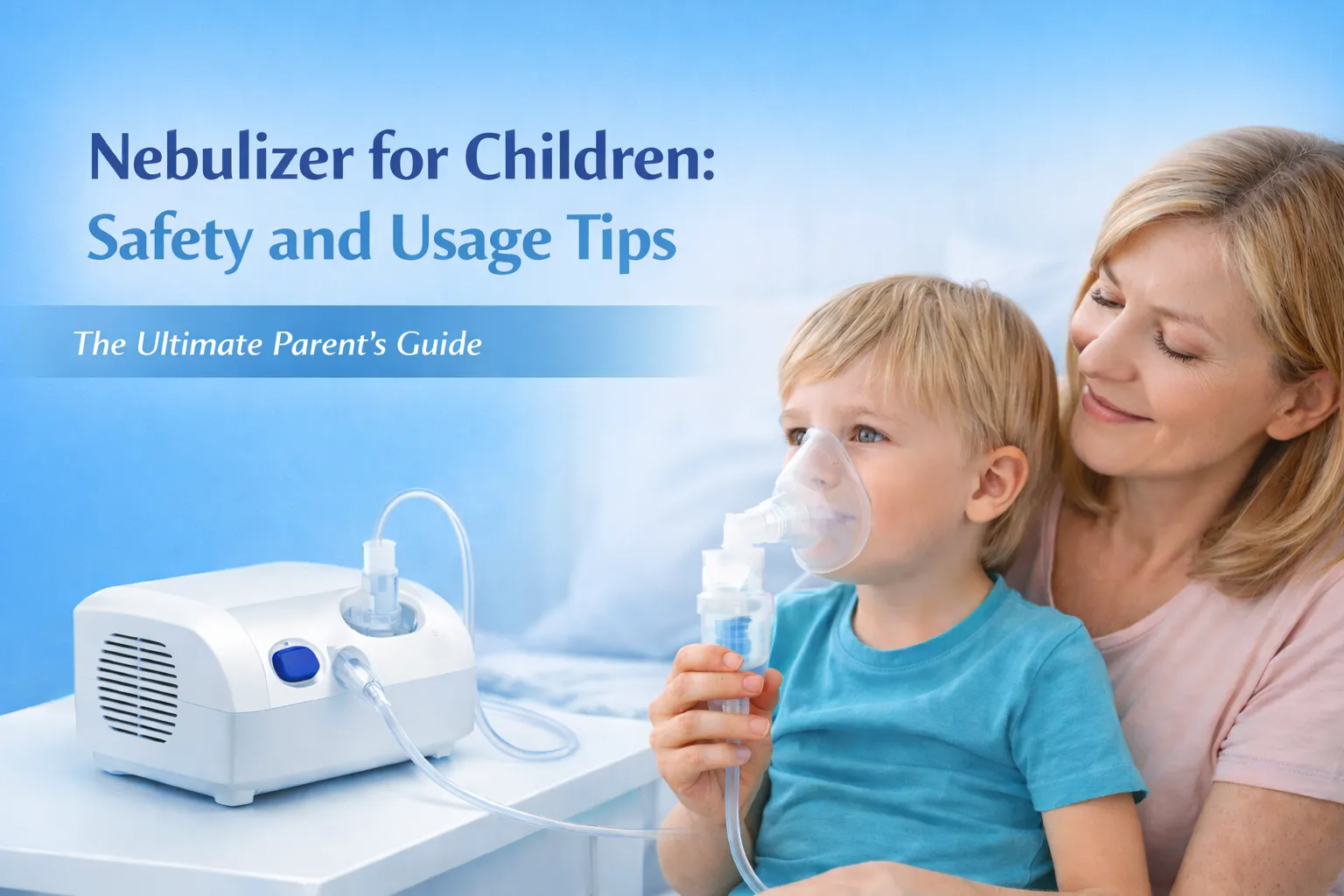
Attach the mask or mouthpiece to the nebulizer cup and place
the mask gently over your child’s nose and mouth. Turn on the machine and
encourage your child to breathe normally until the mist stops.
After the session, turn off the machine, remove the mask,
and wipe your child’s face gently to remove medication residue. Disassemble and
clean all parts immediately.
Safety Tips Every Parent Must Follow
Always use medications exactly as prescribed by your child’s
doctor. Overuse or incorrect dosage can cause side effects such as rapid
heartbeat, tremors, or airway irritation.
Never leave a child unattended during nebulizer therapy.
Young children may remove the mask, spill medication, or bite the tubing,
reducing treatment effectiveness.
Avoid using essential oils, home remedies, or herbal liquids
in the nebulizer unless approved by a doctor. These substances can damage lung
tissue and clog the nebulizer.
Keep the nebulizer away from water, wet floors, and loose
electrical sockets to prevent electric shock hazards.
Do not force a crying or panicking child to use the
nebulizer aggressively. Calm the child first, then resume therapy gently.
How to Make Nebulizer Therapy Comfortable for Children
Children often feel scared or irritated during nebulization
sessions, especially when the machine is noisy or the mask feels uncomfortable.
One effective way to reduce fear is to explain the process in simple words and
demonstrate it on a toy or yourself first.
Distraction techniques such as playing cartoons,
storytelling, singing songs, or using a favourite toy can make the session feel
shorter and more enjoyable. Creating a routine also helps children mentally
prepare for nebulizer therapy.
Choosing child-friendly masks with soft edges and fun
designs can significantly improve comfort and cooperation. Mesh nebulizers are
particularly useful for children who are sensitive to noise.
Positive reinforcement, such as praising the child or
offering small rewards after sessions, helps build long-term acceptance of
nebulizer therapy.
Cleaning and Maintenance Guidelines
Daily cleaning is essential to prevent bacterial growth.
After every session, rinse the mask, mouthpiece, and medicine cup with warm
water and mild soap. Allow them to air dry completely on a clean towel.
Weekly disinfection is necessary. Soak removable parts in a
doctor-recommended disinfectant or boil them if manufacturer instructions
allow. This reduces infection risk significantly.
Inspect tubing, filters, and power cords monthly for wear
and tear. Replace damaged parts immediately to ensure safe and effective
therapy.
Never store nebulizer parts in damp or dirty environments.
Always keep them in a clean, dry container when not in use.
Nebulizer Type Comparison for Children
|
Feature |
Compressor
Nebulizer |
Ultrasonic
Nebulizer |
Mesh
Nebulizer |
|
Medication
Compatibility |
Very High |
Medium |
Very High |
|
Noise Level |
Moderate |
Low |
Very Low |
|
Portability |
Low |
Medium |
High |
|
Nebulization
Speed |
Medium |
Fast |
Fast |
|
Cleaning Ease |
Medium |
Medium |
High |
|
Best for
Children |
Long-term
therapy |
Quiet
sessions |
Premium care |
Who Should Avoid Nebulizer Use Without Medical Advice
Children with heart conditions, severe allergies to
medications, or rare lung disorders should never use nebulizers without strict
medical supervision.
Newborns and premature infants require specialized neonatal
nebulizers and dosing guidance.
Children experiencing sudden chest pain, bluish lips, or
extreme breathlessness should be taken to a hospital immediately instead of
relying only on nebulizer therapy.
Conclusion
Nebulizer therapy is a powerful and life-saving tool for
managing childhood respiratory conditions safely at home. From asthma and
bronchitis to seasonal allergies and post-viral cough, nebulizers provide fast,
effective relief by delivering medication directly into delicate airways.
By following proper safety guidelines, maintaining strict
hygiene routines, and choosing the right nebulizer type, parents can ensure
safe and comfortable therapy sessions for their children. With patience,
routine, and the right equipment, nebulizer therapy can become a stress-free
part of your child’s respiratory care routine.
At Aarogyaa Bharat, we offer a curated range of
child-friendly nebulizer machines, paediatric masks, and accessories, along
with expert guidance on selection, setup, and long-term usage. Our mission is
to empower families with safe, reliable, and affordable medical equipment that
brings hospital-grade respiratory care into the comfort of their homes.
If your child experiences frequent breathing issues,
Aarogyaa Bharat is always here to help you choose the right nebulizer solution
for healthier lungs, easier breathing, and greater peace of mind.