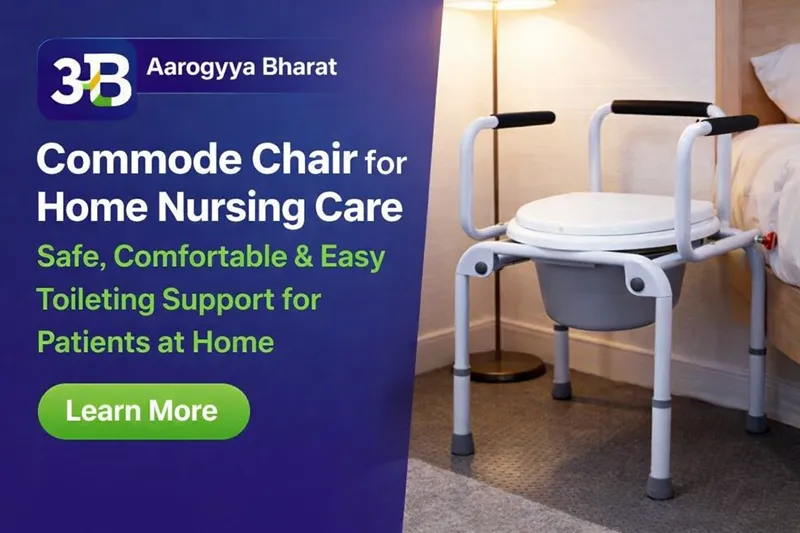
Among all daily care tasks, toileting remains one of the
most sensitive, frequent, and high-risk activities because it involves urgency,
physical transfers, hygiene, and emotional vulnerability. A commode chair for
home nursing care is not merely a convenience but a core nursing tool that
enables safe, efficient, dignified, and repeatable toileting support in real
home environments. Aarogyaa Bharat recognises commode chairs as foundational
equipment that allows home nursing care to function smoothly, safely, and
sustainably for both patients and caregivers.
Understanding the Role of Toileting in Home Nursing Care
In home nursing care, toileting is not an occasional task
but a structured, recurring responsibility that occurs multiple times a day and
night. Unlike hospital settings, homes lack adjustable beds, grab rails,
non-slip flooring, and constant staff availability. Nurses and caregivers must
manage toileting while balancing patient comfort, time efficiency, hygiene
standards, and injury prevention. A commode chair creates a predictable and
controlled toileting setup that aligns with nursing workflows, reducing
improvisation and risk.
Why Bathrooms Are Often Unsafe In-Home Nursing Settings
Most Indian homes are not designed for nursing care, with
bathrooms that may be small, slippery, poorly ventilated, or far from the
patient’s resting area. Moving patients repeatedly to the bathroom increases
fatigue, fall risk, and caregiver strain. For nurses managing multiple tasks,
repeated bathroom transfers consume time and energy that could be better used
for clinical care. A commode chair eliminates these challenges by relocating
toileting to a safer and more manageable space.
Role of a Commode Chair in Professional Nursing Workflows
In professional home nursing, efficiency and consistency are
essential. A commode chair allows nurses to assist patients using a
standardised method that reduces variability and risk. The chair supports
upright posture, stable transfers, and hygienic waste management, enabling
nurses to maintain professional care standards even in non-clinical
environments. This consistency improves patient outcomes and caregiver
confidence.
Supporting Safe Transfers During Nursing Care
Transfers are one of the highest-risk activities in nursing
care, often leading to back injuries for caregivers and falls for patients. A
commode chair with proper height, armrests, and stability reduces the physical
effort required during transfers. Nurses can guide patients safely rather than
lifting or catching them, protecting both parties from injury.
Dignity and Emotional Comfort in Nurse-Assisted Toileting
Patients receiving home nursing care often feel vulnerable,
especially during toileting. Preserving dignity is critical for trust,
cooperation, and emotional well-being. A commode chair allows toileting to
occur discreetly, without rushing or exposure, helping patients feel respected
rather than medicalised. Emotional comfort improves cooperation with nursing
routines and overall recovery.
Night-Time Toileting Management in Home Nursing
Home nurses and attendants often provide overnight care for
high-risk patients. Night-time toileting is especially dangerous due to
fatigue, low lighting, and reduced reflexes. A bedside commode chair enables
safe night-time toileting without waking multiple caregivers or moving patients
through dark spaces. This significantly reduces emergencies and night-time
falls.
Reducing Caregiver Fatigue and Burnout
Home nursing care can be physically and emotionally
demanding, particularly when toileting assistance is frequent. A commode chair
reduces repeated lifting, rushing, and emergency situations, allowing
caregivers to conserve energy and focus on clinical tasks. Reduced fatigue
improves care quality and sustainability, especially in long-term home nursing
arrangements.
Hygiene Control in Home Nursing Environments
Maintaining hygiene in home nursing care is challenging due
to shared household spaces and limited facilities. Commode chairs with
removable buckets, smooth surfaces, and easy cleaning routines allow nurses to
maintain infection control standards comparable to clinical settings. Proper
hygiene protects patients with weakened immunity and prevents
cross-contamination within the household.
Use in Short-Term vs Long-Term Nursing Care
Home nursing care may be temporary, such as post-surgical
recovery, or long-term, such as chronic illness or disability support. Commode
chairs are suitable for both scenarios, offering flexibility and adaptability.
Adjustable features allow the same chair to support changing patient needs over
time, reducing equipment changes.
Suitability for Different Patient Conditions
Home nursing care supports diverse patient conditions,
including stroke recovery, orthopaedic rehabilitation, neurological disorders,
respiratory illness, cancer care, and palliative care. A commode chair provides
a universal toileting solution that can be customised through placement, height
adjustment, and support features to suit individual care plans.
Integration with Other Nursing Equipment
Commode chairs integrate easily with other home nursing
equipment such as hospital beds, walkers, wheelchairs, and physiotherapy aids.
This interoperability allows nurses to design efficient care routines without
cluttering the home or compromising safety.
Types of Commode Chairs Used in Home Nursing Care
|
Nursing
Scenario |
Recommended
Chair Type |
Key
Nursing Benefit |
|
Bedside
nursing |
Bedside
commode chair |
Reduced
transfers |
|
Long sitting
care |
Cushioned
seat chair |
Patient
comfort |
|
Variable
mobility |
Adjustable-height
chair |
Safe
transfers |
|
High fall
risk |
Anti-slip
commode chair |
Stability |
|
Long-term
nursing |
Reinforced
commode chair |
Durability |
Training Family Members Alongside Professional Nurses
In many Indian homes, professional nurses work alongside
family caregivers. A commode chair simplifies training by providing a
consistent toileting setup that family members can learn quickly. This
continuity ensures safe care even when professional staff are not present.
Preventing Medical Complications Through Safe Toileting
Unsafe toileting can lead to falls, wound reopening,
pressure injuries, urinary infections, and delayed recovery. A commode chair
reduces these risks by enabling timely, safe, and hygienic toileting.
Preventing complications is a core goal of home nursing care.
Cost Efficiency in Home Nursing Care
Hospital stays and extended nursing hours are expensive. A
commode chair reduces the need for constant supervision and emergency
interventions, making home nursing care more cost-effective. It is a one-time
investment that delivers long-term value.
Supporting Palliative and Comfort-Focused Nursing Care
In palliative care, comfort, dignity, and minimal distress
are primary goals. A commode chair allows gentle, respectful toileting without
excessive movement or discomfort, aligning with comfort-focused nursing
principles.
Why Aarogyaa Bharat Supports Home Nursing Solutions
Aarogyaa Bharat understands that effective home nursing care
requires reliable tools that adapt to real Indian homes and family-based
caregiving. Our commode chairs are selected to support professional nursing
standards while remaining practical for home use. By prioritising safety,
dignity, and ease of care, Aarogyaa Bharat helps nurses and families deliver
high-quality care at home.
Conclusion
A commode chair for home nursing care is an essential component of safe, dignified, and efficient home-based healthcare. By reducing transfer risk, supporting hygiene, preserving patient dignity, and easing caregiver workload, commode chairs enable home nursing care to function smoothly outside clinical settings. In Indian households where professional care and family support work together, a well-chosen commode chair becomes a silent but powerful partner in daily care. Aarogyaa Bharat remains committed to empowering home nursing care with solutions that protect both patients and caregivers every day.