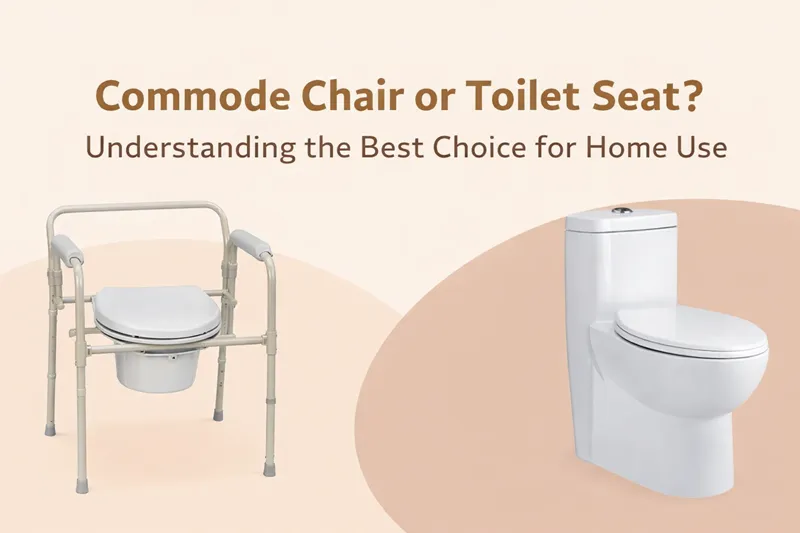
While both
are designed to assist with toileting, they serve very different purposes and
are suitable for very different patient conditions. Choosing the wrong option
can lead to falls, discomfort, loss of dignity, and increased caregiver stress.
Understanding the difference between a commode chair and a toilet seat is
essential to ensuring safe, comfortable, and dignified home care.
Understanding the Basics of Toileting Assistance at Home
Toileting is not just a physical task; it is deeply
connected to independence, privacy, and dignity. As mobility decreases due to
aging, illness, or surgery, the ability to safely reach and use a bathroom
becomes compromised. Slippery floors, poor lighting, urgency, muscle weakness,
and balance issues all combine to make bathrooms one of the most dangerous
areas in a home. Toileting assistance equipment exists to reduce these risks,
but it must match the user’s actual mobility level and daily routine. A commode
chair and a toilet seat may appear similar in function, but they address very
different stages of mobility decline.
What Is a Commode Chair and How It Works
A commode chair is a portable toilet solution designed for
individuals who cannot safely or comfortably walk to the bathroom. It consists
of a sturdy frame, a seat with an opening, armrests for support, and a
removable bucket that collects waste. Some models include backrests, padded
seats, height adjustment, wheels, and lockable brakes. The defining feature of
a commode chair is its flexibility of placement. It can be positioned next to
the bed, inside the bedroom, or in any convenient location, allowing the user
to use the toilet without traveling to the bathroom. This makes it especially
valuable for elderly individuals, bedridden patients, stroke survivors, and
people recovering from major surgery.
What Is a Toilet Seat and Its Intended Use
A toilet seat, in the context of patient care, refers to an
attachment fitted onto an existing western toilet. This may include a raised
toilet seat, a seat with armrests, or a toilet safety frame. The purpose of a
toilet seat is to make sitting down and standing up from the toilet easier by
increasing seat height and providing hand support. Toilet seats are designed
for individuals who can still walk to the bathroom independently or with
minimal assistance but struggle with bending their knees or maintaining balance
while sitting or standing. Unlike a commode chair, a toilet seat does not
replace the need to walk to the bathroom.
Mobility Level: The Most Important Deciding Factor
The biggest difference between a commode chair and a toilet
seat lies in the mobility level of the user. A commode chair is designed for
low-mobility or dependent users who cannot safely walk to the bathroom,
especially during night-time. It eliminates the walking requirement entirely. A
toilet seat, on the other hand, assumes that the user can reach the bathroom
safely. If a person has poor balance, weak legs, dizziness, or urgency issues,
asking them to walk to the bathroom even with a toilet seat installed can
significantly increase fall risk. In such cases, a commode chair is clearly the
safer choice.
Safety Comparison: Fall Risk and Injury Prevention
Bathrooms are one of the most common locations for household
falls among elderly individuals. Wet floors, tight spaces, and hurried movement
increase the risk dramatically. A commode chair reduces this risk by minimizing
movement. Since it can be placed close to the bed, it allows the user to sit
and stand in a controlled environment with arm support and stable footing.
Toilet seats only improve safety at the moment of sitting or standing but do
not reduce the danger involved in reaching the bathroom. For elderly
individuals who wake up at night, feel dizzy, or experience urgency, a commode
chair offers significantly higher safety.
Comfort and Daily Usability
Comfort is often underestimated but plays a huge role in
whether an assistive device is actually used consistently. Commode chairs are
designed for repeated daily use and often include padded seats, ergonomic
armrests, and back support. They allow users to sit at a comfortable height
without excessive knee bending. Toilet seats may improve height but usually
lack back support and padding. They also require the user to lower themselves
onto a fixed toilet, which can be painful for people with arthritis or muscle
weakness. For long-term or frequent use, commode chairs are generally more
comfortable.
Impact on Caregivers and Family Members
From a caregiver’s perspective, the difference between a
commode chair and a toilet seat is significant. A commode chair allows
caregivers to assist patients without repeated lifting, guiding, or rushing to
the bathroom. Wheelchair commode chairs further reduce physical strain by
allowing smooth patient movement. Toilet seats may still require caregivers to
escort the patient to the bathroom, increasing fatigue and risk of caregiver
injury. For dependent patients, a commode chair simplifies care routines and
reduces emotional and physical stress for family members.
Hygiene and Cleanliness Considerations
Hygiene is a common concern when comparing commode chairs
and toilet seats. Commode chairs use removable buckets that must be cleaned and
disinfected regularly. While this requires effort, it ensures that toileting
happens safely and immediately, reducing accidents. Toilet seats rely on
regular bathroom hygiene, which may feel more familiar. However, if a patient
struggles to reach the toilet in time, accidents may occur, increasing cleaning
challenges. For individuals with urgency or incontinence, commode chairs often
provide better overall hygiene control.
Home Layout and Space Requirements
The physical layout of a home can influence the choice
between a commode chair and a toilet seat. Homes with large bedrooms or limited
bathroom accessibility benefit from the flexibility of a commode chair. It does
not require plumbing changes or bathroom modifications. Toilet seats require a
western toilet and sufficient bathroom space for safe movement and caregiver
assistance. In small or poorly designed bathrooms, a toilet seat alone may not
provide adequate safety.
Cost Considerations and Long-Term Value
Toilet seats are generally less expensive upfront because
they are simple attachments. Commode chairs may have a higher initial cost,
especially models with wheels, padding, or adjustability. However, cost should
be evaluated in terms of long-term value. A commode chair can prevent falls,
hospital visits, and caregiver injuries, which can save significant medical
expenses over time. For long-term care or dependent patients, a commode chair
often provides better overall value despite the higher initial price.
Comparison Table: Commode Chair vs Toilet Seat
|
Aspect |
Commode
Chair |
Toilet
Seat |
|
Mobility
Requirement |
Low to very
low mobility |
Mild mobility |
|
Bedside Use |
Yes |
No |
|
Walking to
Bathroom |
Not required |
Required |
|
Fall Risk
Reduction |
Very high |
Moderate |
|
Comfort for
Long Use |
High |
Medium |
|
Caregiver
Assistance |
Easier |
More effort |
|
Installation |
None |
Requires
fitting |
|
Night-Time
Safety |
Excellent |
Risky |
Which Option Is Better for Elderly Care?
For elderly individuals with balance issues, weak legs,
dizziness, or frequent night-time bathroom needs, a commode chair is generally
the better and safer option. Toilet seats are suitable for seniors who are
still mobile and only need assistance with sitting and standing. In many homes,
both solutions are used together commode chairs for night-time or emergencies
and toilet seats for daytime bathroom use.
Conclusion
Choosing between a commode chair and a toilet seat is not
about which product is better overall, but which one is better for the user’s
mobility, safety, and daily routine. Toilet seats work well for individuals
with mild mobility limitations, while commode chairs provide superior safety,
comfort, and flexibility for elderly and dependent patients. Making the right
choice can prevent accidents, reduce caregiver stress, and preserve dignity.
Aarogyaa Bharat remains committed to guiding families toward the safest and
most practical home healthcare solutions.