Who Are Considered Limited Mobility Users
Limited mobility users are individuals who cannot move
freely, quickly, or safely without support due to physical, neurological, or
medical conditions. This group includes elderly people with muscle weakness or
balance problems, patients recovering from fractures or joint surgeries, stroke
survivors with partial paralysis, individuals with Parkinson’s disease,
multiple sclerosis, spinal cord injuries, or chronic pain conditions, as well
as people experiencing extreme fatigue from cancer treatment or respiratory
illness. Limited mobility does not always mean complete immobility; many users
can walk short distances but struggle with endurance, stability, or sudden
movements. These limitations make toileting particularly dangerous, as it
requires walking, turning, bending, and sitting all high-risk movements for
this population.
Why Toileting Is Especially Risky for Limited Mobility
Users
Toileting combines several movements that are difficult for
limited mobility users, including standing up from a seated position, walking
on potentially slippery surfaces, turning in tight spaces, and sitting down
again on low seats. Fatigue, dizziness, muscle weakness, joint pain, or tremors
can worsen suddenly, making even familiar routes unsafe. Many limited mobility
users rush due to urgency or fear of incontinence, increasing fall risk. In
Indian homes, squat toilets or low Western seats further compound the
difficulty. A commode chair removes the need for these complex movements,
allowing toileting to occur in a controlled, stable environment.
Role of a Commode Chair in Supporting Limited Mobility
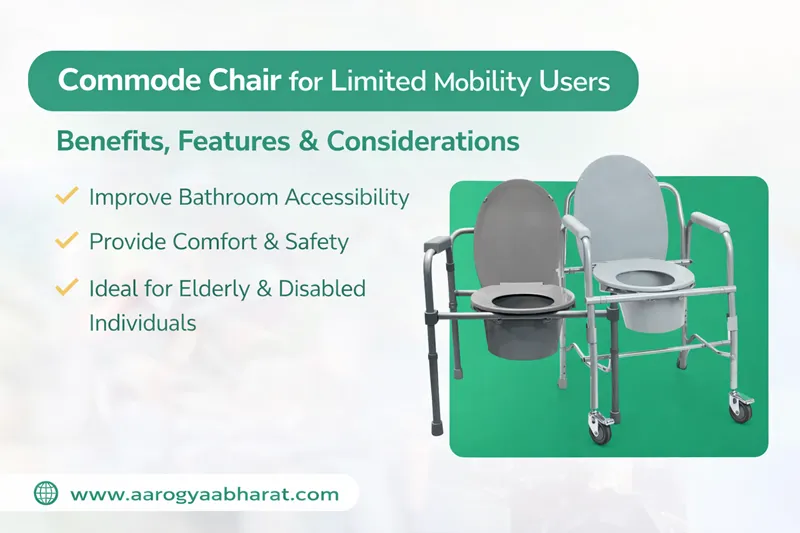
A commode chair acts as a mobility bridge by reducing the
physical distance and effort required for toileting. Positioned near the bed or
resting area, it eliminates long walks and unsafe transfers. Armrests provide
upper-body support, backrests help maintain posture, and stable legs prevent
wobbling. The removable bucket enables hygienic waste disposal without bathroom
dependency. For limited mobility users, this setup transforms toileting from a
hazardous task into a manageable routine.
Restoring Independence for Limited Mobility Users
Loss of independence is often more distressing than physical
pain for limited mobility users. Relying on others for toileting can cause
embarrassment, frustration, and emotional withdrawal. A commode chair restores
partial or full independence by allowing users to manage toileting on their own
or with minimal assistance. Even small gains in independence significantly
improve self-esteem, confidence, and mental health, which directly influence
recovery and long-term well-being.
Energy Conservation and Fatigue Management
Limited mobility users often experience rapid fatigue,
making energy conservation essential. Walking to the bathroom multiple times a
day can drain energy needed for healing, physiotherapy, or basic daily
activities. A commode chair reduces physical exertion during toileting,
allowing users to conserve energy and avoid overexertion. Energy conservation
leads to better endurance, fewer complications, and improved quality of life.
Importance of Proper Height and Support Features
Seat height plays a crucial role in safe transfers for
limited mobility users. Seats that are too low strain weak knees and hips,
while seats that are too high reduce stability. Commode chairs with appropriate
height, strong armrests, and back support allow controlled sitting and standing
movements. These features reduce joint strain, prevent sudden collapse, and
increase user confidence during transfers.
Night-Time Safety for Limited Mobility Users
Night-time toileting poses extreme risk for limited mobility
users due to low visibility, sleepiness, and reduced muscle control. Many
serious falls occur at night when users attempt to reach the bathroom without
assistance. A bedside commode chair allows safe night-time toileting without
walking, switching on lights, or navigating obstacles, significantly reducing
fall risk and anxiety.
Impact on Family Caregivers
Family caregivers supporting limited mobility users often
experience physical strain and emotional stress, especially when assisting with
bathroom trips multiple times a day and night. A commode chair reduces
caregiver lifting, rushing, and constant supervision. This lowers caregiver
injury risk and burnout, making long-term home care more sustainable and
compassionate.
Use in Temporary vs Long-Term Limited Mobility
Limited mobility may be temporary, such as after surgery or
injury, or permanent due to chronic conditions or disability. Commode chairs
are suitable for both scenarios. Temporary users benefit from safe recovery
support, while long-term users gain a consistent toileting solution that adapts
to changing abilities. Adjustable features allow continued use without frequent
equipment replacement.
Suitability for Different Home Environments
Limited mobility users live in diverse environments, from
small urban apartments to larger independent houses. Commode chairs offer
flexibility, functioning as bedside units, room-based toilets, or temporary
alternatives when bathroom access is unsafe. Foldable or compact designs help
manage space constraints common in Indian homes.
Types of Commode Chairs for Limited Mobility Users
|
Commode
Chair Type |
Suitable
Users |
Key
Benefit |
|
Severe
mobility limitation |
Immediate
access |
|
|
Adjustable-Leg
Chair |
Changing
mobility levels |
Custom height |
|
Cushioned
Seat Chair |
Long sitting
needs |
Comfort |
|
Anti-Slip
Chair |
Balance
issues |
Stability |
|
Heavy users |
Structural
safety |
Hygiene and Cleanliness for Limited Mobility Care
Limited mobility users may be unable to maintain hygiene
independently, increasing the importance of easy-to-clean commode chairs.
Removable buckets, smooth surfaces, and waterproof materials allow caregivers
to maintain cleanliness efficiently. Good hygiene prevents infections, skin
issues, and odor, ensuring that commode chair use remains dignified and
acceptable within the home.
Psychological Benefits of Safe Toileting Access
Fear of falling or embarrassment often leads limited
mobility users to restrict fluid intake or delay toileting, causing
dehydration, urinary infections, and discomfort. A commode chair removes fear
by providing a predictable and safe toileting option. Psychological relief
improves cooperation, mood, and overall mental health.
Long-Term Cost and Safety Benefits
Investing in a commode chair for limited mobility users
reduces the risk of falls, hospital readmissions, and caregiver injuries.
Compared to the cost of emergency treatment or long-term complications, a
commode chair is a cost-effective safety investment that supports sustainable
home care.
Why Aarogyaa Bharat Focuses on Limited Mobility Solutions
Aarogyaa Bharat understands that limited mobility affects
every aspect of daily life, not just movement. Our commode chairs are selected
to address Indian home layouts, caregiver realities, and diverse mobility
challenges. By prioritising safety, adaptability, and dignity, Aarogyaa Bharat
supports confident living for people with limited mobility.
Conclusion
A commode chair for limited mobility users is a critical
home-care solution that restores safety, independence, and dignity in daily
toileting. By reducing movement demands, preventing falls, conserving energy,
and easing caregiver burden, commode chairs transform the home into a safer and
more supportive environment. Whether mobility limitation is temporary or
permanent, the right commode chair enables individuals to live more confidently
and comfortably at home. Aarogyaa Bharat remains committed to delivering
practical, compassionate solutions that truly support limited mobility users.