What Is Temporary Home Care and Why It Is High Risk
Temporary home care refers to a short-to-medium duration
period where a person requires assistance at home due to temporary physical
limitations rather than permanent disability. This may include post-surgery
recovery, fracture healing, severe infections, respiratory illness,
pregnancy-related weakness, or hospital discharge after acute treatment. During
this phase, patients often overestimate their strength and attempt to resume
normal routines too quickly. Muscle weakness, medication side effects, pain, low
blood pressure, and fatigue create unpredictable risk, especially during
toileting. Because the condition is temporary, families often delay or avoid
arranging proper assistive equipment, assuming the patient will “manage for a
few days,” which is precisely when accidents occur. Temporary home care
requires proactive safety planning to prevent avoidable injuries.
Toileting Challenges During Temporary Recovery
Toileting is often the first activity where temporary
weakness becomes evident. Patients may be able to walk short distances but
struggle with standing from low seats, maintaining balance, or moving quickly
during urgency. Pain, stiffness, dizziness, or fear of falling can cause
hesitation, rushed movements, or unsafe posture. Indian bathrooms often require
bending, turning, or stepping over thresholds, all of which are risky for
someone in recovery. A commode chair eliminates these challenges by providing a
stable, nearby toileting option that does not demand unnecessary movement or
strength.
Role of a Commode Chair in Temporary Home Care
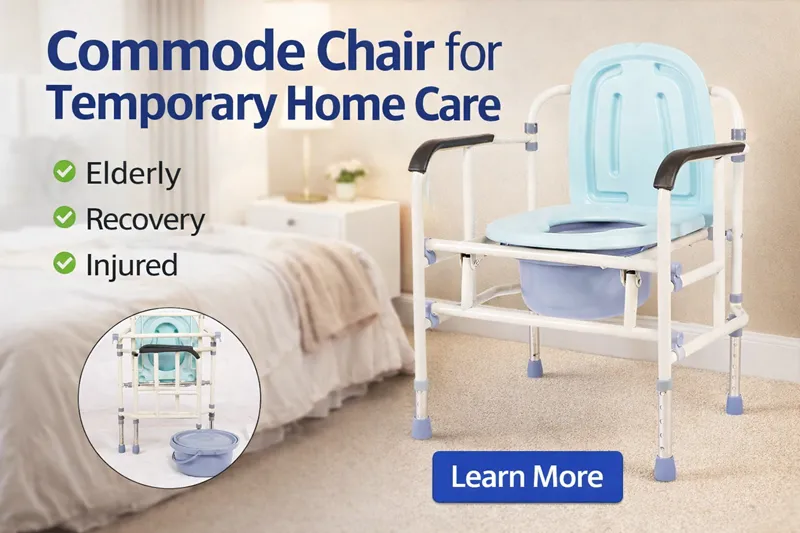
In temporary home care, a commode chair acts as a protective
buffer between hospital-level support and full independence. It allows patients
to toilet safely while strength and confidence gradually return. The chair
provides controlled sitting and standing, arm support, and balance stability,
reducing strain on healing joints and muscles. Because the need is temporary,
the chair’s portability and ease of removal make it ideal for short-term use
without permanent changes to the home.
Preventing Setbacks and Hospital Readmission
One of the biggest risks during temporary home care is
undoing recovery progress due to a fall or injury at home. A single bathroom
fall can reopen surgical wounds, cause fractures, or trigger complications that
require rehospitalisation. Commode chairs significantly reduce this risk by
eliminating unsafe bathroom trips during recovery. Preventing setbacks not only
protects health but also reduces emotional stress and financial burden on
families.
Supporting Safe Recovery After Surgery or Injury
After surgery or injury, patients are often advised to limit
movement, avoid bending, and conserve energy. Walking to the bathroom multiple
times a day contradicts these instructions and can delay healing. A commode
chair supports medical advice by reducing movement and protecting recovery
zones such as knees, hips, abdomen, or spine. Safe toileting accelerates
recovery rather than compromising it.
Temporary Home Care for Elderly Family Members
Elderly individuals frequently require temporary home care
after illness, minor surgery, or infection, even if they were previously
independent. Age-related muscle loss and balance issues make temporary weakness
especially dangerous. A commode chair provides extra safety during this period,
allowing elderly users to recover without fear and regain independence
gradually.
Night-Time Safety During Temporary Care
Night-time toileting is particularly risky during temporary
home care due to sleepiness, low lighting, and sudden urgency. Many accidents
occur at night when patients attempt to manage independently to avoid
disturbing family members. A bedside commode chair allows safe night-time
toileting without walking, reducing fall risk and anxiety for both patient and
caregivers.
Emotional Comfort and Dignity During Short-Term
Dependency
Temporary dependency can be emotionally difficult,
especially for adults accustomed to independence. Needing help with toileting
can cause embarrassment, frustration, and resistance. A commode chair restores
privacy and control, allowing patients to manage toileting independently or
with minimal assistance. Preserving dignity during temporary care improves
cooperation, mood, and overall recovery experience.
Reducing Caregiver Stress in Temporary Home Care
Family caregivers often juggle work, household
responsibilities, and caregiving during temporary home care. Constant bathroom
assistance adds physical strain and emotional stress. A commode chair reduces
emergency situations, repeated walking assistance, and night-time disruptions,
making caregiving more manageable and less exhausting.
Flexibility and Ease of Removal After Recovery
One of the key advantages of a commode chair in temporary
home care is its flexibility. Once the patient regains strength and confidence,
the chair can be folded, stored, returned, or repurposed. This makes it a
practical solution for short-term needs without long-term commitment or home
modification.
Suitability for Different Temporary Care Scenarios
Temporary home care may occur in bedrooms, living rooms, or
improvised recovery spaces. Commode chairs can be repositioned easily based on
patient comfort and room layout. This adaptability ensures safe toileting
regardless of where recovery takes place within the home.
Types of Commode Chairs Suitable for Temporary Home Care
|
Commode
Chair Type |
Best
Temporary Use |
Key
Advantage |
|
Night-time
recovery |
Immediate
access |
|
|
Adjustable-Leg
Chair |
Changing
strength levels |
Custom height |
|
Short-term
use |
Easy storage |
|
|
Cushioned
Seat Chair |
Pain or
weakness |
Comfort |
|
Anti-Slip
Chair |
Tiled floors |
Stability |
Hygiene and Cleanliness During Temporary Use
Even short-term use requires proper hygiene to prevent
infection and discomfort. Commode chairs with removable buckets and easy-clean
surfaces allow caregivers to maintain cleanliness without complex routines.
Good hygiene ensures that temporary care remains dignified and acceptable
within the household.
Cost-Effectiveness of Commode Chairs for Temporary Care
Many families hesitate to invest in equipment for short-term
use, but the cost of a fall or readmission far exceeds the cost of a commode
chair. Temporary use of a commode chair is a preventive investment that
protects recovery and reduces overall healthcare expenses.
Why Aarogyaa Bharat Supports Temporary Home Care
Solutions
Aarogyaa Bharat understands that healthcare needs are not
always permanent but still require serious attention. Our commode chairs are
selected to support temporary recovery phases with the same focus on safety,
comfort, and dignity as long-term care. By offering flexible, practical
solutions, Aarogyaa Bharat helps families navigate temporary home care with
confidence.
Conclusion
Temporary home care is a short phase, but the risks during
this period are very real and potentially life-altering. A commode chair for
temporary home care provides immediate safety, preserves dignity, supports
recovery, and reduces caregiver burden during this vulnerable time. By
preventing falls, conserving energy, and enabling controlled independence,
commode chairs protect patients until full mobility returns. Aarogyaa Bharat
remains committed to supporting families through every stage of care, including
the critical transition periods that matter most.