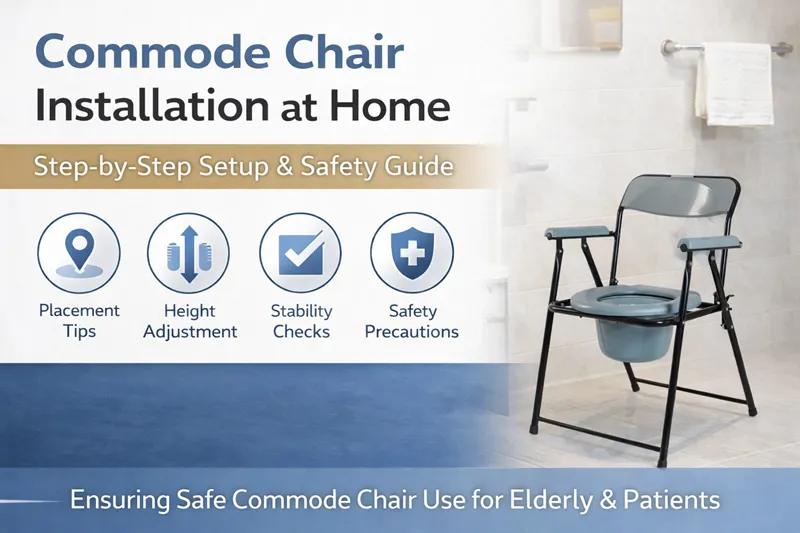
In Indian homes, where space constraints, tiled flooring,
uneven surfaces, and multi-purpose rooms are common, correct installation
becomes even more important. At Aarogyaa Bharat, we regularly assist families
who already own a commode chair but face problems because it was not installed
or positioned correctly from the beginning. A properly installed commode chair
transforms home care into a safer, calmer, and more dignified experience, while
a poorly installed one becomes a daily hazard.
Why Proper Commode Chair Installation Matters for Home
Safety
A commode chair is a load-bearing safety device that
supports a patient’s full body weight during sitting, standing, and transfer
movements, which are the moments when falls are most likely to occur. Improper
installation can cause the chair to wobble, slide, or tilt, leading to panic,
loss of balance, or serious injury. For elderly individuals or patients with
weak joints, even a small shift in the chair’s position can trigger fear and
hesitation, which then discourages regular use and increases dependence on
caregivers. Correct installation ensures stability, confidence, and predictable
movement, allowing patients to focus on comfort rather than fear. In home
nursing, safety begins with installation, not usage alone.
Choosing the Right Location for Commode Chair
Installation
Selecting the correct location is the first and most
important step in installing a commode chair at home. The chair should ideally
be placed close to the bed, especially for elderly patients, arthritis
sufferers, or those who require night-time toileting support. The chosen area
must have a flat, even surface free from loose rugs, floor mats, electrical
wires, or clutter. In Indian homes, tiled floors are common, so extra care must
be taken to ensure the surface is dry and clean before placement. Installing
the chair in a predictable, consistent location helps patients develop
familiarity and confidence, reducing confusion and hesitation, particularly
during night-time use.
Understanding Floor Surface Requirements in Indian Homes
Indian homes often use ceramic, vitrified, or marble tiles,
which can become slippery due to moisture, cleaning liquids, or polishing
residue. When installing a commode chair on such surfaces, it is essential to
ensure that all rubber feet are intact, evenly touching the floor, and free
from dust or wear. Even a slight unevenness can cause rocking during transfers.
Aarogyaa Bharat strongly recommends checking the grip of each leg after
placement by gently applying pressure from different directions. If the floor
is uneven, repositioning the chair or using a stable anti-slip mat designed for
medical equipment may be necessary to ensure complete stability.
Adjusting the Correct Height During Installation
Height adjustment is one of the most critical yet frequently
overlooked aspects of commode chair installation. A chair that is too low
forces excessive bending of knees and hips, causing pain and instability, while
a chair that is too high makes sitting and standing difficult and unsafe. The
ideal height allows the patient’s feet to rest flat on the floor with knees at
a comfortable angle, enabling smooth sit-to-stand movement. During
installation, caregivers should adjust the legs evenly and double-check that
all height pins or locking mechanisms are securely engaged. Aarogyaa Bharat
advises testing the height with the patient present, as comfort and safety vary
based on body proportions and medical condition.
Ensuring Proper Alignment with the Bed
When installing a commode chair beside the bed, alignment
plays a crucial role in transfer safety. The seat height of the commode chair
should be equal to or slightly lower than the bed height to allow a smooth
sideways transfer. Misalignment forces patients to shift body weight awkwardly,
increasing fall risk. During installation, caregivers should simulate a
transfer movement to ensure that the chair placement supports natural motion.
Proper alignment reduces effort, pain, and fear, particularly for post-surgery
patients and individuals with balance issues.
Installing the Commode Bucket Correctly
The commode bucket must be installed securely before any
use. A loosely fitted bucket can shift during use, causing discomfort,
spillage, or hygiene issues. During installation, caregivers should ensure that
the bucket is fully seated in its holder and aligned correctly with the seat
opening. Some models have locking clips or guides that must be engaged
properly. Aarogyaa Bharat recommends checking bucket stability by gently
pressing down on the seat before first use to confirm that everything is secure.
Armrest and Backrest Checks During Installation
Armrests and backrests are critical support points,
especially for elderly individuals, arthritis patients, and obese users. During
installation, caregivers should ensure that armrests are firmly attached,
level, and capable of bearing weight without flexing. Backrests, if included,
should be aligned correctly to provide lumbar support without pushing the
patient forward. Loose armrests or misaligned backrests compromise safety and
must be corrected before regular use. These checks are especially important in
newly assembled or foldable commode chairs.
Testing Stability Before First Use
Once installation is complete, stability testing is
essential before allowing patient use. Caregivers should apply gentle pressure
from different directions, sit on the chair briefly if appropriate, and observe
any movement or noise. The chair should feel solid, quiet, and unmoving under
load. This testing phase builds caregiver confidence and ensures that any
installation errors are corrected early. Aarogyaa Bharat considers stability
testing a mandatory step, not an optional precaution.
Night-Time Installation Considerations
For patients who require night-time toileting support,
installation must consider lighting, orientation, and consistency. A soft night
lamp or motion-sensor light near the commode chair helps patients orient
themselves without harsh brightness. The chair should remain in the same
position every night to prevent confusion. Installing the chair on the side of
the bed the patient naturally uses for getting up further improves safety.
These night-time considerations significantly reduce falls and anxiety.
Hygiene Planning During Installation
Hygiene planning should be part of the installation process,
not an afterthought. The commode chair should be placed in a location that
allows easy removal and cleaning of the bucket without disturbing the patient
or surrounding furniture. Adequate space for caregiver movement during cleaning
is important, especially in small homes. Aarogyaa Bharat advises families to
plan a simple, repeatable cleaning routine during installation to ensure
long-term hygiene compliance.
Caregiver Ergonomics and Installation Setup
Installation should also consider caregiver comfort and
safety. The chair must be positioned so caregivers can assist transfers without
twisting, bending excessively, or lifting awkwardly. Proper installation
reduces caregiver strain, prevents back injuries, and makes daily assistance
more sustainable. A well-installed commode chair supports both patient and
caregiver equally.
Avoiding Common Installation Mistakes
Common installation mistakes include uneven leg adjustment,
placing the chair on rugs, ignoring floor slope, incorrect height setting, and
failing to test stability. These errors often lead to fear, discomfort, and
eventual disuse of the chair. Aarogyaa Bharat emphasises careful, step-by-step
installation to prevent these issues and ensure long-term satisfaction.
Long-Term Monitoring After Installation
Installation is not a one-time task. Over time, floor
conditions, patient weight, or mobility levels may change. Regular checks
ensure that the chair remains stable, height remains appropriate, and
components remain secure. Aarogyaa Bharat recommends periodic inspection as
part of routine home care.
Why Aarogyaa Bharat Emphasises Proper Installation
Aarogyaa Bharat believes that even the best commode chair
cannot deliver safety and dignity if it is not installed correctly. Our
guidance focuses on real-world Indian home conditions, ensuring families
understand not just what to buy, but how to use it safely from day one. Proper
installation is the foundation of effective home care.
Conclusion
Commode chair installation at home is a critical step that directly influences safety, comfort, dignity, and caregiver confidence. By carefully selecting the location, adjusting height, ensuring stability, and planning hygiene and night-time use, families can transform a commode chair into a reliable daily support system rather than a source of risk. In Indian homes, where environmental factors already pose challenges, proper installation becomes even more essential. Aarogyaa Bharat remains committed to guiding families through every stage of home care, ensuring that commode chairs are not only purchased wisely but installed correctly for long-term peace of mind.