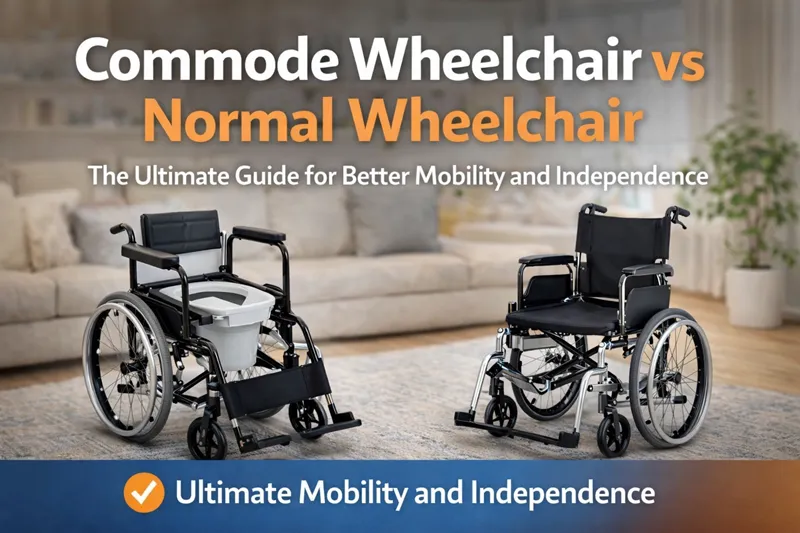
These mobility aids are more than just equipment; they represent pathways to restored dignity, reduced caregiver burden, and enhanced safety in households often characterized by multi-generational living and limited space, making informed choices essential amid rising awareness of elderly care and rehabilitation needs. This in-depth Aarogyaa Bharat blog explores every facet of commode wheelchair vs normal wheelchair debates, weaving in high-traffic keywords like best wheelchair for elderly, wheelchair with toilet seat, commode wheelchair advantages, senior citizen wheelchairs, and wheelchair toilet solutions to empower readers with actionable insights tailored to Indian contexts, budgets, healthcare schemes, and lifestyle nuances for optimal wellness and independence.
What is a Commode Wheelchair?
A commode wheelchair stands out as a highly specialized mobility device that masterfully combines transportation capabilities with an integrated toileting system, addressing the critical needs of users who face significant difficulties in transferring to traditional bathrooms, a common issue in compact Indian homes where doorways are narrow and fixtures are often elevated or inaccessible for those with limited leg strength. At its core, it features a thoughtfully designed U-shaped or open-front seat that accommodates a removable, hygienic bucket or pan positioned directly beneath, allowing users to attend to personal hygiene needs right from the chair without the physical strain or risk associated with standing, pivoting, or walking short distances features that make it a cornerstone for elderly care, post-hip or knee surgery recovery, paralysis patients, or individuals with severe arthritis. Constructed typically from corrosion-resistant steel or lightweight aluminum frames to withstand India's humid monsoons and dusty environments, these wheelchairs incorporate adjustable armrests, swing-away footrests, padded seating for pressure ulcer prevention, and robust locking brakes for unwavering stability during use, with popular Indian models often including anti-tippers for added safety on slightly uneven floors. Beyond mere functionality, commode wheelchairs foster emotional well-being by preserving user privacy and autonomy, drastically reducing the frequency of caregiver interventions that can feel intrusive, especially in close-knit families where elders value independence; they also align seamlessly with rehabilitation protocols, enabling gradual mobility exercises while managing incontinence or post-operative limitations. In the Indian market, variations abound from basic manual versions for homebound users to slightly motorized ones for enhanced ease each emphasizing ease of bucket emptying, quick-clean materials, and compact folding for storage in space-strapped urban dwellings like those in Pune, positioning them as indispensable tools for holistic health management at Aarogyaa Bharat, where quality meets affordability for long-term reliability.
What is a Normal Wheelchair?
A normal wheelchair, frequently referred to as a standard, basic, or self-propelled wheelchair, serves as the foundational mobility aid engineered exclusively for efficient movement across indoor and outdoor spaces, prioritizing versatility, lightness, and user-friendliness over specialized hygiene features, making it a staple for millions navigating India's vibrant streets, hospitals, and homes. It boasts a solid, ergonomically contoured seat paired with a supportive backrest, large rear wheels equipped with push rims for independent propulsion, and smaller front casters for agile maneuvering, often complemented by foldable frames that collapse neatly for transport via scooters, buses, or car trunks in traffic-heavy cities like Pune. Available in manual and powered configurations, these wheelchairs cater to a spectrum of users from those with moderate mobility impairments like early Parkinson's or minor stroke aftermaths to active seniors engaging in community outings featuring customizable elements such as height-adjustable seats, detachable armrests, elevating leg rests to prevent swelling, and puncture-proof tires suited for potholed roads and gravel paths prevalent in Indian locales. Their lightweight design, typically ranging from 10-20 kg, facilitates easy handling by caregivers or solo users, while modular components simplify repairs through widespread local service networks, ensuring minimal downtime; however, this pure mobility focus assumes users possess adequate upper body strength and balance for ancillary tasks like toileting, which occurs separately via bedside aids or accessible bathrooms. Economical and widely available under government schemes, normal wheelchairs promote physical engagement and social participation, countering isolation risks in aging populations, and at Aarogyaa Bharat, they form the backbone of rental fleets for short-term rehab or trial periods, offering a practical entry point into enhanced mobility without overwhelming complexity or cost.
Key Differences Between Commode and Normal Wheelchair
Distinguishing between commode and normal wheelchairs hinges on their divergent philosophies one as a comprehensive hygiene-mobility hybrid tailored for profound dependency scenarios, the other as a streamlined transport tool for broader functionality each excelling in contexts shaped by India's unique blend of space limitations, cultural caregiving dynamics, and infrastructural realities like narrow corridors and monsoon-prone terrains. Fundamentally, the commode wheelchair's open-seat architecture with its concealed bucket revolutionizes toileting by enabling in-situ use that eliminates transfer hazards responsible for numerous elderly falls annually, whereas the normal wheelchair's enclosed, cushioned seat optimizes for seamless gliding over distances but mandates external hygiene solutions, potentially amplifying risks for frail users. Hygiene paradigms shift dramatically: commode models encapsulate waste discreetly with spill-proof designs and antimicrobial coatings, upholding dignity in shared living spaces, while normal variants rely on user-initiated moves to commodes or toilets, often straining caregivers in joint families. In terms of portability, commode wheelchairs' reinforced builds (15-25 kg) prioritize indoor stability over travel agility, contrasting the featherweight, collapsible normal wheelchairs that breeze through markets or clinics; pricing mirrors this, with commode options at ₹8,000-₹25,000 reflecting premium engineering versus ₹5,000-₹15,000 for basics, influencing accessibility via Ayushman Bharat subsidies. Maintenance diverges too commode chairs demand meticulous bucket sanitation and part inspections, normal ones a swift wipe-down while outdoor prowess favors the latter's rugged wheels. This expanded comparison table, optimized for searches on commode wheelchair vs normal wheelchair and best wheelchair for seniors in India, illuminates these facets:
| Feature | Commode Wheelchair | Normal Wheelchair |
|---|---|---|
| Primary Function | Mobility + integrated toileting | Mobility and transport only |
| Seat Design | U-shaped/open with removable bucket | Solid, padded for comfort |
| Best For | Seniors with transfer issues, post-surgery | Active users, general daily movement |
| Hygiene & Dignity | Excellent in-place use, minimal transfers | Requires separate toilet access |
| Weight & Portability | 15-25 kg, bulkier, indoor-focused | 10-20 kg, foldable, travel-friendly |
| Price Range (India) | ₹8,000-₹25,000 | ₹5,000-₹15,000 |
| Maintenance | Bucket cleaning, more parts | Simple wipe-down, fewer components |
| Outdoor Suitability | Limited by size and stability | High with rugged wheels |
| User Weight Capacity | Up to 120-150 kg, reinforced frames | Up to 100-120 kg, standard builds |
| Customization Options | Height-adjustable, anti-tippers | Reclining backs, elevating legs |
Advantages and Disadvantages of Commode Wheelchair
Commode wheelchairs deliver unparalleled advantages in scenarios demanding uncompromising hygiene and minimal physical exertion, particularly for India's aging demographic where incontinence or post-surgical weakness affects over 10% of seniors; their pinnacle benefit is the zero-transfer toileting mechanism that not only curtails fall risks by facilitating stable, seated elimination but also instills profound psychological empowerment through privacy preservation amid family settings. Caregivers reap immense rewards with reduced lifting frequencies that avert musculoskeletal injuries plaguing 40% of informal carers, complemented by ergonomic adjustments like flip-up arms for lateral transfers and breathable, washable upholstery mitigating skin irritations during extended occupancy. Safety innovations such as dual-locking brakes, non-slip footplates, and high-back support further solidify their role in stroke rehabilitation or spinal cord injury management, while durable powder-coated finishes battle corrosion effectively. Nevertheless, challenges include elevated weight complicating navigation through tight doorways or elevators, premium pricing straining modest budgets despite subsidies, intensive cleaning regimens to forestall odors, and curtailed outdoor viability on account of lower ground clearance, rendering them niche rather than universal solutions despite their transformative hygiene edge.
Advantages and Disadvantages of Normal Wheelchair
Normal wheelchairs excel through unmatched versatility and economic appeal, embodying accessibility for diverse Indian users from urban professionals recovering from accidents to rural elders attending village events, with their featherlight frames and intuitive self-drive systems encouraging active lifestyles that combat sedentary risks associated with immobility. Affordability spans entry-level models to feature-rich variants, bolstered by ubiquitous spare parts availability and straightforward assembly, while expansive wheelbases and shock-absorbing tires tame uneven pavements, facilitating outings to temples, markets, or physiotherapy sessions without fatigue. Customizations like quick-release axles and contoured cushions enhance long-haul comfort, and their compact foldability suits public transport integration, a daily necessity in congested metros like Pune. Drawbacks emerge in hygiene-dependent contexts, where transfer vulnerabilities expose users to slips or strains, necessitating supplementary aids that inflate overall costs; limited inherent pressure relief may invite sores without add-ons, and dependency on pusher assistance curbs full independence for weaker arms, positioning them ideally for transit-oriented needs over all-encompassing care.
When to Choose Commode Wheelchair Over Normal Wheelchair
Choosing a commode wheelchair over its normal counterpart becomes imperative when user profiles feature high toileting dependency encompassing advanced dementia, lower limb paralysis, morbid obesity precluding safe lifts, or immediate post-operative phases like joint replacements where in-chair sanitation averts complications in elevator-less homes or distant bathrooms, aligning with India's overburdened healthcare by easing hospital readmissions. These chairs thrive in ground-level dwellings, palliative setups, or night-time routines minimizing disruptions, their stability fostering confidence for progressive rehab exercises under physiotherapist guidance. Normal wheelchairs suit conversely when mobility predominates sans acute hygiene hurdles, such as outpatient therapy, social errands, or transitional recoveries where portable bedside options suffice, allowing budgetary allocation toward powered upgrades for extended ranges.
Maintenance and Buying Tips for Wheelchairs in India
Meticulous maintenance underpins wheelchair longevity in India's variable climates: commode variants require daily bucket sterilization with vinegar solutions or hospital-grade disinfectants, bi-weekly wheel alignments to counter wear from tiled floors, and quarterly frame inspections for rust, whereas normal models benefit from pneumatic tire inflations to 30-40 PSI, chain lubrication, and upholstery vacuuming against dust accumulation. Buyer prudence at Aarogyaa Bharat entails matching specifications to body metrics seat widths from 16-20 inches, weight tolerances up to 150 kg alongside trial sits verifying brake responsiveness and propulsion ease; prioritize ISI-marked products with 1-2 year warranties, rust-inhibiting paints, and modular designs for upgrades. Rentals from ₹500 monthly facilitate testing, government portals like Ayushman Bharat unlock reimbursements up to 75%, and bulk purchases for ashrams yield discounts; consult ergonomics experts for fittings, ensuring seamless integration into Pune's fast-paced life.
Conclusion
In the commode wheelchair vs normal wheelchair dilemma, the optimal choice crystallizes around individual necessities embrace commode innovations for hygiene-centric, indoor lifestyles prioritizing safety and autonomy, or standard models for versatile, budget-friendly mobility across India's dynamic landscapes. Aarogyaa Bharat champions both, urging personalized assessments to unlock independence, underscoring that the right wheelchair not only navigates physical barriers but elevates life's quality for users and loved ones alike.