What Is an Autoclave?
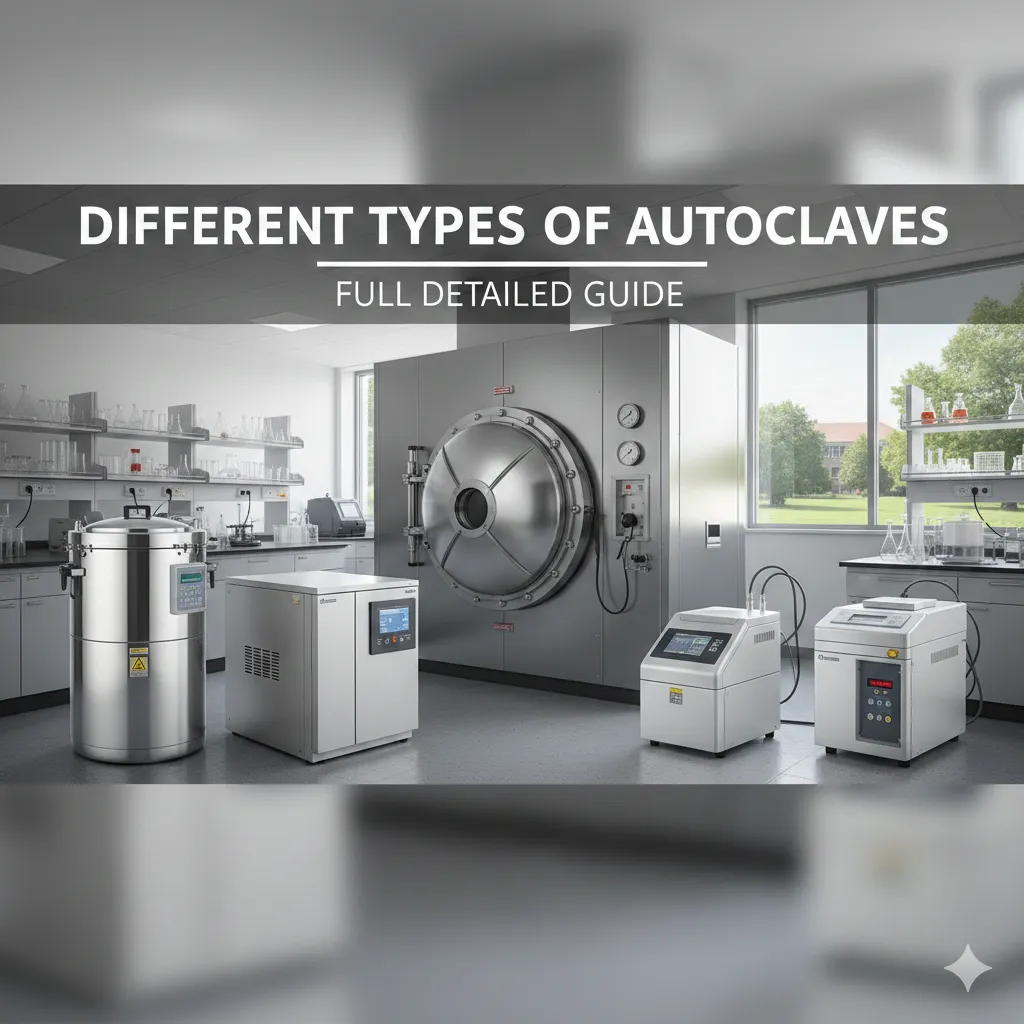
An autoclave is a sterilization device that uses
high-temperature saturated steam under pressure to destroy all microorganisms,
including:
- Bacteria
- Viruses
- Fungi
- Mycobacteria
- Bacterial
spores
Autoclaves are considered the gold standard for sterilization because they are reliable, effective, and environmentally safe when used correctly.
In this complete guide by Aarogyaa Bharat, we explain:
- What
an autoclave is and how it works
- Autoclave
classification by Class (B, N, S)
- Autoclave
classification by design and application
- Use-case
mapping for hospitals, labs, and clinics
- How
to choose the right autoclave for your facility
How Autoclaves Are Classified
Autoclaves can be broadly classified in two major ways:
- By
sterilization class (Class B, Class N, Class S)
- By
design and application (gravity, vacuum, tabletop, vertical, etc.)
Understanding both classifications helps in choosing the
right equipment for your workflow.
Classification 1: Types of Autoclave by Class (EN 13060 Standard)
1. Class B Autoclave (Most Advanced)
Class B autoclaves are the highest and most versatile
category of steam sterilizers.
How it works
- Uses
pre-vacuum and post-vacuum cycles
- Removes
air completely before steam injection
- Ensures
excellent steam penetration into complex loads
What it can sterilize
- Wrapped
and unwrapped instruments
- Hollow
instruments (Type A & B)
- Porous
loads
- Textile
packs
Where it is used
- Hospitals
- CSSD
departments
- Dental
clinics
- Surgical
centres
Advantages
- Highest sterilization assurance
- Suitable for all load types
- Meets international standards (NABH, JCI)
Limitations
- Higher cost
- Requires trained staff and maintenance
Best choice for facilities handling critical instruments
2. Class N Autoclave (Basic Sterilization)
Class N autoclaves are designed for simple, unwrapped solid
instruments.
How it works
- Uses
gravity displacement
- No
vacuum phase
What it can sterilize
- Solid,
unwrapped instruments only
Cannot sterilize:
- Wrapped
instruments
- Hollow
instruments
- Porous
loads
Where it is used
- Small
clinics
- Tattoo
studios
- Simple
outpatient setups
Advantages
- Affordable
- Easy to operate
Limitations
- Limited applications
- Not suitable for advanced medical procedures
Not recommended for hospitals or dental clinics handling
complex instruments
3. Class S Autoclave (Specialized Use)
Class S autoclaves fall between Class B and Class N.
How it works
- Limited
vacuum cycles
- Sterilization
capability depends on manufacturer specification
What it can sterilize
- Specific
wrapped or hollow instruments (as defined by manufacturer)
Where it is used
- Specialty
clinics
- Facilities
with known, limited instrument types
Advantages
- More flexible than Class N
- Lower cost than Class B
Limitations
- Not universal
- Requires careful load compatibility checks
Classification 2: Types of Autoclaves by Design & Application
1. Gravity Displacement Autoclave
- Steam
displaces air naturally
- Simple
and cost-effective
Best for:
Laboratories, media sterilization, basic instruments
2. Pre-Vacuum (High-Vacuum) Autoclave
- Uses
vacuum pump to remove air
- Superior
steam penetration
Best for:
Hospitals, CSSD, wrapped surgical instruments
3. Tabletop / Benchtop Autoclave
- Compact
and space-saving
- Often
Class B or S
Best for:
Dental clinics, small labs, outpatient centers
4. Vertical Autoclave
- Top-loading
design
- Ideal
for liquids and culture media
Best for:
Laboratories, pharmaceutical units
5. Horizontal Autoclave
- Front-loading,
large chamber
- High
throughput
Best for:
Hospitals, large CSSD units
Choosing the Right Autoclave for Your Facility
Ask These Key Questions
- What
type of instruments are being sterilized?
- Solid
only → Class N
- Hollow
/ wrapped → Class B
- Volume
of sterilization?
- Low
→ Tabletop
- High
→ Horizontal / CSSD autoclave
- Regulatory
requirements?
- NABH
/ JCI → Class B recommended
- Available
space & utilities?
- Small
clinic → Benchtop
- Hospital
→ Floor-mounted systems
Comparison Table: Autoclave Types at a Glance
|
Feature |
Class B |
Class S |
Class N |
|
Vacuum cycles |
Full |
Limited |
None |
|
Wrapped
instruments |
Yes |
Limited |
No |
|
Hollow
instruments |
Yes |
Limited |
No |
|
Porous loads |
Yes |
Limited |
No |
|
Compliance
level |
Highest |
Medium |
Basic |
|
Cost |
High |
Medium |
Low |
Why Aarogyaa Bharat Is Your Trusted Partner for
Autoclaves
At Aarogyaa Bharat, we help healthcare and laboratory
facilities choose the right sterilization solution, not just any autoclave.
We offer:
- Class
B, S, and N autoclaves
- Tabletop,
vertical, and CSSD systems
- Expert
guidance based on your use case
- Reliable
after-sales and service support
Our mission is to ensure safe, compliant, and efficient sterilization across India.
Conclusion
Understanding the different types of autoclaves is essential
for making the right sterilization investment. While Class N autoclaves may
suit basic needs, Class B autoclaves provide the highest level of safety,
flexibility, and compliance - making them the preferred choice for modern
healthcare facilities.
When sterilization matters, choosing the right autoclave
makes all the difference.