Why Fall Prevention is Important for Elderly Individuals
Falls are one of the most common health risks faced by elderly individuals. As people age, balance, muscle strength, coordination, reflexes, and joint flexibility naturally decrease. Because of this, everyday activities like walking around the house, standing up, climbing stairs, using the bathroom, or walking outdoors can become more difficult and unsafe.
A fall can lead to serious injuries such as fractures, long recovery periods, reduced confidence, and loss of independence. In many cases, the fear of falling also causes seniors to avoid physical activity, which can further affect their overall health and well-being.
This is why proper mobility support is extremely important for elderly individuals. Walkers with wheels provide stable support, smoother movement, and better walking control, helping seniors move more safely and confidently during daily activities. They also reduce physical strain and support independent mobility both indoors and outdoors.
Platforms like Aarogyaa Bharat continue to support elderly healthcare through Hospital Pages focused on rehabilitation and mobility care, City Pages that help users locate suitable mobility aids nearby, and Healthcare Calculator tools that simplify product comparison according to individual mobility and fall prevention needs.
What is a Wheeled Walker?
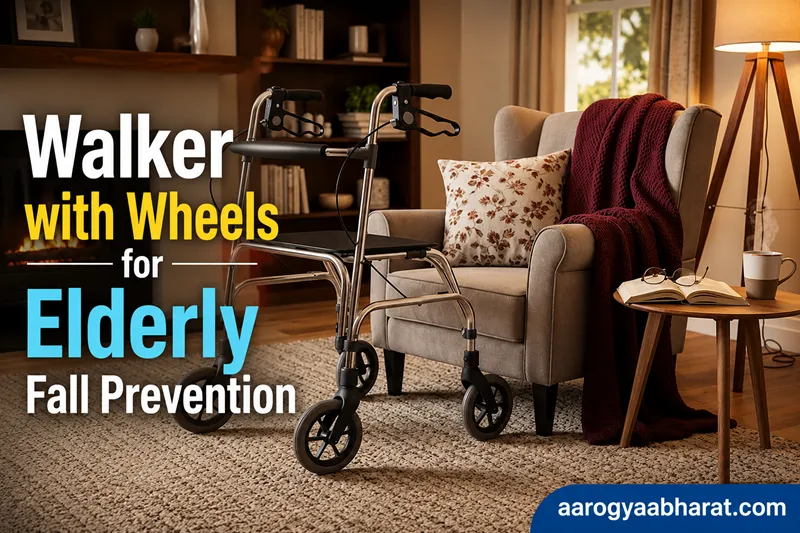
A wheeled walker is a mobility aid designed to help elderly individuals walk more safely and comfortably by combining stable support with smooth rolling movement. Unlike standard walkers that need to be lifted while walking, wheeled walkers move forward easily, reducing strain on the arms, shoulders, knees, and back.
Modern walkers with wheels usually include ergonomic hand grips, adjustable height settings, anti-slip support systems, lightweight yet durable frames, smooth wheels, and reliable braking mechanisms. These features improve walking balance, posture, and movement control across different surfaces.
Wheeled walkers are especially helpful for seniors experiencing balance problems, weakness, arthritis, or mobility challenges during rehabilitation and recovery. Aarogyaa Bharat offers a wide range of wheeled walkers designed to meet different mobility and comfort needs.
Benefits of Using a Walker with Wheels
Using a walker with wheels offers several important benefits for elderly users:
- Improves balance and walking stability
- Reduces the risk of slips and falls
- Provides smooth and comfortable movement
- Reduces pressure on joints and muscles
- Minimizes physical fatigue during walking
- Supports independent daily mobility
- Suitable for both indoor and outdoor use
- Encourages a more active and confident lifestyle
These walkers are especially beneficial for elderly individuals recovering from surgery, living with arthritis, or facing age-related mobility decline.
Types of Wheeled Walkers
Different wheeled walkers are available depending on the level of support and mobility required.
| Walker Type | Best For | Key Features | Support Level |
|---|---|---|---|
| Two-Wheel Walker | Indoor fall prevention | Front wheels, anti-slip support | Medium-High |
| Three-Wheel Walker | Easy movement in compact spaces | Lightweight, smooth turning | Medium |
| Four-Wheel Rollator | Outdoor walking and comfort | Seat, brakes, storage basket | High |
| Foldable Wheel Walker | Travel and portability | Lightweight foldable frame | Medium |
Choosing the right walker depends on the user’s balance condition, walking habits, and indoor or outdoor mobility requirements.
Important Features to Consider Before Buying
Before purchasing a wheeled walker, it is important to focus on features that improve safety, comfort, and convenience:
- Adjustable height for proper posture
- Ergonomic hand grips for better comfort
- Lightweight yet durable frame
- Smooth wheels with anti-slip support
- Reliable hand brakes for better control
- Foldable design for easy storage and transport
- Padded seats for resting during long walks
- Shock-absorbing systems for smoother movement
Aarogyaa Bharat simplifies the buying process through expert guidance and Healthcare Calculator tools.
How to Use a Wheeled Walker Safely
Using a wheeled walker correctly is important for improving stability and preventing accidents. Elderly users should:
- Adjust the walker according to their height
- Keep elbows slightly bent while holding the handles
- Maintain an upright posture while walking
- Move slowly and steadily across surfaces
- Apply brakes whenever stopping or sitting
- Avoid slippery or uneven floors whenever possible
- Walk carefully while turning or moving through narrow spaces
Caregivers can also help by keeping walking areas free from clutter and obstacles.
Advantages of Wheeled Walkers
- Better balance and walking control
- Reduced fall risks during movement
- Smooth and comfortable walking support
- Less strain on muscles and joints
- Suitable for indoor and outdoor use
- Supports independent daily activities
- Encourages safer and more active mobility
Indoor and Outdoor Use for Fall Prevention
Wheeled walkers work well for both indoor and outdoor mobility. Indoors, they help seniors move safely around bedrooms, kitchens, hallways, hospitals, and rehabilitation centers. Outdoors, they provide support in parks, sidewalks, shopping areas, and community spaces.
Larger wheel models are useful for uneven outdoor surfaces, while lightweight compact designs improve movement around furniture and narrow indoor spaces. This flexibility allows seniors to remain active and independent with greater confidence.
Safety Tips for Preventing Falls
To improve safety while using a wheeled walker:
- Wear comfortable non-slip footwear
- Check wheels, brakes, and rubber parts regularly
- Avoid wet or slippery surfaces
- Ensure proper lighting during nighttime movement
- Maintain a slow and controlled walking speed
- Avoid carrying excessive weight while walking
- Remove loose rugs, wires, and clutter from pathways
These simple precautions can significantly reduce the risk of slips and falls.
Maintenance Tips for Long-Term Durability
Regular maintenance helps keep wheeled walkers safe and reliable for daily use:
- Clean the frame and wheels regularly
- Inspect brakes and wheel alignment for stability
- Replace worn-out wheels or rubber parts promptly
- Lubricate moving parts when necessary
- Store the walker in a dry and secure place
Proper maintenance improves product lifespan and ensures safer long-term mobility support.
Latest Innovations in Wheeled Walkers (2026)
Modern wheeled walkers in 2026 are more advanced, lightweight, and user-friendly than ever before. New features include:
- Ultra-light aluminium frames
- Ergonomic comfort grips
- Silent smooth-rolling wheels
- Advanced braking systems
- Foldable travel-friendly designs
- Shock-absorbing technology
- Posture-support mechanisms
These innovations focus on making daily movement smoother, safer, and more comfortable for elderly users.
Conclusion
A walker with wheels is an essential mobility aid that helps elderly individuals move more safely, comfortably, and confidently during daily activities. By improving balance, reducing strain, and lowering fall risks, wheeled walkers support greater independence and a better quality of life for seniors.
Choosing the right walker, understanding its features, and following proper safety and maintenance practices can make everyday movement easier and safer both indoors and outdoors.
Aarogyaa Bharat continues to support elderly healthcare through mobility products, Hospital Pages, City Pages, and Healthcare Calculator tools that help users make informed healthcare decisions.