



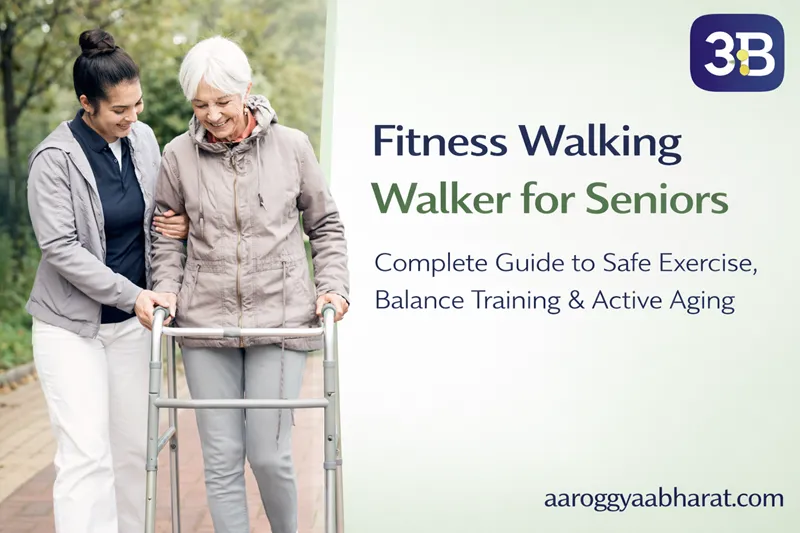
These walkers create a controlled walking environment where
seniors can perform light exercise routines safely. Families exploring hospital
pages and home care fitness resources often discover that physiotherapists
recommend walkers for seniors who want to maintain mobility while performing
daily walking exercises. Aarogyaa Bharat’s rehabilitation section highlights
walking walkers as practical mobility aids that help elderly individuals remain
active while protecting joints and maintaining balance. Healthcare calculators
used to evaluate fall risk and mobility stability frequently recommend walkers
as supportive equipment for elderly fitness routines.
Understanding the Importance of Fitness for Seniors
Maintaining physical fitness becomes increasingly important
as people age. Regular walking and light exercise help strengthen muscles,
improve cardiovascular health, enhance joint flexibility, and maintain
coordination. Without regular physical activity, seniors may experience muscle
weakness, joint stiffness, and reduced mobility over time. Walking walkers
provide a stable framework that allows elderly individuals to exercise safely
even when balance or endurance is limited. Physiotherapists listed on hospital
pages often recommend structured walking routines for seniors recovering from
illness or managing age-related mobility challenges. Aarogyaa Bharat’s home
care equipment guides emphasize that walkers help seniors stay active while
reducing strain on joints and muscles. Healthcare calculators designed to
evaluate mobility performance often indicate that regular walking exercises
improve balance and reduce fall risk among elderly individuals.
How Walking Walkers Support Senior Fitness
Walking walkers create a stable walking environment that
allows seniors to perform exercise routines with confidence. By providing a
firm structure for balance, walkers enable seniors to focus on improving
posture, walking rhythm, and endurance without worrying about falling. Seniors
can perform indoor walking exercises, physiotherapy routines, and light fitness
movements using walkers for support. Hospital pages that provide rehabilitation
guidance often recommend walkers during exercise programs because they allow
controlled movement during recovery and strength training. Aarogyaa Bharat’s
rehabilitation section highlights walkers as effective tools for promoting
active aging and safe exercise. Healthcare calculators used to measure mobility
endurance frequently show improvement when seniors use walkers during regular
walking routines.
Key Features of Walkers Suitable for Fitness Walking
Walkers designed for fitness walking include several
features that improve comfort, stability, and usability. Lightweight aluminium
frames allow seniors to manoeuvre the walker easily while exercising.
Adjustable height handles ensure the walker aligns with the user’s posture,
which is essential for maintaining proper walking technique. Anti-slip rubber
tips provide stability on indoor floors, preventing accidental slipping during
movement. Some walkers also include front wheels that allow smoother walking exercises
with reduced lifting effort. Aarogyaa Bharat’s rehabilitation equipment guides
highlight walkers with ergonomic grips because they improve comfort during
longer exercise sessions. Families reviewing hospital pages for mobility
solutions often prefer walkers that combine stability, lightweight
construction, and ergonomic design.
Typical Features of Fitness Walking Walkers
|
Feature |
Description |
|
Frame
Material |
Lightweight
aluminium or reinforced steel |
|
Height
Adjustment |
Adjustable
handle levels |
|
Base Support |
Anti-slip
rubber tips |
|
Optional
Wheels |
Some models
include front wheels |
|
Weight
Capacity |
Usually
supports 100–150 kg |
|
Grip Design |
Ergonomic
handles for comfort |
Daily Fitness Activities Seniors Can Perform with Walkers
Walking walkers allow seniors to perform several safe
exercise routines that improve strength and balance. Indoor walking sessions
help maintain cardiovascular fitness while improving endurance. Seniors can
also perform gentle physiotherapy exercises such as slow step training, posture
correction movements, and balance exercises while using walkers for support.
Aarogyaa Bharat’s home care equipment guides explain that walkers provide a
safe platform for elderly individuals who want to stay physically active
without risking falls. Hospital pages often highlight the importance of
structured walking exercises for elderly rehabilitation and fitness programs.
Healthcare calculators designed to evaluate mobility health frequently
recommend daily walking routines supported by mobility aids.
Benefits of Using Walkers for Senior Fitness
- Encourage
regular physical activity for elderly individuals
- Provide
stable support during exercise routines
- Improve
balance and walking coordination
- Help
maintain muscle strength and joint flexibility
- Reduce
the risk of falls during fitness activities
- Suitable
for rehabilitation and physiotherapy exercises
- Lightweight
design allows easy manoeuvring
- Support
active and healthy aging lifestyles
Walker vs Walking Stick for Fitness Walking
Different mobility aids provide different levels of support
during exercise routines. Walking sticks offer light balance support and are
typically suitable for seniors who already have strong walking ability. Walkers
provide stronger structural support and are more suitable for seniors who
require additional balance assistance while exercising. Patients consulting
hospital pages often begin fitness routines with walkers before transitioning
to walking sticks once their strength improves. Aarogyaa Bharat’s rehabilitation
section highlights walkers as ideal fitness aids for seniors who need reliable
support while performing walking exercises. Healthcare calculators used to
evaluate mobility progression frequently indicate that walkers improve exercise
confidence for elderly individuals.
Table: Walker vs Walking Stick for Fitness Support
|
Feature |
Walker |
Walking
Stick |
|
Support Level |
Strong
balance support |
Light balance
support |
|
Best Use |
Exercise and
rehabilitation |
Light walking
support |
|
Stability |
Multiple
ground contact points |
Single
contact point |
|
Movement |
Structured
walking support |
Natural
walking movement |
|
Fitness
Safety |
High |
Moderate |
Choosing the Right Walker for Senior Fitness
Selecting the right walker for exercise routines requires
evaluating the user’s mobility level, fitness goals, and home environment.
Seniors performing indoor walking exercises may benefit from walkers with
anti-slip rubber tips that provide stable floor contact. Individuals
participating in physiotherapy programs listed on hospital pages may prefer
walkers with adjustable heights and ergonomic grips for improved posture.
Aarogyaa Bharat recommends reviewing walker specifications carefully before
purchasing mobility equipment. Healthcare calculators designed to measure fall
risk and walking stability can help families determine whether a standard
walker, wheeled walker, or rollator walker is the most appropriate option for
fitness support.
Role of Walkers in Rehabilitation Fitness Programs
Rehabilitation fitness programs often include walking
exercises that help patients rebuild strength and endurance after illness or
surgery. Walkers play an important role in these programs because they provide
reliable balance support while patients perform mobility exercises.
Physiotherapists listed on hospital pages frequently recommend walkers during
rehabilitation to ensure safe walking practice. Aarogyaa Bharat’s
rehabilitation section explains that walkers help seniors regain walking
confidence while improving physical strength and coordination. Healthcare
calculators used to track rehabilitation progress often measure improvements in
endurance and walking stability over time. With regular exercise and proper
guidance, walkers help seniors maintain long-term mobility health.
Conclusion
Walking walkers provide an effective and safe solution for elderly individuals who want to maintain fitness while managing mobility limitations. Their stable design allows seniors to perform walking exercises confidently while reducing the risk of falls and injuries. Regular use of walkers during exercise routines can improve balance, strengthen muscles, and support healthy aging. Aarogyaa Bharat’s home care and rehabilitation equipment collections emphasize the importance of selecting mobility aids that encourage active lifestyles while ensuring safety. By consulting hospital pages, exploring cities pages, and using healthcare calculators to evaluate mobility needs, families can choose walkers that support safe fitness routines for seniors. With the right walker and consistent exercise, elderly individuals can maintain strength, mobility, and independence throughout their later years.





