However, with frequent usage, complex internal design, and
repeated cleaning cycles, flexible endoscopes are also among the most
vulnerable medical devices when it comes to wear and tear. Even minor handling
errors or delayed maintenance can lead to performance issues, increased repair
costs, and potential risks to patient safety.
At Aarogyaa Bharat, the focus is on spreading awareness
about correct medical equipment usage, early fault detection, and timely repair
helping healthcare facilities protect both patients and investments.
Why Flexible Endoscopes Are Prone to Damage
Flexible endoscopes are intricate devices made up of
multiple delicate components, including:
- Insertion
tube and outer sheath
- Distal
tip with lens and light source
- Angulation
wires and control knobs
- Air,
water, and suction channels
- Image
transmission system (fiber optic or video sensor)
These components are exposed to:
- Repeated
bending and twisting
- Body
fluids and biological debris
- Chemical
disinfectants
- Heat
and moisture during reprocessing
Without proper handling and preventive care, even
high-quality endoscopes can develop faults over time.
Common Problems in Flexible Endoscope Usage
1. Poor or Degraded Image Quality
Problem
Clinicians may notice blurred images, dark spots, reduced
brightness, or distorted visuals on the monitor.
Possible Causes
- Broken
or damaged fiber bundles
- Dirty
or damaged distal lens
- Light
guide fiber breakage
- Sensor
damage in video endoscopes
Possible Repair
- Fiber
bundle replacement
- Lens
cleaning or replacement
- Light
guide repair
- Sensor
module repair
Early repair can fully restore image clarity and diagnostic
accuracy.
2. Reduced Tip Angulation or Loss of Control
Problem
Difficulty bending the distal tip or reduced responsiveness
of control knobs.
Possible Causes
- Worn
or snapped angulation wires
- Internal
cable corrosion due to moisture ingress
- Excessive
force during procedures
Possible Repair
- Angulation
wire replacement
- Control
mechanism recalibration
- Internal
cable repair
Loss of angulation can make procedures unsafe and
uncomfortable for patients.
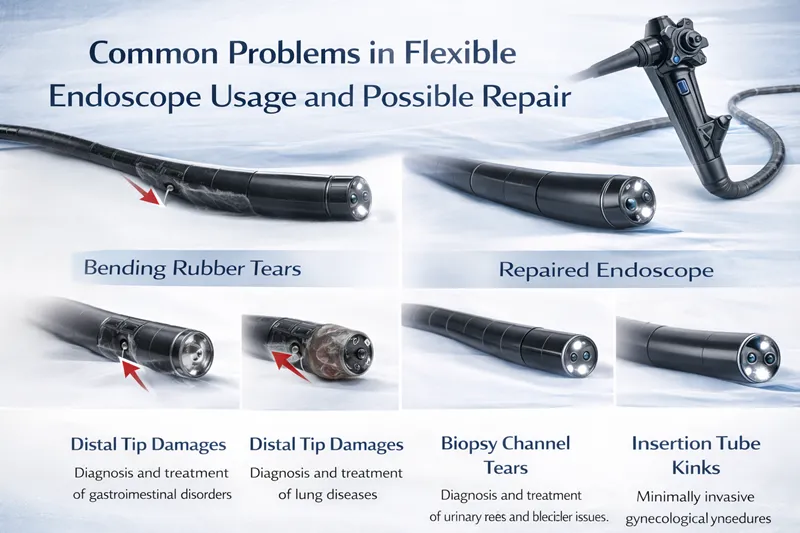
3. Insertion Tube Damage
Problem
Cracks, bubbles, stiffness, or peeling on the insertion tube
surface.
Possible Causes
- Over-bending
during insertion or storage
- Chemical
damage from incorrect disinfectants
- Heat
damage during sterilization
Possible Repair
- Insertion
tube replacement
- Outer
sheath repair
Insertion tube damage is critical as it increases the risk
of cross-contamination.
4. Leakage and Water Ingress
Problem
Failed leak test or presence of moisture inside the scope.
Possible Causes
- Compromised
seals
- Cracked
distal tip
- Punctured
insertion tube
Possible Repair
- Seal
replacement
- Distal
tip repair
- Leak
correction and pressure testing
Routine leak testing is essential to prevent internal
corrosion.
5. Blocked Air/Water or Suction Channels
Problem
Poor insufflation, weak suction, or inadequate water flow.
Possible Causes
- Residue
buildup due to improper cleaning
- Channel
narrowing or liner damage
- Valve
malfunction
Possible Repair
- Deep
channel cleaning
- Channel
liner replacement
- Valve
repair or replacement
Blocked channels also pose a serious infection control risk.
6. Stiff or Malfunctioning Control Knobs
Problem
Hard-to-turn knobs or delayed response during procedures.
Possible Causes
- Mechanical
wear and tear
- Corrosion
due to moisture
- Lack
of lubrication
Possible Repair
- Control
knob assembly repair
- Internal
mechanism replacement
- Lubrication
and recalibration
7. Light Source and Connector Issues
Problem
Flickering or inconsistent illumination.
Possible Causes
- Damaged
light guide connector
- Fiber
breakage
- Loose
coupling
Possible Repair
- Connector
repair
- Light
guide replacement
Common Handling Mistakes That Cause Endoscope Damage
Many endoscope problems are preventable and result from:
- Skipping
routine leak testing
- Improper
storage (tight coiling or incorrect hanging)
- Using
incompatible disinfectants
- Inadequate
staff training
- Rushing
reprocessing steps
Adhering to manufacturer guidelines significantly reduces
damage frequency.
Importance of Timely Repair and Preventive Maintenance
Regular inspection and early repair:
- Extend
endoscope lifespan
- Reduce
downtime and emergency replacements
- Maintain
image quality and manoeuvrability
- Ensure
patient safety and infection control
- Lower
overall operating costs
Preventive maintenance is far more cost-effective than
repeated major repairs.
Repair vs Replacement: Making the Right Decision
Repair is recommended when:
- Damage
is localized
- Core
structure is intact
- Performance
can be restored safely
Replacement may be necessary when:
- Multiple
major components are damaged
- Repair
costs approach replacement value
- Device
no longer meets clinical standards
A professional technical assessment helps make the right
choice.
Aarogyaa Bharat’s Role in Equipment Awareness
Aarogyaa Bharat supports healthcare providers by:
- Promoting
best practices in equipment handling
- Encouraging
preventive maintenance culture
- Providing
reliable information for informed decisions
Their goal is to ensure safe, cost-effective, and reliable
medical equipment usage across healthcare settings.
Conclusion
Flexible endoscopes are powerful diagnostic tools, but their
performance depends on careful handling, regular inspection, and timely repair.
Most common issues - such as image degradation, angulation failure, or channel
blockage are repairable if detected early.
By understanding common problems and addressing them promptly, healthcare facilities can safeguard patient safety, maintain clinical excellence, and extend the life of these valuable devices. With awareness initiatives supported by Aarogyaa Bharat, hospitals and clinics can strike the perfect balance between technology, safety, and cost efficiency.