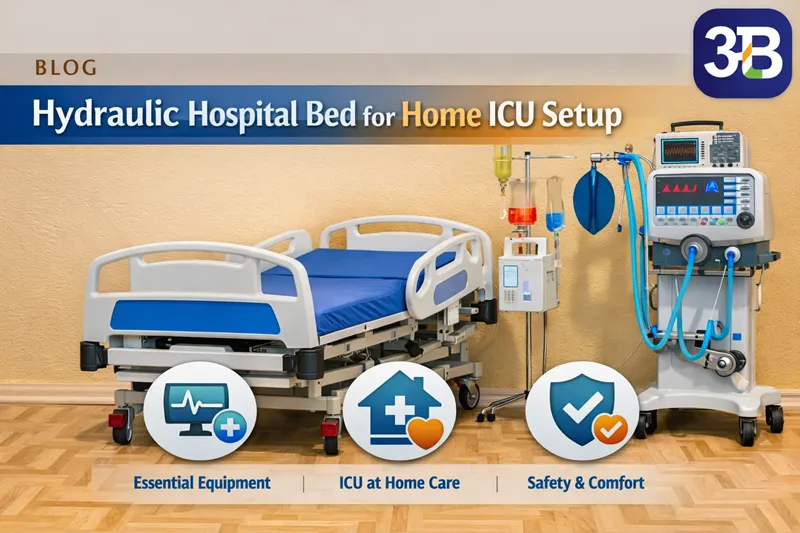
Understanding the Importance of Hospital Beds in Home ICU
Care
Home ICU setups are becoming increasingly common as families
prefer recovery and long-term treatment in familiar environments rather than
extended hospital stays. A standard bed cannot provide the positioning
flexibility required for patients with respiratory issues, neurological
conditions, or post-surgical recovery. Hydraulic hospital beds are engineered
to replicate essential hospital functions, enabling elevation of the backrest,
leg section, and bed height to improve breathing, circulation, and patient
comfort. Aarogyaa Bharat emphasizes that the right hospital bed forms the
foundation of a safe home ICU because it directly affects mobility, pressure
distribution, and caregiver efficiency throughout the day.
Patients who remain bedridden for extended periods are at
higher risk of pressure injuries, muscle stiffness, and respiratory discomfort.
Adjustable beds allow caregivers to reposition patients regularly, supporting
circulation and reducing strain on sensitive areas of the body. This ability to
adapt positioning is one of the most important reasons hydraulic hospital beds
are widely used in home ICU environments.
What Hydraulic Hospital Beds Support Home ICU
Functionality
Hydraulic hospital beds operate using manual crank or pump
mechanisms that lift and lower different sections of the bed smoothly. Unlike
electric beds, they do not rely on power supply, making them especially useful
in regions where electricity may be inconsistent. The hydraulic system ensures
controlled movement, allowing caregivers to adjust positions gradually without
sudden jerks that could cause discomfort to critically ill patients.
In a home ICU setup, frequent adjustments are required for
feeding, suctioning, physiotherapy, or respiratory support. Hydraulic beds
enable caregivers to perform these tasks efficiently while maintaining patient
stability. Aarogyaa Bharat notes that the simplicity of hydraulic systems
reduces technical complications, ensuring uninterrupted functionality even
during emergencies.
Key Features That Make Hydraulic Beds Ideal for Home ICU
Hydraulic hospital beds are built with clinical-grade
materials and functional design elements that enhance safety and usability.
Adjustable backrests help patients maintain semi-Fowler positions, which are
often recommended for respiratory comfort. Leg elevation improves blood
circulation and reduces swelling, particularly for elderly or immobilized
individuals. Height adjustment allows caregivers to work at ergonomic levels,
reducing physical strain during patient transfers or hygiene care.
Strong side rails prevent accidental falls and provide
support during repositioning. Lockable caster wheels ensure the bed remains
stable when stationary but can be moved easily when needed. Aarogyaa Bharat
highlights that these features collectively transform a home environment into a
structured medical care space capable of supporting ICU-level needs.
Table: Essential Hydraulic Hospital Bed Features for Home
ICU
|
Feature |
Clinical
Function |
Patient
Benefit |
Caregiver
Advantage |
|
Backrest
Elevation |
Supports
upright posture |
Easier
breathing & feeding |
Reduced
lifting effort |
|
Leg Elevation |
Improves
circulation |
Less swelling |
Better
positioning control |
|
Height
Adjustment |
Adjustable
bed level |
Safe
transfers |
Ergonomic
caregiving |
|
Side Safety
Rails |
Prevents
falls |
Added
security |
Stability
during movement |
Benefits of Hydraulic Hospital Beds for Critically Ill
Patients
Patients requiring intensive care often experience
discomfort from prolonged immobility. Hydraulic beds allow gentle repositioning
that supports spinal alignment and pressure redistribution. Semi-reclined
positions may help patients with respiratory challenges breathe more
comfortably, while leg elevation reduces fluid retention in lower limbs.
Aarogyaa Bharat explains that the ability to adjust posture without complex
electronics ensures consistent patient care even in challenging home
environments.
Another important benefit is psychological comfort. Patients
who can sit upright occasionally feel more engaged with their surroundings,
improving mood and reducing feelings of isolation during recovery.
Caregiver Advantages in a Home ICU Environment
Caregivers managing home ICU setups perform numerous
physically demanding tasks, including repositioning patients, assisting with
feeding, and conducting hygiene care. Hydraulic beds reduce the need for heavy
lifting by allowing controlled manual adjustments that improve accessibility.
Height adjustment enables caregivers to maintain proper posture, minimizing
back strain and fatigue during long caregiving hours.
Families often appreciate the reliability of hydraulic beds
because they function independently of electricity. Aarogyaa Bharat stresses
that this reliability provides peace of mind, especially during night time care
or unexpected power interruptions.
Table: Hydraulic Bed Benefits Compared to Standard Beds
in Home ICU
|
Care
Requirement |
Standard
Bed Limitation |
Hydraulic
Bed Advantage |
|
Patient
Positioning |
Fixed flat
surface |
Multi-angle
adjustment |
|
Feeding &
Breathing Support |
Difficult
posture control |
Adjustable
backrest |
|
Pressure
Relief |
Limited |
Controlled
repositioning |
|
Caregiver
Safety |
High physical
strain |
Ergonomic
adjustments |
Setting Up a Hydraulic Hospital Bed for Home ICU
Proper placement is essential when installing a hydraulic
bed at home. The bed should be positioned in a well-ventilated area with enough
space around it for caregivers and medical equipment such as oxygen
concentrators or suction machines. Side rails should be adjusted according to
patient mobility, and wheels must be locked once the bed is in place. Aarogyaa
Bharat recommends conducting a demonstration during installation so that
caregivers understand how to operate hydraulic mechanisms safely.
Safety Guidelines for Using Hydraulic Beds in Intensive
Care
Safety begins with proper operation. Adjustments should be
made slowly to avoid sudden shifts that might startle or discomfort the
patient. Caregivers should ensure that tubing from oxygen equipment or
monitoring devices remains untangled during bed movement. Regular inspection of
hydraulic pumps and mechanical joints ensures smooth operation and long-term
durability. Aarogyaa Bharat encourages families to maintain a daily checklist
to monitor bed stability, rail locks, and wheel brakes.
Ideal Patient Conditions for Hydraulic Hospital Beds
Hydraulic hospital beds are commonly used for patients
recovering from surgery, neurological conditions such as stroke or paralysis,
chronic respiratory diseases, and elderly individuals requiring long-term
support. They are particularly suitable for home ICU setups where caregivers
provide structured care but do not require continuous automated adjustments.
Patients undergoing physiotherapy at home also benefit from
adjustable positioning that supports stretching exercises and gradual mobility
training. Aarogyaa Bharat highlights that versatility makes hydraulic beds an
excellent investment for both temporary recovery and long-term medical care.
Maintenance and Hygiene Practices for Long-Term Use
Regular cleaning ensures hygiene and prolongs the lifespan
of the bed. The metal frame should be wiped with disinfectant, and moving parts
should be inspected periodically for smooth operation. Using hospital-grade
mattresses designed for pressure redistribution enhances comfort and supports
clinical positioning. Aarogyaa Bharat advises avoiding excessive weight beyond
the bed’s capacity and scheduling periodic maintenance checks to ensure optimal
performance
Emotional and Lifestyle Benefits of a Structured Home ICU
Bed Setup
Beyond physical care, a hydraulic hospital bed helps create
a structured environment that supports dignity and emotional well-being.
Patients who can sit upright occasionally feel more connected to daily life,
improving morale during recovery. Families often experience reduced stress when
caregiving becomes safer and more manageable. Aarogyaa Bharat believes that
thoughtful equipment choices transform home healthcare from a challenging
responsibility into a supportive healing environment.
Conclusion
A hydraulic hospital bed is one of the most reliable and
practical foundations for a safe home ICU setup. Its manual adjustability,
durable construction, and independence from electricity make it an excellent
choice for families managing long-term patient care. By understanding features,
safety practices, and proper setup techniques, caregivers can create a
comfortable and efficient medical environment at home. Aarogyaa Bharat
encourages families to choose hospital beds that prioritize patient dignity, caregiver
convenience, and long-term reliability, ensuring that recovery and care
continue smoothly in the comfort of home