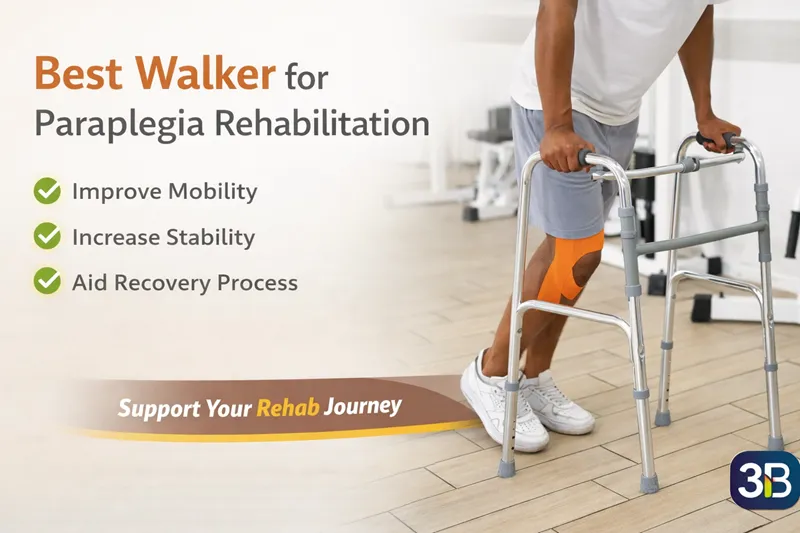
Understanding Paraplegia Rehabilitation and the Role of
Walker Support
Paraplegia rehabilitation focuses on restoring functional
independence, improving circulation, and preventing secondary complications
such as muscle wasting or pressure injuries. While wheelchairs remain essential
for long-distance mobility, walkers play a unique therapeutic role by enabling
supported standing and controlled stepping exercises. The best walker for
paraplegia is not defined only by its design but by how effectively it
integrates into a structured rehabilitation program guided by physiotherapists.
Aarogyaa Bharat emphasizes that walker-based therapy stimulates neuromuscular
engagement, improves posture alignment, and helps patients rebuild confidence
in upright movement, which is often one of the most challenging psychological
barriers after spinal cord injury.
Types of Walkers Used in Paraplegia Rehabilitation
Programs
Different walker designs serve different rehabilitation
goals depending on the patient’s level of mobility, trunk control, and
upper-body strength. Standard walkers provide a stable base for early standing
exercises, while reciprocal walkers allow alternating movement patterns that
mimic natural walking mechanics. Gait trainers offer advanced support with
harness systems and pelvic stabilization, making them ideal for patients who
require extensive assistance during therapy. Posterior walkers encourage upright
posture and are often used in advanced rehabilitation stages when patients
develop better balance. Aarogyaa Bharat recommends that the choice of walker be
made in collaboration with rehabilitation specialists to ensure alignment with
therapy objectives.
Table: Clinical Comparison of Walkers for Paraplegia
Rehabilitation
|
Walker Type |
Support Level |
Best Rehabilitation Stage |
Primary Benefit |
|
Standard Walker |
Moderate |
Early standing training |
Maximum stability |
|
Reciprocal Walker |
High |
Gait re-training |
Natural stepping rhythm |
|
Gait Trainer |
Very High |
Intensive therapy |
Full-body support |
|
Posterior Walker |
Moderate |
Advanced mobility |
Upright posture development |
Biomechanics of Walker-Assisted Mobility for Paraplegia
Patients
Walker-assisted rehabilitation works by redistributing body
weight through the arms and shoulders while encouraging controlled movement of
the lower limbs. The wide base of support reduces fall risk, allowing patients
to practice weight shifting and stepping exercises safely. This process
activates upper-body muscles, improves cardiovascular function, and enhances
bone density through partial weight-bearing. Aarogyaa Bharat highlights that
biomechanical alignment is crucial, as incorrect walker height or posture can
lead to shoulder strain or spinal discomfort. Rehabilitation walkers often
include adjustable features to ensure optimal ergonomics for each patient.
Key Features That Define the Best Walker for Paraplegia
Rehabilitation
The best walker for paraplegia rehabilitation should combine
stability, adjustability, and adaptability to evolving therapy needs.
Height-adjustable frames allow customization for individual body proportions,
while padded forearm supports reduce strain during prolonged sessions. Non-slip
rubber tips or wheels enhance safety across different surfaces, and lightweight
aluminium construction ensures easier manoeuvrability without sacrificing
strength. Aarogyaa Bharat emphasizes that selecting a walker with ergonomic
handles and stable locking mechanisms significantly improves both patient
safety and caregiver confidence during mobility training.
Early Rehabilitation Phase: Standing and Balance Training
During the early stages of rehabilitation, patients often
focus on standing tolerance rather than walking distance. Walkers provide a
secure structure that allows gradual weight-bearing while reducing fear of
falling. Physiotherapists typically guide patients through exercises such as
static standing, lateral weight shifts, and assisted stepping, which help
rebuild muscle memory and circulation. Aarogyaa Bharat recommends starting with
short, supervised sessions to prevent fatigue and gradually increasing duration
as strength improves.
Intermediate Rehabilitation Phase: Gait Training and
Functional Mobility
As patients progress, walkers become tools for practicing
functional mobility, including turning, stepping forward, and navigating indoor
spaces. Reciprocal walkers are particularly useful during this phase because
they allow alternating movement patterns that resemble natural walking.
Caregivers play a key role in ensuring that movements remain controlled and
that the walker stays positioned correctly. Aarogyaa Bharat highlights that
consistent practice during this stage helps improve coordination and prepares
patients for more advanced mobility aids.
Table: Rehabilitation Techniques Using Paraplegia Walkers
|
Rehabilitation
Goal |
Walker
Technique |
Safety Tip |
Expected
Benefit |
|
Standing
Practice |
Static hold
with support |
Engage brakes
if applicable |
Improved
circulation |
|
Weight
Shifting |
Side-to-side
movement |
Maintain
upright posture |
Balance
training |
|
Step Practice |
Controlled
forward steps |
Avoid rushing |
Muscle
activation |
|
Indoor
Navigation |
Wide turns |
Clear
obstacles |
Confidence
building |
Advanced Rehabilitation Phase: Independence and Outdoor
Mobility
In advanced rehabilitation stages, walkers help patients
practice independent mobility in controlled outdoor environments. Smooth
pavements and therapy gardens are often used to introduce real-world challenges
while maintaining safety. Posterior walkers may be recommended to encourage
upright posture and reduce forward leaning. Aarogyaa Bharat advises gradual
progression from indoor to outdoor training to ensure that patients adapt
safely to environmental changes.
Psychological Impact of Walker-Based Rehabilitation
Regaining the ability to stand or move with assistance has
profound emotional benefits for paraplegia patients. Mobility aids restore a
sense of autonomy and reduce feelings of dependency, which can significantly
improve mental health outcomes. Small achievements, such as standing longer or
taking a few assisted steps, often boost motivation and encourage continued
participation in therapy. Aarogyaa Bharat believes that emotional support and
positive reinforcement are as important as physical rehabilitation techniques.
Caregiver Role and Safe Assistance Strategies
Caregivers play a vital role in paraplegia rehabilitation by
ensuring safe movement and providing emotional encouragement. Proper assistance
techniques include supporting from the side rather than pulling from behind,
maintaining clear communication, and monitoring signs of fatigue. Aarogyaa
Bharat recommends caregiver training sessions with physiotherapists to prevent
injury and promote sustainable rehabilitation practices.
Safety Considerations and Common Mistakes to Avoid
Common mistakes during walker use include incorrect height
adjustment, excessive forward leaning, and attempting to move too quickly.
Patients should focus on controlled, deliberate movements rather than speed,
ensuring that balance remains stable throughout each step. Aarogyaa Bharat
advises regular inspection of walker components, including rubber tips and
locking mechanisms, to maintain safety during long-term use.
Maintenance and Long-Term Durability of Rehabilitation
Walkers
Durability is essential for walkers used in daily
rehabilitation routines. Regular cleaning, tightening of screws, and inspection
of joints help prevent mechanical issues. Lightweight aluminium frames offer
corrosion resistance, making them suitable for long-term home care. Aarogyaa
Bharat recommends periodic professional servicing to ensure that walkers remain
safe and functional as therapy progresses.
Conclusion
Choosing the best walker for paraplegia rehabilitation
involves understanding the patient’s mobility level, therapy goals, and
long-term independence needs. Walkers provide essential support for standing
training, gait rehabilitation, and functional mobility development, helping
patients regain confidence and improve overall health. With proper guidance,
safe usage techniques, and consistent rehabilitation practice, walker-based
mobility can play a transformative role in the recovery journey. Aarogyaa Bharat
encourages families and caregivers to approach walker selection as part of a
holistic rehabilitation strategy that combines clinical expertise, emotional
support, and adaptive mobility solutions to enhance quality of life.