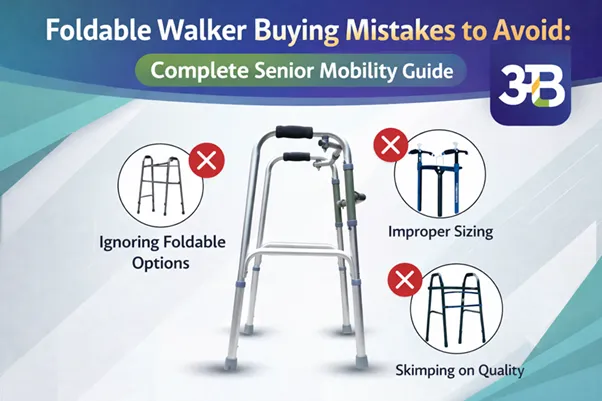
Why Choosing the Right Foldable Walker Is Important
Mobility aids play a critical role in improving the safety
and independence of elderly individuals. Foldable walkers are widely used
because they are lightweight, easy to store, and convenient for travel.
However, selecting the wrong walker can create new mobility problems instead of
solving existing ones. Walkers that do not match the user’s height, weight, or
walking ability may cause posture strain, discomfort, or instability. Doctors
and physiotherapists listed on Aarogyaa Bharat hospital pages frequently
emphasize that improper walker selection is a major reason why seniors stop
using mobility aids after purchase. When the correct walker is chosen, it
supports natural walking posture, improves balance, and allows seniors to move
safely both indoors and outdoors. Understanding the common mistakes people make
while buying foldable walkers can help families make better decisions and
ensure long-term mobility support.
Mistake 1: Choosing the Wrong Walker Height
One of the most common mistakes people make when purchasing
foldable walkers is selecting a model that does not match the user’s height.
Walker handles that are too high or too low can cause serious posture problems
during walking. If the walker is too low, the user may bend forward while
walking, which puts pressure on the back and increases fall risk. If the walker
is too high, it can strain the shoulders and wrists while reducing control over
the walker. Physiotherapists listed on Aarogyaa Bharat hospital pages
recommend that walker handles should align with the wrist level when the arms
are relaxed at the sides. Adjustable walkers are usually the safest choice
because they allow users to customize the height according to their body
proportions. Proper height adjustment ensures comfortable walking posture and
better stability.
Mistake 2: Ignoring Weight Capacity Limits
Every walker is designed with a specific weight capacity
that determines how much body weight it can safely support. Ignoring this limit
can compromise safety and durability. Many buyers focus only on the appearance
or price of the walker without checking the maximum weight it can support. If
the walker cannot handle the user’s weight, it may become unstable or wear out
quickly. Orthopaedic specialists listed on Aarogyaa Bharat city pages
strongly recommend selecting walkers with sufficient weight capacity to ensure
safe long-term use. Heavy-duty walkers are available for individuals who
require stronger frames and additional stability. Checking the manufacturer’s
weight specifications before purchase helps prevent safety issues and ensures
reliable mobility support.
Mistake 3: Not Considering the User’s Mobility Condition
Different walkers are designed for different levels of
mobility support. Some seniors require maximum stability, while others only
need mild balance assistance. Choosing a walker without considering the user’s
physical condition can lead to discomfort and ineffective support. For example,
seniors recovering from surgeries may need stronger walkers that provide high
stability, while active seniors may prefer walkers with wheels that allow
smoother movement. Doctors listed on Aarogyaa Bharat hospital pages often
evaluate a patient’s walking ability, muscle strength, and balance before
recommending a specific walker type. Understanding the user’s mobility needs is
essential for selecting the right walker.
Mistake 4: Buying a Walker Without Wheels When Wheels Are
Needed
Traditional walkers without wheels provide maximum stability
but require lifting with each step. For seniors with weak arms or joint pain,
repeatedly lifting the walker can become tiring. In such cases, walkers with
front wheels provide smoother movement and reduce physical effort.
Physiotherapists featured on Aarogyaa Bharat hospital pages often
recommend front-wheel walkers for patients who need moderate mobility support
but want easier movement. Choosing a walker without considering these factors
can lead to fatigue and reduced walker usage. Evaluating whether the user needs
wheels or not is an important part of walker selection.
Mistake 5: Ignoring Portability and Storage Needs
Foldable walkers are designed to provide convenient storage
and transportation. However, some buyers forget to consider how often the
walker will be transported or stored. Seniors who travel frequently for
hospital visits or physiotherapy sessions need walkers that are easy to fold
and carry. Compact folding mechanisms make it easier to store walkers in cars
or small living spaces. Experts listed on Aarogyaa Bharat city pages
often recommend foldable walkers with simple locking systems that allow quick
folding and unfolding. Considering portability ensures that the walker remains
practical for everyday use.
Common Walker Types and Their Use Cases
|
Walker
Type |
Best Use
Case |
|
Standard
Foldable Walker |
Maximum
stability indoors |
|
Walker with
Front Wheels |
Smooth indoor
mobility |
|
Rollator
Walker |
Outdoor
walking and shopping |
|
Heavy-Duty
Walker |
Higher weight
capacity users |
|
Pediatric
Walker |
Smaller
height users |
Understanding different walker types helps families choose
the most appropriate mobility aid for elderly users.
Benefits of Choosing the Right Foldable Walker
• Improves walking posture and balance
• Reduces strain on joints and muscles
• Prevents falls and mobility accidents
• Enhances independence in daily activities
• Supports physiotherapy recovery programs
• Allows convenient storage and transportation
• Provides long-term durability and safety
These benefits highlight the importance of careful walker
selection for elderly individuals.
Role of Walkers in Physiotherapy Rehabilitation
Physiotherapy programs often include structured walking
exercises designed to rebuild muscle strength and coordination after injuries
or surgeries. Walkers provide the stability required for patients to perform
these exercises safely. Physiotherapists listed on Aarogyaa Bharat hospital
pages frequently recommend walkers during rehabilitation programs for
patients recovering from fractures, joint replacement surgeries, or
neurological disorders. Walkers allow patients to practice walking gradually
while maintaining proper posture and balance. Over time, consistent
physiotherapy combined with walker usage helps improve mobility and restore
walking confidence.
Using Healthcare Calculators to Plan Mobility Recovery
Recovery from injuries or surgeries often requires careful
planning and progress tracking. Aarogyaa Bharat healthcare calculators
help families estimate rehabilitation timelines, physiotherapy sessions, and
expected mobility milestones. These tools provide insights into walking
endurance improvements and recovery progress over time. For example, joint
replacement recovery calculators estimate how long patients may require walker
support before transitioning to independent walking. By combining walker usage with
physiotherapy programs and healthcare calculators, seniors can follow a
structured recovery plan that improves long-term mobility outcomes.
Tips for Buying the Right Foldable Walker
Before purchasing a walker, families should evaluate the
user’s height, weight, and mobility condition. Adjustable walkers are usually
the best option because they allow customization for comfort and posture
alignment. Lightweight aluminium frames provide durability without making the
walker difficult to manoeuvre. Non-slip rubber tips or wheels should be
selected based on the walking environment. Experts listed on Aarogyaa Bharat
city pages also recommend choosing walkers with ergonomic grips that reduce
wrist strain during long walking sessions. Consulting healthcare professionals
before purchasing mobility aids can help ensure the correct choice.
Where to Buy Reliable Walkers in India
Reliable walkers should always be purchased from trusted
medical equipment providers that follow healthcare safety standards.
Hospital-grade walkers are designed with durable materials and ergonomic
features that support elderly mobility safely. Aarogyaa Bharat provides
medically recommended foldable walkers designed for rehabilitation, home
mobility, and safe elderly care. With availability across major city pages
including Pune, Mumbai, Delhi, Bangalore, and Hyderabad, Aarogyaa Bharat
ensures families across India can easily access reliable mobility equipment.
Conclusion
Foldable walkers provide essential mobility support for elderly individuals, helping them maintain independence and safety during daily activities. However, choosing the wrong walker can lead to discomfort, instability, and reduced mobility confidence. Avoiding common buying mistakes such as selecting incorrect height, ignoring weight capacity, or overlooking mobility needs can significantly improve walker effectiveness. When chosen correctly, foldable walkers provide reliable support that enhances balance, posture, and walking comfort. Combined with physiotherapy guidance, hospital consultations, and healthcare calculators available through Aarogyaa Bharat, the right walker can help seniors maintain safe mobility and a better quality of life.