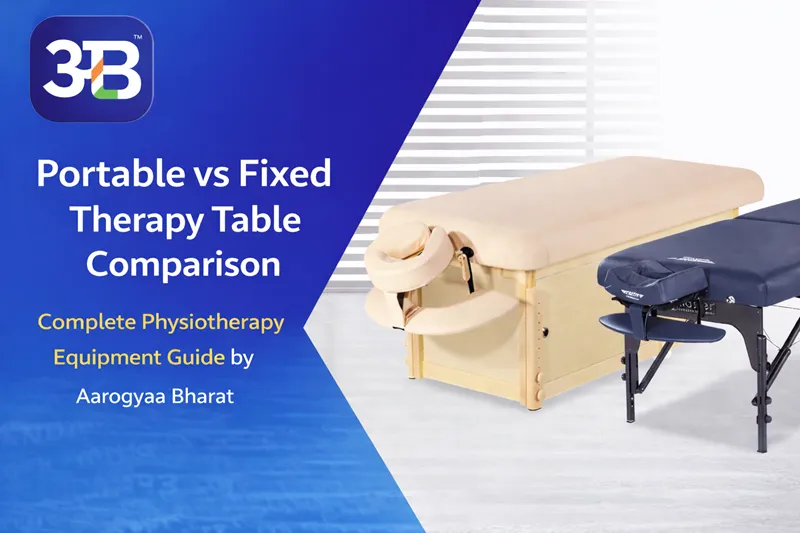
Understanding the Role of Therapy Tables in Modern
Rehabilitation
Therapy tables are the foundation of physiotherapy
treatments because they provide a safe and supportive platform for exercises,
manual therapy, assessments, and recovery programs. Whether in a professional
clinic or a home care setting, the stability and design of the therapy table
directly influence patient comfort and therapist efficiency. Portable therapy
tables focus on flexibility and ease of transport, allowing therapists to
provide services in multiple locations without heavy equipment. Fixed therapy
tables, on the other hand, emphasize durability and strength, making them
suitable for busy clinics where continuous treatments require stable and
long-lasting equipment. Understanding how each type fits into different
rehabilitation environments helps buyers make informed decisions that balance
practicality and long-term performance.
What Is a Portable Therapy Table and How Does It Work
Portable therapy tables are lightweight, foldable designs
created for mobility and convenience. They are commonly used by traveling
physiotherapists, sports therapists, and home healthcare providers who need
equipment that can be set up quickly and stored easily after sessions. Most
portable tables feature aluminium or lightweight steel frames with foldable
legs, allowing them to be carried between locations without difficulty. Despite
their compact design, many portable therapy tables include adjustable headrests
and cushioned surfaces that support basic rehabilitation treatments. Their
versatility makes them ideal for home visits, temporary therapy setups, and
smaller clinics with limited space. However, portability often comes with
trade-offs in terms of weight capacity and stability compared to fixed therapy
tables.
What Is a Fixed Therapy Table and Why Clinics Prefer It
Fixed therapy tables are heavy-duty structures designed for
permanent installation in physiotherapy clinics and rehabilitation centers.
These tables prioritize stability, durability, and high weight capacity, making
them suitable for intensive treatments such as spinal therapy, neurological
rehabilitation, and manual therapy techniques. Fixed tables often feature
reinforced steel frames and thick foam padding that withstand continuous daily
use without losing shape or support. Because they remain stationary, therapists
can apply controlled pressure during treatments without worrying about movement
or wobbling. Clinics with high patient flow prefer fixed therapy tables because
they offer consistent performance, long lifespan, and enhanced safety for both
therapists and patients.
Key Differences Between Portable and Fixed Therapy Tables
|
Feature |
Portable
Therapy Table |
Fixed
Therapy Table |
|
Mobility |
Lightweight
and foldable |
Stationary
and heavy-duty |
|
Stability |
Moderate
stability |
High
stability for intensive therapy |
|
Weight
Capacity |
Lower
compared to fixed tables |
Higher weight
capacity |
|
Storage |
Easy to store
and transport |
Requires
dedicated space |
|
Ideal
Environment |
Home care and
mobile therapy |
Clinics and
rehabilitation centers |
Stability and Safety Comparison
Stability is one of the most important factors when
comparing portable and fixed therapy tables. Portable tables are designed to
balance strength with lightweight construction, which means they may flex
slightly under heavy pressure. This is generally acceptable for basic therapy
exercises or massage treatments but may not be ideal for advanced
rehabilitation techniques that require firm support. Fixed therapy tables
provide a solid foundation that allows therapists to perform precise manual
therapy without worrying about movement. Patients with limited mobility or
balance issues often feel more secure on fixed tables because the structure
remains completely stable throughout the session.
Portability and Space Efficiency Explained
Portable therapy tables are highly valued for their ability
to adapt to different environments. Therapists who travel between homes or
clinics benefit from equipment that can be folded, transported, and assembled
quickly. In small apartments or compact home care setups, portable tables save
space and can be stored easily when not in use. Fixed therapy tables, however,
require dedicated treatment areas and are better suited for permanent clinical
spaces. Clinics with limited space may still choose compact fixed models, but
portability remains the primary advantage of foldable designs.
Comfort and Cushioning Differences
Comfort plays a crucial role in therapy sessions that may
last for extended periods. Fixed therapy tables typically include thicker
high-density foam padding, providing better support for patients during long
treatments. Portable tables also offer cushioning, but the foam thickness may
be slightly reduced to maintain lightweight construction. For elderly patients
or individuals with chronic pain, the extra support offered by fixed tables can
make a noticeable difference in treatment comfort. Therapists should evaluate
how frequently long-duration sessions will occur before deciding which type
provides the best balance between comfort and portability.
Durability and Long-Term Performance
|
Feature |
Portable
Table Benefit |
Fixed
Table Benefit |
|
Frame
Strength |
Lightweight
construction |
Heavy-duty
steel structure |
|
Lifespan |
Suitable for
moderate use |
Designed for
continuous clinical use |
|
Maintenance |
Easy to store
and transport |
Requires
regular cleaning and inspection |
|
Load Handling |
Moderate load
capacity |
High load
capacity for diverse patients |
Durability is often the deciding factor for professional
clinics. Fixed therapy tables are built to handle continuous use, while
portable tables are better suited for lighter workloads or occasional
treatments.
Which Therapy Table Is Better for Home Care
For home physiotherapy, portable therapy tables often
provide the best balanfhoce between functionality and convenience. Caregivers can
set them up quickly in living rooms or bedrooms, allowing patients to perform
exercises without needing a dedicated clinic space. Foldable designs make it
easier to store the table after sessions, keeping the home environment
organized. Fixed therapy tables may still be used in home care when long-term
rehabilitation is required, especially for patients who need consistent positioning
and strong support.
Choosing the Right Option Based on Clinic Workflow
Physiotherapy clinics with high patient turnover usually
benefit from fixed therapy tables because they provide stability and durability
throughout the day. Clinics offering specialized treatments such as
neurological rehabilitation or sports therapy may also prefer electric or
multi-section fixed tables that allow advanced positioning. Portable therapy
tables are ideal for therapists who provide on-site services or operate small
clinics where flexibility is more important than heavy-duty performance. Understanding
workflow patterns and patient needs ensures that the chosen table aligns with
daily operations.
Common Mistakes When Comparing Portable and Fixed Therapy
Tables
One common mistake is assuming that portable tables lack
professional quality; many modern designs offer excellent support for basic
therapy sessions. Another mistake is choosing a fixed table without considering
available space, which may lead to cluttered treatment areas. Some buyers also
overlook weight capacity or frame strength, focusing only on portability or
price. Evaluating therapy requirements, patient demographics, and clinic
environment helps prevent these issues and ensures long-term satisfaction.
Maintenance and Care Tips for Both Types
Portable therapy tables should be folded carefully after use
to avoid stress on hinges and joints. Regular cleaning of upholstery with mild
disinfectants helps maintain hygiene in both portable and fixed models. Fixed
therapy tables should be inspected periodically to ensure bolts and adjustment
mechanisms remain secure. Using protective covers can extend the life of the
upholstery and maintain a professional appearance in clinical environments.
Why Aarogyaa Bharat Recommends Choosing Based on Real
Therapy Needs
Aarogyaa Bharat encourages physiotherapists and caregivers
to evaluate therapy table features based on real rehabilitation requirements
rather than trends or appearance. Portable therapy tables provide flexibility
and convenience for mobile therapy, while fixed tables offer unmatched
stability and durability for intensive clinical use. Selecting the right type
helps create a safer and more effective rehabilitation environment, improving
treatment outcomes and patient confidence.