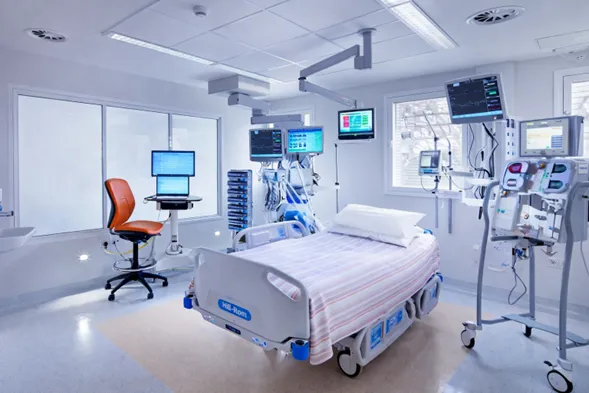
Let’s take a closer look at the general equipment required
in a hospital ICU and understand their importance.
An ICU bed is not an ordinary hospital bed. It is
electrically operated and allows multiple positioning options to support
patient comfort and medical procedures.
Key features include:
- Height
adjustment
- Backrest
and leg elevation
- Trendelenburg
and reverse Trendelenburg positions
- Side
rails for patient safety
ICU beds help prevent pressure injuries, improve breathing,
and allow easy access for medical staff.
2. Patient Monitoring System
Continuous monitoring is the backbone of ICU care.
Multiparameter monitors track vital signs in real time, including:
- Heart
rate
- Blood
pressure
- Oxygen
saturation (SpO₂)
- Respiratory
rate
- ECG
readings
Any abnormal change triggers alarms, enabling immediate
medical intervention.
3. Ventilator
Ventilators are life-saving devices used for patients who
cannot breathe adequately on their own.
They:
- Deliver
controlled oxygen and air
- Support
or replace natural breathing
- Are
essential in respiratory failure, severe infections, and post-operative
care
Modern ventilators allow precise control and monitoring of
breathing parameters.
4. Infusion Pumps and Syringe Pumps
These devices deliver medications, fluids, and nutrients
accurately over a specific time period.
They are commonly used for:
- Antibiotics
- Sedatives
- Pain
medications
- Inotropes
and vasopressors
Precision is critical in ICU treatment, and infusion pumps
ensure exact dosing.
5. Defibrillator
A defibrillator is used during cardiac emergencies such as
sudden cardiac arrest.
It:
- Delivers
controlled electrical shocks
- Restores
normal heart rhythm
- Is a
mandatory safety device in every ICU
Many defibrillators also include monitoring and pacing
functions.
6. Oxygen Supply System
Oxygen therapy is fundamental in ICU care. ICUs are equipped
with:
- Central
oxygen supply lines
- Flow
meters and humidifiers
- Backup
oxygen cylinders
Adequate oxygen delivery supports vital organs and prevents
complications.
7. Suction Machine
Suction machines help remove:
- Airway
secretions
- Blood
or fluids
- Vomit
or mucus
They keep the airway clear and reduce the risk of infection
and aspiration.
8. Crash Cart (Emergency Trolley)
A crash cart contains all emergency medications and tools
required during critical situations.
It typically includes:
- Emergency
drugs
- Airway
equipment
- Defibrillator
- IV
supplies
Quick access to a crash cart can save lives during
emergencies.
A pulse oximeter measures oxygen saturation levels in the
blood. It provides instant feedback on how well oxygen is being delivered to
the body.
Continuous SpO₂ monitoring is crucial in critically ill
patients.
10. ABG Analyzer (Blood Gas Analyzer)
This device measures:
- Oxygen
levels
- Carbon
dioxide levels
- Blood
pH
ABG analysis helps doctors assess lung function and
acid-base balance, guiding ventilation and oxygen therapy.
Importance of Proper ICU Equipment
Well-equipped ICUs:
- Improve
patient survival rates
- Enable
early detection of complications
- Support
faster recovery
- Reduce
medical errors
Each piece of equipment works together to provide comprehensive critical care.
Conclusion
An ICU is the most critical department of any hospital, and its effectiveness depends heavily on advanced medical equipment. From ventilators and monitors to infusion pumps and ICU beds, each device plays a vital role in saving lives. Having the right ICU equipment ensures timely intervention, better patient outcomes, and high-quality critical care.