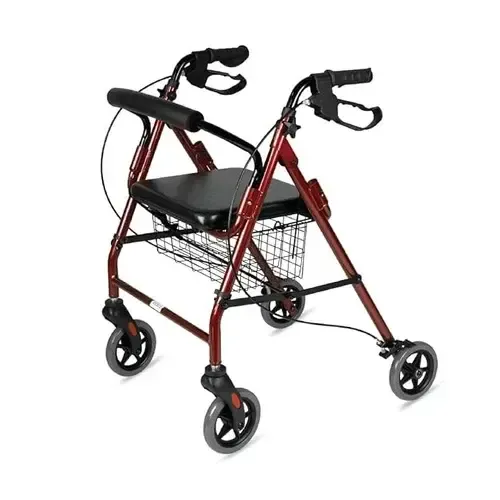
How to Choose the Best Rollator Walker for Elderly in 6 Steps
When a physiotherapist or doctor recommends a rollator walker,
families quickly discover that the product category is far more varied than
expected. Frame materials, wheel sizes, weight ratings, brake systems, and
folding mechanisms all differ across models. Getting the wrong one can
compromise the elderly user's safety and confidence. Here is a straightforward
6-step decision sequence:
1. Get a professional mobility assessment from a
physiotherapist or orthopaedic doctor before purchasing.
2. Decide between 3-wheel and 4-wheel based on the user's
turning space, balance, and strength needs.
3. Confirm indoor vs outdoor use to determine the correct
wheel size and frame durability.
4. Measure seat height and handle height against the user's
specific body dimensions.
5. Check weight capacity and frame material to ensure the
rollator is safe and durable for daily use.
6. Evaluate folding mechanism, accessories, warranty, and
price before deciding to buy or rent.
Rollator Walker Glossary: Terms That Shape Your Decision
Most confusion when choosing the best rollator walker for
elderly users comes from unfamiliar specifications. This glossary covers only
the terms that directly affect which rollator you need.
Rollator Walker
A wheeled mobility aid with a frame, two or more wheels, hand
brakes, and usually a built-in seat and storage pouch. Unlike a standard
walker, a rollator rolls forward continuously, reducing the lifting effort
required with each step.
Frame Material
The structural material of the rollator typically aluminium,
steel, or carbon fibre. Aluminium is lightweight and rust-resistant, making it
the most common choice. Frame material directly affects the rollator's weight,
durability, and portability.
Weight Capacity
The maximum user weight the rollator is rated to support
safely. Standard rollators support 100-120 kg. Bariatric rollators are rated
for 150-200 kg or more. Always choose a rollator whose weight capacity exceeds
the user's current weight by at least 10-15%.
Seat Height
The distance from the floor to the rollator's padded seat
surface, typically adjustable between 47 cm and 60 cm. The correct seat height
allows the user to sit with feet flat on the floor and thighs parallel to the
ground.
Handle Height
The height of the rollator's handgrips, adjustable on most
models. Correct handle height is at approximately wrist level when the user
stands upright with arms relaxed.
Wheel Size
Measured in inches or centimeters. Smaller wheels (15-18 cm)
suit smooth indoor floors. Larger wheels (20-25 cm) handle uneven outdoor
surfaces more effectively.
Loop Brakes
The hand-operated braking system. Pressing down locks the
brakes for seated resting. Brake sensitivity and locking mechanism quality are
critical safety factors.
Folding Mechanism
The system that collapses the rollator for transport and
storage. A rollator's folded dimensions and folding ease determine whether it
is practical for car trips or narrow storage spaces.
Indoor vs Outdoor Rollator
Indoor rollators have smaller, quieter wheels for smooth
floors. Outdoor rollators have larger wheels for uneven terrain. Choosing the
wrong type leads to instability or poor maneuverability.
Bariatric Rollator
A heavy-duty rollator designed for users who exceed the weight
capacity of standard models typically above 120 kg. Bariatric frames are wider
and reinforced.
Turning Radius
The minimum space required for the rollator to complete a full
turn. 3-wheel rollators have a tighter turning radius than 4-wheel models.
Seat and Backrest
Most rollators include a padded seat. Seat dimensions should
match the user's hip width and provide comfortable, stable sitting.
Storage Pouch or Basket
An accessory compartment for carrying personal items.
Rollators used outdoors benefit most from a larger basket.
Standard Walker vs Rollator Walker
A standard walker must be lifted with each step; a rollator
rolls forward continuously. A physiotherapist will recommend which type is
appropriate.
Assistive Technology Professional (ATP)
A certified professional specialized in recommending and
fitting assistive devices. Consulting an ATP or physiotherapist ensures the
device is correctly sized.
Start with the Professional Assessment, Not the Product Page
The single most common mistake families make when buying the
best rollator walker for elderly relatives is browsing product listings before
consulting a physiotherapist or doctor. A rollator walker is a medical mobility
device, not a consumer product. Using the wrong model even a high-quality one
can increase fall risk, strain joints, or accelerate the progression of a
mobility condition.
A physiotherapist or orthopaedic specialist will evaluate the
user's gait pattern, balance, grip strength, joint health, and home environment
before recommending a specific type of rollator. They will specify handle
height ranges, weight capacity requirements, and whether the user needs a
3-wheel or 4-wheel model.
If a formal assessment is not immediately available, carers
should at minimum note the user's current height and weight, the surfaces where
the rollator will primarily be used, the user's grip strength and ability to
operate hand brakes, and any specific conditions such as Parkinson's disease,
arthritis, or post-surgical recovery that may influence design requirements.
3-Wheel vs 4-Wheel Rollator Walker: Which Should Elderly Users Choose?
The choice between a 3-wheel and 4-wheel rollator directly
affects stability, maneuverability, and safety for elderly users.
|
Factor |
3-Wheel Rollator |
4-Wheel Rollator |
|
Stability |
Moderate triangular base |
Higher wider rectangular base |
|
Turning radius |
Tighter better in small spaces |
Wider needs more space to turn |
|
Seat included |
Usually no |
Yes, standard feature |
|
Rollator weight |
Lighter (4-5 kg typical) |
Heavier (6-8 kg typical) |
|
Best for |
Narrow hallways, lighter users, moderate balance |
Outdoor use, longer walks, users needing rest stops |
|
India price range |
₹3,500 - ₹7,000 |
₹6,000 - ₹20,000+ |
For most elderly users who need balance support during daily
walks and the ability to rest, a 4-wheel rollator with a seat is the more
appropriate and safer choice.
Indoor vs Outdoor Rollator Walkers: Key Differences
Whether the rollator will primarily be used indoors, outdoors,
or both is a fundamental question that shapes wheel size, frame weight, and
design.
Indoor rollators are designed for smooth tiled or wooden
floors. They typically use smaller wheels (15-18 cm), are lighter in overall
frame weight, and have a narrower profile. Outdoor rollators prioritise larger
wheels (20-25 cm) that can handle uneven pavement, garden paths, and kerb
edges. Dual-purpose rollators attempt to balance both requirements but involve
compromises.
Always evaluate which environment the user will spend 70% or
more of their walking time in, and optimize for that setting.
Seat Height, Handle Height, and Fit: The Measurements That Matter Most
Ergonomic fit is the single most important safety factor that
is routinely ignored by online shoppers. A rollator that is the wrong height
changes the user's posture and dramatically increases the risk of falls or
strain injuries over time.
Correct Handle Height
Have the user stand upright with arms relaxed at their sides
and shoes on. The handgrip should be level with their wrist crease. This allows
a slight elbow bend (approximately 15-20 degrees) during normal walking,
reducing wrist, elbow, and shoulder fatigue.
Correct Seat Height
For seated rest, the user should be able to sit with feet flat
on the floor and knees at a comfortable 90-degree angle. Measure the user's
sitting height (floor to back of knee) as the baseline seat height target.
Frame Width
The rollator's frame width must fit through all doorways in
the user's home. Standard doorframes in Indian homes are typically 75-80 cm
wide. Most standard rollators are 56-65 cm wide when unfolded always verify
this measurement against the narrowest doorway before buying.
Weight Capacity and Frame Safety: What the Spec Sheet Must Show
Weight capacity is a non-negotiable safety specification.
Using a rollator at or above its rated weight capacity stresses frame joints
and compromises braking reliability. Always verify that the rated weight
capacity exceeds the user's body weight by at least 10-15%.
Red Flags to Watch For
●
No weight capacity listed any reputable rollator will
state this clearly
●
Weight capacity rated at exactly the user's weight
insufficient safety margin
●
Wobbly or uneven frame when assembled structural defect
that should disqualify the product
●
Brakes that require strong grip to engage a hazard for
users with arthritis or weak hands
●
No non-slip rubber tips or glides on any contact points
sliding risk on tile or marble floors
●
Loose wheel axle bolts or uneven wheel resistance
indicates assembly or quality issues
●
Plastic frame joints at load-bearing points structural
weakness
How to Read a Spec Sheet
When reviewing a rollator's product specifications, focus on:
Maximum User Weight, Frame Material, Wheel Diameter, Handle Height Range, Seat
Height, Folded Dimensions, and Net Weight of the rollator itself. Ignore
marketing language such as "heavy-duty" or
"senior-friendly" unless supported by specific measurements.
Buy vs Rent: Rollator Walker Economics in India
Whether to buy or rent depends primarily on the expected
duration of use. If the need is under three to four months, renting is more
economical. If the user will need a rollator for six months or longer, buying
is almost always the better financial decision.
India Price Benchmarks
|
Category |
Approximate Price Range |
|
Basic 4-wheel rollator (buy) |
₹6,000 - ₹10,000 |
|
Mid-range 4-wheel rollator (buy) |
₹10,000 - ₹16,000 |
|
Premium / imported rollator (buy) |
₹18,000 - ₹35,000+ |
|
Bariatric rollator (buy) |
₹12,000 - ₹22,000 |
|
Rollator rental (monthly) |
₹800 - ₹2,000 per month |
Before renting, always ask when the equipment was last
serviced and sanitized. Rental rollators that have not been inspected between
users may have worn brake cables, loose axle bolts, or cracked grips all of
which are safety hazards.
Safe Use, Setup, and Maintenance at Home
Even the best rollator walker for elderly users can become a
fall hazard if incorrectly set up or poorly maintained. Establishing a simple
maintenance routine significantly reduces fall risk.
Setup and Adjustment Tips
●
Always adjust handle height before first use do not
assume factory settings are correct
●
Check all locking pins and bolts after assembly and
tighten as needed
●
Test brakes before each use squeeze both handles and
ensure the rollator stops smoothly
●
Confirm all four wheels spin freely and make even
contact with the floor
●
If the rollator has a seat, always engage the brakes
before the user attempts to sit
Daily Safety Tips
●
Never use the rollator on stairs use a stairlift or
handrail for level changes
●
Keep the rollator close to the body during walking
leaning forward over the frame causes tipping risk
●
Always lock brakes before sitting down or standing up
from the seat
●
Remove loose rugs, extension cords, and other floor
obstacles in primary walking areas
●
Use the storage pouch to carry items rather than
hanging bags from the handles
Maintenance Schedule
●
Weekly: Check brake cable tension and tyre pressure (if
pneumatic wheels fitted)
●
Monthly: Wipe frame and wheels clean; check all nuts
and bolts for tightness
●
Every 6 months: Replace worn hand grips if smooth or
cracked
●
Annually: Have the rollator professionally inspected if
used heavily or outdoors daily
Home Safety Checklist for Rollator Walker Users
●
Confirm all doorways in the home are wider than the
rollator's unfolded frame width
●
Remove or tape down all loose rugs and mats in walking
areas
●
Ensure adequate lighting in all rooms and corridors the
user moves through
●
Check that toilet and bathroom door widths accommodate
the rollator
●
Install grab bars near the toilet and shower if not
already present
●
Ensure the rollator fits in the user's car boot for
outings, or arrange transport accordingly
●
Verify the rollator folds and unfolds easily enough for
the primary caregiver to manage
●
Keep the rollator in the same location when not in use
so the user can find it independently
●
Ensure the user has been trained by a physiotherapist
before independent use
●
Have a phone or alarm system accessible to the user at
all times in case of a fall
Who Decides What: Doctor, Supplier, and Caregiver Roles
|
Decision |
Who Decides |
|
Rollator type (3-wheel vs 4-wheel), weight rating, and
handle height |
Physiotherapist / Orthopaedic Doctor |
|
Frame size and seat height fitting |
Physiotherapist or ATP |
|
Brand, model, and specific product selection |
Medical equipment supplier (within doctor's
specifications) |
|
Buy vs rent decision |
Family / caregiver, based on expected duration and
budget |
|
Daily use, maintenance, and safety routines |
Primary caregiver, guided by physiotherapist
instructions |
|
When to reassess or upgrade the mobility aid |
Doctor / Physiotherapist at follow-up review |
Questions to Ask Before Buying or Renting
Ask Your Doctor or Physiotherapist
1. Is a rollator the right mobility aid, or would a standard
walker or walking stick be more appropriate?
2. Should I choose a 3-wheel or 4-wheel rollator for this
user's balance and gait pattern?
3. What handle height range is required based on the user's
measurements?
4. Are there any conditions (Parkinson's, post-stroke,
severe arthritis) that require a specialized rollator design?
5. Should I prioritise indoor or outdoor performance based
on typical daily activities?
6. When should we schedule a follow-up to reassess whether
the rollator is still the appropriate aid?
Ask Your Supplier
1. What is the maximum weight capacity of this model?
2. What is the handle height adjustment range?
3. What is the wheel diameter, and is it suitable for the
surfaces this user will encounter?
4. Are the brakes easy to operate for a user with limited
grip strength or arthritis?
5. What is the rollator's weight, and can the caregiver lift
it into a car boot unassisted?
6. What warranty is included, and what does it cover?
7. Are spare parts (wheels, brake cables, grips) available
locally?
8. Is a demo or trial period available before full purchase?
9. For rentals: when was the equipment last inspected and
sanitised?
Caregivers and families who ask these questions before
purchasing are significantly less likely to end up with a rollator that is the
wrong size, too heavy, or insufficiently safe for their elderly user's specific
needs.
Best Rollator Walker for Elderly: The Bottom Line
Choosing the best rollator walker for elderly users is not
about picking the most expensive model or the one with the most features. It is
about matching the right frame type, size, wheel configuration, weight
capacity, and braking system to the specific needs, body dimensions, and daily
environment of the person who will use it every day.
Start with a physiotherapist's assessment. Confirm whether a
3-wheel or 4-wheel model is appropriate. Measure handle height and seat height
to the user's body. Choose wheel size based on the primary use environment.
Verify weight capacity with a safety margin. Confirm brake operability for the
user's hand strength. Then and only then, compare brands, prices, and
accessories.
Get in touch with Aarogyaa Bharat
(https://aarogyaabharat.com/contact-us) for help selecting the right rollator
walker for your elderly family member. Purchases ship pan-India, and rental
options are available in select cities.
For more guides on home healthcare and mobility equipment, visit the Aarogyaa Bharat blog: https://aarogyaabharat.com/blogs